
The Tourette's Outburst and the Racial Slur Shock Ceremony at the BAFTA Awards in 2026
B. Michael After a live incident results in backlash, a BBC apology, and debate regarding broadcast responsibility, Delroy Lindo and Jordan respond.
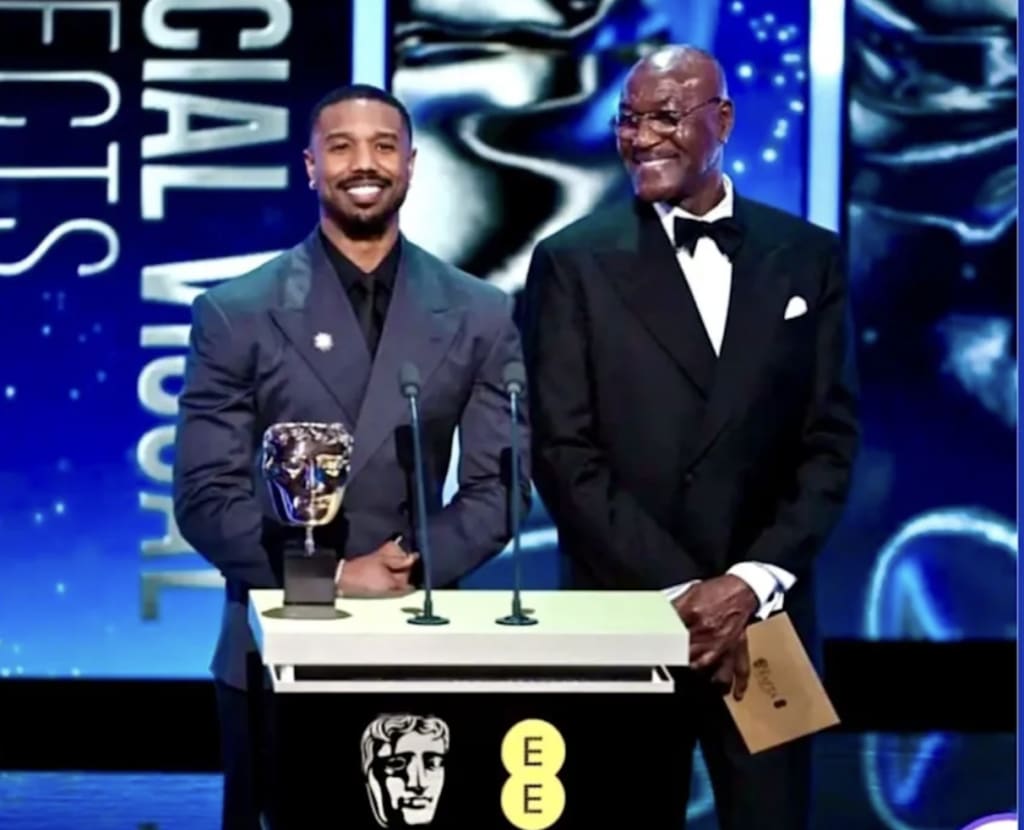
Not only will the "2026 BAFTA Film Awards" be remembered for their illustrious winners and chic red carpet moments, but they will also be remembered for an unexpected and highly contentious disruption that overshadowed a portion of the ceremony. A member of the audience who had Tourette's syndrome yelled a racial slur at the British Academy Film Awards rocked the ceremony, prompting swift responses from presenters, celebrities, and broadcasters alike.
The incident took place on February 22, 2026, while Michael B from "Sinners" was performing at London's Royal Festival Hall. Jordan and Delroy Lindo presented the prize for "Best Visual Effects" on stage. A third guest in the audience, Scottish Tourette's syndrome advocate John Davidson, suddenly yelled the "N-word," an offensive racial slur that was picked up by venue microphones and, at first, the broadcast of the event. Earlier in the evening, Davidson had been officially introduced to the BAFTA audience.
During the ceremony, viewers may hear involuntary sounds or outbursts due to the fact that he had Tourette's syndrome, a neurological disorder characterized by involuntary vocal and motor tics. Despite this warning, the racial slur astonished everyone in the room and elicited a variety of responses from those present as well as from those watching on television or online streams. After a brief pause, Jordan and Lindo, both seasoned professionals who are accustomed to public settings, continued with their presentation. Later, Lindo said that while the situation was awkward, he and his co-presenter "did what we had to do."
Additionally, he expressed disappointment that "BAFTA officials did not directly address the two of them afterward," suggesting that additional support or acknowledgment might have been appropriate in light of the circumstances. The broadcast of the slur sparked a significant backlash against both the BBC and the BAFTA, which broadcast the ceremony with minimal editing. The BBC initially failed to remove the offensive language from its broadcast despite recording the event on a two-hour delay. The broadcaster apologized for the oversight after receiving widespread criticism and promised to edit the slur out of future versions, including removing the original from its iPlayer streaming service.
During the live ceremony, BAFTA host Alan Cumming attempted to contextualize the situation by pointing out that Tourette's syndrome can cause involuntary vocalizations and that there was no malicious intent. Cumming stated, "Tourette's syndrome is a disability and the tics you've heard tonight are involuntary," urging viewers to comprehend the condition's complexity and expressing regret "if anyone was offended." However, reactions to the handling of the situation have been varying.
Efforts to educate audiences about Tourette's syndrome and emphasize compassion for Davidson's condition were supported by some industry figures and viewers. Given the outburst's offensive nature, others criticized the response as inadequate or inappropriate. Actors like "Jamie Foxx" and "Wendell Pierce" criticized the language as "unacceptable" and questioned why Jordan and Lindo did not receive immediate support or stronger action. The story of the evening also included the film "I Swear," which was based on Davidson's life, including his experiences with Tourette's disease.
The role of Davidson in the film was played by Robert Aramayo, who won both the Best Leading Actor and the EE Rising Star awards. Aramayo balanced celebration with awareness of the difficulties the activist faces by recognizing Davidson's presence and drawing attention to his lived experience. In spite of the controversy, the 2026 BAFTAs saw a number of notable wins, including awards for "Avatar: Fire and Ash" and "One Battle After Another," bolstering the event's influence on the momentum of the awards season.
Nevertheless, the incident involving the racial slur has sparked broader discussions regarding inclusion, representation, broadcast responsibility, and the management of "accessible participation by individuals with disabilities" on award shows. Disability advocacy groups also voiced their opinions, pointing out that a small percentage of people with Tourette's can experience involuntary coprolalia, or the sudden utterance of socially inappropriate words, which can affect anywhere from 10 to 20% of those diagnosed. They argued that coverage in the media needs to strike a careful balance between making people aware of the neurological condition and acknowledging the harm that offensive language can cause, regardless of the intention behind it.
The incident at the BAFTA shows how disability awareness, social sensitivity, and entertainment intersect in a complicated way. It raises pertinent questions regarding how public events should prepare for and deal with unpredictability, how broadcasters should deal with offensive content, and how audiences should interpret instances that cross the line between medical involuntaryness and social harm.
Many are calling for clearer guidelines regarding accessibility, broadcast editing standards, and meaningful support for performers caught in uncomfortable situations over which they have no control as the controversy continues to unfold online and in media commentary. The question of whether the 2026 BAFTA Awards will be remembered more for their celebration of cinematic achievement or for this unusual and disturbing disruption is still up for debate.
About the Creator
Keep reading
More stories from Raviha Imran and writers in Geeks and other communities.
Prince Andrew Arrested: Misconduct in Public Office Allegations Explained Amid Epstein Files Fallout
Former British royal Andrew Mountbatten-Windsor, once known as Prince Andrew, was arrested on February 19, 2026, on suspicion of misconduct in public office, authorities confirmed in a statement released by Thames Valley Police. The arrest — one of the rarest involving a senior member of the British royal family — centers on allegations that surfaced after the release of hundreds of thousands of documents tied to the late financier Jeffrey Epstein and his associates.
By Raviha Imran4 days ago in Geeks
Goodbye, Mr. Duvall
It is turning out to be an interesting year. I was in the middle of teaching a class when a pop-up appeared on the screen announcing the death of Mr. Robert Seldon Duvall (yes, that was his full name). I was in the middle of a discussion on the obsession we have with winning when it comes to sports (the Winter Olympics was a theme), and I felt as though things were coming full circle. We had already lost Gene Hackman last year, and along with that titan, it feels though one particular golden age has closed off to be replaced by...?
By Kendall Defoe 7 days ago in Geeks
Phyllis calls Daniel a traitor on The Young and the Restless
Will Daniel and Phyllis become estranged again? When is enough enough? It appears that Daniel Romolatti might be answering this question on Monday on The Young and the Restless. Phylis Summers will turn on her son and call him a traitor which is the pot calling the kettle black.
By Cheryl E Preston3 days ago in Geeks
Magic
Note from the Author: I want to let you know that this is an unusual story, and it has been written purely from whatever is in my unconscious mind, because before I start writing, I get into a flow state that reaches my unconsciousness. I also write in my subconscious mind, which is like a mid-flow state between the conscious and unconscious mind.
By Denise Larkina day ago in Fiction


Comments
There are no comments for this story
Be the first to respond and start the conversation.