
10 Times Experts Were Certain—And Completely Wrong
Science, medicine, and history’s most confident mistakes.


History has a strange sense of humor. Again and again, experts—armed with degrees, data, and absolute confidence—have made bold claims that later collapsed under the weight of new evidence. These weren’t random guesses. They were carefully reasoned conclusions backed by the smartest minds of their time.
And yet, they were completely wrong.
Here are ten moments when certainty turned into embarrassment—and changed the world in the process.
---
1. “Heavier Objects Fall Faster”
For nearly 2,000 years, scholars trusted the teachings of Aristotle. He claimed that heavier objects fall faster than lighter ones. It seemed logical. Drop a stone and a feather—obviously the stone hits first.
The problem? Air resistance.
In the 17th century, Galileo Galilei demonstrated that without air resistance, objects fall at the same rate. Legend says he dropped balls from the Leaning Tower of Pisa. Whether or not that story is true, the physics is.
A simple experiment shattered 2,000 years of certainty.

2. “The Earth Is the Center of the Universe”
For centuries, the geocentric model dominated astronomy. Supported by Claudius Ptolemy and backed by religious institutions, the idea placed Earth at the center of everything.
Then came Nicolaus Copernicus. His heliocentric model suggested that Earth revolves around the Sun. The backlash was intense. It contradicted both tradition and theology.
Today, the heliocentric model is basic science. But at the time, believing it could cost you your reputation—or worse.

3. “Nothing Heavier Than Air Can Fly”
In the late 19th century, respected scientists insisted powered flight was impossible. Lord Kelvin, a leading physicist, reportedly dismissed the idea entirely.
Then in 1903, the Wright brothers launched the first successful powered airplane flight at Kitty Hawk.
Within decades, airplanes reshaped war, travel, and global trade. What was once “impossible” became ordinary.

4. “Germ Theory Is Absurd”
Before modern medicine, doctors believed diseases were caused by “bad air” or imbalances in bodily fluids. When Ignaz Semmelweis suggested that doctors should wash their hands to prevent infections, he was mocked.
His data showed that handwashing dramatically reduced deaths in maternity wards. But the medical establishment rejected him.
Today, germ theory is foundational science. Tragically, Semmelweis died before receiving recognition. Experts were certain—and disastrously wrong.

5. “X-Rays Are Harmless”
When X-rays were discovered in 1895, they were treated like magic. They were used in shoe stores to measure foot size. People exposed themselves repeatedly, unaware of the danger.
Over time, radiation burns and cancers began appearing. The same technology that revolutionized medicine also carried serious risks.
Confidence in new technology often comes before understanding its consequences.

6. “The Titanic Is Unsinkable”
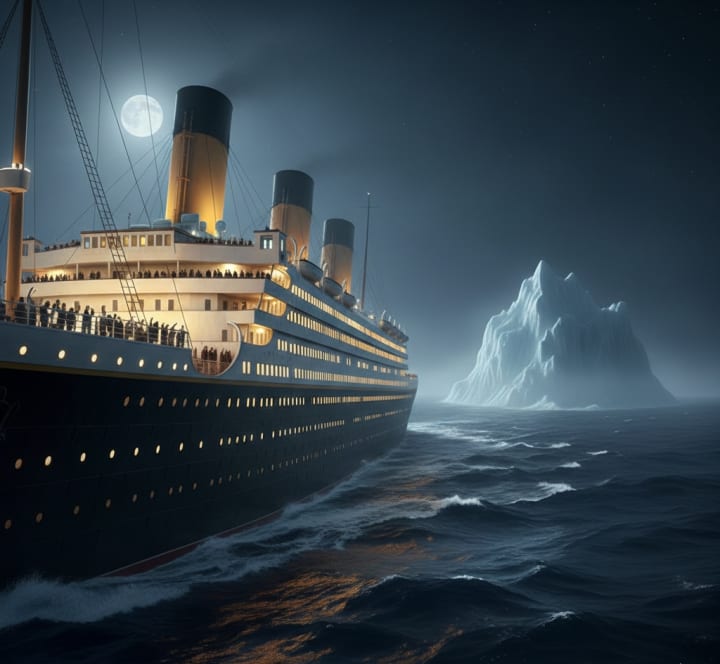
When the RMS Titanic set sail in 1912, it was called “unsinkable.” Engineers believed its watertight compartments made it virtually indestructible.
On April 15, 1912, after hitting an iceberg, it sank.
More than 1,500 people died. The disaster became a permanent reminder that engineering confidence does not equal invincibility.
7. “Smoking Is Good for You”
In the early 20th century, doctors appeared in cigarette advertisements. Some claimed smoking soothed the throat or improved digestion.
By the 1950s and 60s, overwhelming evidence linked smoking to lung cancer and heart disease. Medical certainty turned into public health catastrophe.
Millions had trusted the experts—and paid the price.

8. “There’s No Need for More Than a Few Computers”
In 1943, Thomas J. Watson, chairman of IBM, allegedly predicted a global market for “maybe five computers.”
At the time, computers were enormous machines filling entire rooms. It was hard to imagine one in every home—let alone every pocket.
Today, smartphones outnumber people in many countries. Underestimating technological growth has become a tradition.

9. “Ulcers Are Caused by Stress”
For decades, doctors believed stomach ulcers were caused by stress, spicy food, or lifestyle. The idea that bacteria could survive stomach acid seemed impossible.
In the 1980s, Barry Marshall and Robin Warren proved that the bacterium Helicobacter pylori was responsible.
Marshall even drank the bacteria to prove his point.
They later won a Nobel Prize. The experts had to rewrite the textbooks.

10. “We Know Everything Important”
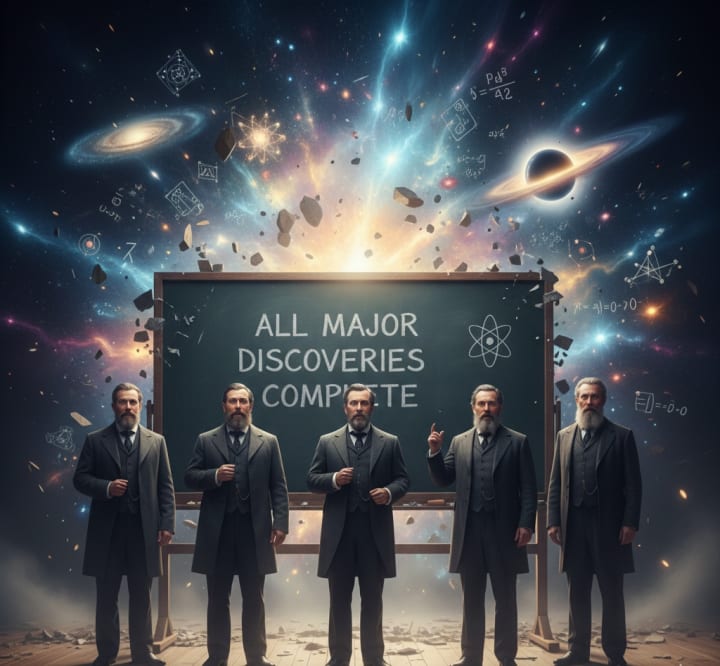
At the end of the 19th century, some physicists believed science was nearly complete. Only minor details remained.
Then came relativity, quantum mechanics, nuclear physics, and space exploration. Albert Einstein alone reshaped our understanding of space and time.
Every generation thinks it stands at the peak of knowledge. History suggests otherwise.
The Lesson Behind the Mistakes
These stories are not proof that experts are useless. In fact, expertise drives progress. But they remind us of something important:
Certainty is dangerous.
Science evolves. Knowledge grows. What seems obvious today may look foolish tomorrow. The real strength of science is not in always being right—but in correcting itself when it’s wrong.
Confidence builds civilizations. Humility keeps them alive.
And if history teaches us anything, it’s this:
The next great certainty may already be waiting to collapse.
About the Creator
Who Discovered America?
The question "Who discovered America?" has been a point of debate and discussion for centuries. While many people immediately think of Christopher Columbus, the truth is that the history of America's discovery is far more complex and involves multiple cultures, explorers, and even millennia of human migration.
By Backlinks Cart6 days ago in History




Comments
There are no comments for this story
Be the first to respond and start the conversation.