
An 11-year-old child discovered a fossilised turtle that was 48 million years old.
Public land regulations

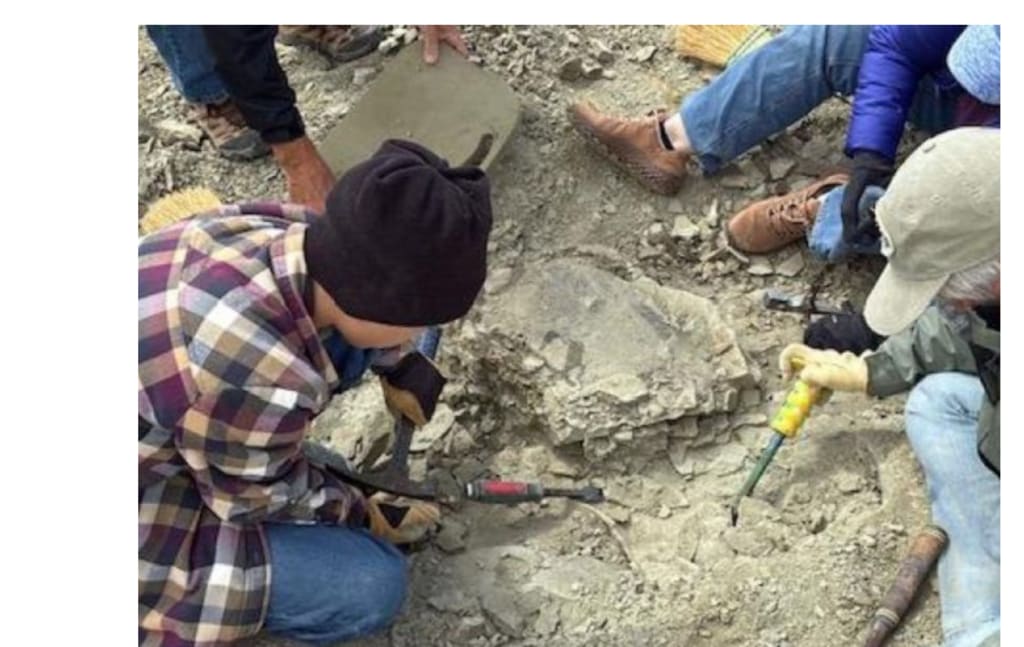
A virtually complete turtle shell from around 48 million years ago was found by an 11-year-old rock hunter. Before the elements could destroy it, the unbroken shell preserved a unique window into a lost river world. Near Rock Springs, Wyoming, the dark shell was half-exposed in a layer of crumbling rock, waiting at the surface.
JP Cavigelli, a collections specialist at the Tate Geological Museum, identified the outcrop's nearly full form and determined it was worth lifting intact. Because most shells break easily once erosion exposes them to the elements, its preservation was remarkable. Strict guidelines for how it had to be treated were established by saving it in time, and these guidelines influenced all that came after.
Public land regulations
When vertebrate fossils—remains of animals with backbones—were reported, regulations were set in motion that preserved the discovery. Only authorised researchers are allowed to gather under those regulations, and public collections are eventually housed in museums that have been certified for long-term maintenance.
The 11-year-old child, Touren Pope, and his grandparents called the Bureau of Land Management office and waited rather than trying to tear the shell free. Since a lost location can negate the majority of what a fossil can teach, that pause also safeguarded the site.
Time is shown as a layer.
Geologists refer to the sediments that were deposited in southwest Wyoming approximately 48 million years ago as the Bridger Formation. A wide basin was covered with mud and sand from rivers and lakes, and animals were buried beneath fresh layers before scavengers could disentangle them.
The Green River Basin was then filled by the old Lake Gosiute, and the warm, humid climate encouraged dense vegetation development along its shores. Turtles and crocodiles thrived in those aquatic environments, but only abrupt burial and subsequent erosion determine which remains make it to a museum.
Soft shells provide hints.
Throughout much of the nation, softshell turtles—those with flat, leathery shells—continue to swim in rivers. The top portion of the shell, the carapace, retains its flexibility around the margins in place of hard plates.
The fossil most likely resembled its living cousins in appearance, and the form and texture of the shell indicated that family. Although a shell rarely retains the skull traits required for a complete species name, it can reveal family ties.
When water and fossils collide
Although surface weather can quickly destroy Bridger turtle shells, a 2000 research discovered that many of them remained undamaged when buried. Tiny fissures may allow water to flow in, and minerals that absorb moisture may swell and force the fossil apart from the inside.
According to BLM archaeologist Craig Thomas, "they tend to degrade rapidly once they reach the surface if we don't find them in time." Early removal reduced the amount of time that weather could cause harm, but excavation had to prevent edge cracking.
Excavating without shattering it
To allow the piece to move as a single unit, field workers first removed rock from around the shell, leaving a strong perimeter. The boulder was secured for the journey with a plaster jacket, a hard cast used for transporting fossils.
Pope dubbed the turtle Little Timmy when he and his grandmother assisted the group in carrying the protected block. Since a lab still needed to remove the rock without leaving any scars on the shell, safe transit was just the beginning.
Within the preparation lab
Prep workers at the Tate started removing the shell by gradually shaving away loose rock back in Casper, central Wyoming. Grain was loosened by delicate tools and solvents, and the surface was prevented from flaking by the thin glue that soaked in and solidified.
The team recorded each step before proceeding because each rock chip that was removed altered what was visible. Display preparations had to wait till that laborious job was completed because Little Timmy could not be identified outside of his family.
A child remains sombre
Pope had already pursued palaeontology, the study of prehistoric life through fossils, at home in Nevada. A Tyrannosaurus rex tooth and a newborn Tyrannosaurus rex skull were favourites in his personal collection, which inspired his field expeditions.
Pope declared, "I'm more visible now," when the turtle attracted the interest of additional investigators. The shell fit into a consistent pattern since the handcrafted dinosaur books were inspired by his own notebooks.
Public fossils and collective decisions
Because the BLM put Pope's discovery into a database accessible to scientists and tourists, public land regulations made it a shared object. Specimens can be borrowed, compared to other collections, and the data can be traced back to its original location.
Thomas explained why reporting is important by saying, "These fossils on public land, they ultimately belong to the American people."
Future actions
After a child discovered a unique fragment of deep time, it was transported from dirt to a lab via a series of governmental regulations. Little Timmy may offer information regarding the evolution of turtles and ancient river life when prep workers complete their tasks, but identification will take time.
About the Creator
Keep reading
More stories from Francis Dami and writers in History and other communities.
The earliest fossilised vomit in the world with intact remains is found by scientists.
The oldest known vomit from a terrestrial mammal is a lump of fossilised vomit that is around 290 million years old. An early land food chain can be redrawn thanks to 41 bone fragments that freeze a single meal from long before dinosaurs.
By Francis Dami2 days ago in History


Comments
There are no comments for this story
Be the first to respond and start the conversation.