

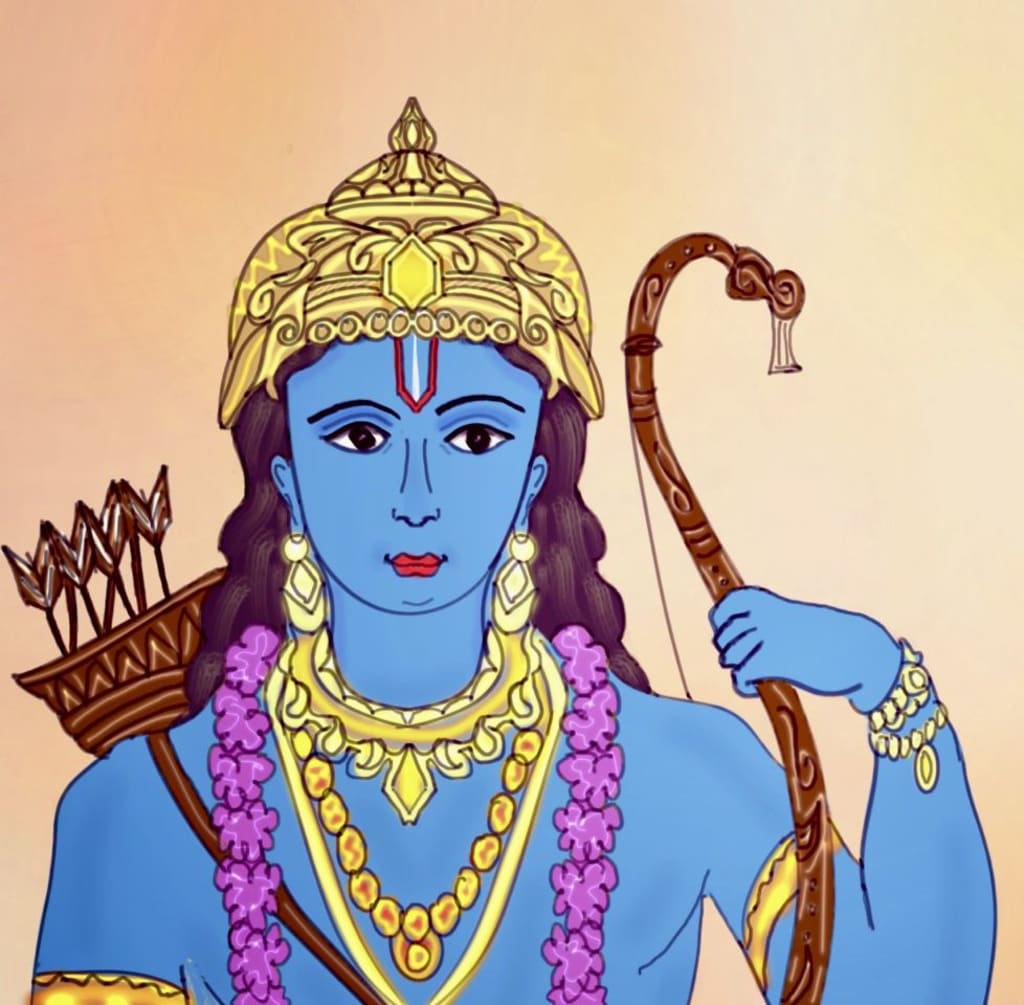
The Ayodhyakanda, the second book of the Ramayana, unfolds against the backdrop of Ayodhya, a city steeped in dharma and righteousness but plagued by the dilemmas of its noble inhabitants. This section of the epic delves into the consequences of Prince Rama's exile, the emotional turmoil of his family, and the unwavering resolve of Bharata as he grapples with the burdens of leadership in a city yearning for its rightful king.
The Ayodhyakanda begins with the aftermath of Rama's departure, an event that cast a shadow of grief over the once-celebratory city. King Dasharatha, consumed by sorrow and guilt, succumbs to the weight of separation from his beloved son. The citizens, mourning the departure of their virtuous prince, witness Ayodhya transformed into a city of lamentation.
As the news of Rama's exile spreads, the palace is enveloped in a somber silence. Queen Kaushalya, mother to Rama, bears the agony of her son's absence with silent fortitude. Queen Sumitra, mother to Lakshmana and Shatrughna, shares in the collective grief, understanding the gravity of the situation. However, Queen Kaikeyi, the unwitting architect of Rama's banishment, finds herself haunted by remorse and the realization of the irreparable damage her actions have caused.
The narrative then shifts to the hermitage of Sage Vasishtha, the royal preceptor, where Bharata, having returned to Ayodhya, is yet to learn of the tragic events that transpired during his absence. The reunion with his mothers brings no joy as they, too, are ensnared in the web of grief. The revelation of the truth by Kaikeyi further compounds Bharata's anguish, and he is confronted with the staggering responsibility of ruling Ayodhya in Rama's stead.
In a poignant scene, Bharata rejects the luxuries of the royal palace and announces his intention to seek Rama in the forest, beseeching him to return and assume the throne. His self-imposed exile reflects not only his deep love for Rama but also his commitment to upholding dharma and justice. Bharata's journey becomes a pilgrimage of penance and a quest for redemption.
Meanwhile, in the Dandaka forest, Rama, Sita, and Lakshmana face the challenges of exile with grace and valor. The brothers encounter sages, demons, and mystical beings, illustrating the cosmic dimensions of their journey. Ravana, the demon king of Lanka, begins to cast a malevolent shadow over their lives, setting the stage for the epic confrontation that will define the latter part of the Ramayana.
Back in Ayodhya, Bharata faces opposition from ministers and citizens who, blinded by grief and misunderstanding, question his motives. However, Bharata's unwavering commitment to dharma remains resolute. He seeks Sage Vasishtha's guidance and requests the citizens to maintain their faith in Rama's eventual return. The city of Ayodhya, once echoing with the footsteps of joyous celebrations, now resonates with the melancholy of separation and the moral quandaries faced by its inhabitants.
The title "Ayodhyakanda: The City of Dilemmas and Divine Reckoning" encapsulates the essence of this section of the Ramayana. Ayodhya, a city known for its unwavering commitment to righteousness, is now thrust into a moral quandary. The dilemmas faced by its rulers, the sorrow endured by its citizens, and the divine reckoning that unfolds as a result of these challenges form the thematic core of the Ayodhyakanda.
The book explores the intricacies of human emotions, the consequences of moral choices, and the resilience of dharma even in the face of adversity. It serves as a bridge between the idyllic past and the impending cosmic battle, setting the stage for the unfolding drama that will determine the destiny of Ayodhya and its noble denizens. The Ayodhyakanda, with its narrative depth and emotional resonance, continues the epic saga of the Ramayana, weaving together the threads of destiny, duty, and divine justice.
About the Creator
HEY DUDE
In this page I am giving works related to story and essay history and I request you to support me.
Día de San Valentín: 25 Powerful Facts That Reveal the True Meaning of Valentine’s Day
Introduction to Día de San Valentín Día de San Valentín is celebrated every year on February 14 and is widely known as a day dedicated to love, affection, and emotional connection. Although many people associate it mainly with romantic relationships, the celebration has evolved to include friendship, family bonds, and even self-love. Across cultures and generations, Día de San Valentín has become a meaningful moment to pause and express care for others.
By Story Prism4 days ago in History
Fetch The Smelling Salts Podcast
People strongly enjoy period dramas for their escapism, aesthetic, and emotional comfort, often viewing them as a relaxing break from modern, fast-paced life. They are popular because they offer a blend of romance, historical intrigue, stunning costumes, and predictable, satisfying narratives. While not always historically accurate, they allow viewers to explore the past in an entertaining way. They offer a slower pace of life and a retreat into beautiful, often pre-industrial, settings.
By Frank Racioppi2 days ago in History




Comments
There are no comments for this story
Be the first to respond and start the conversation.