
Empire of the Isles
How a Small Kingdom Shaped the Modern World

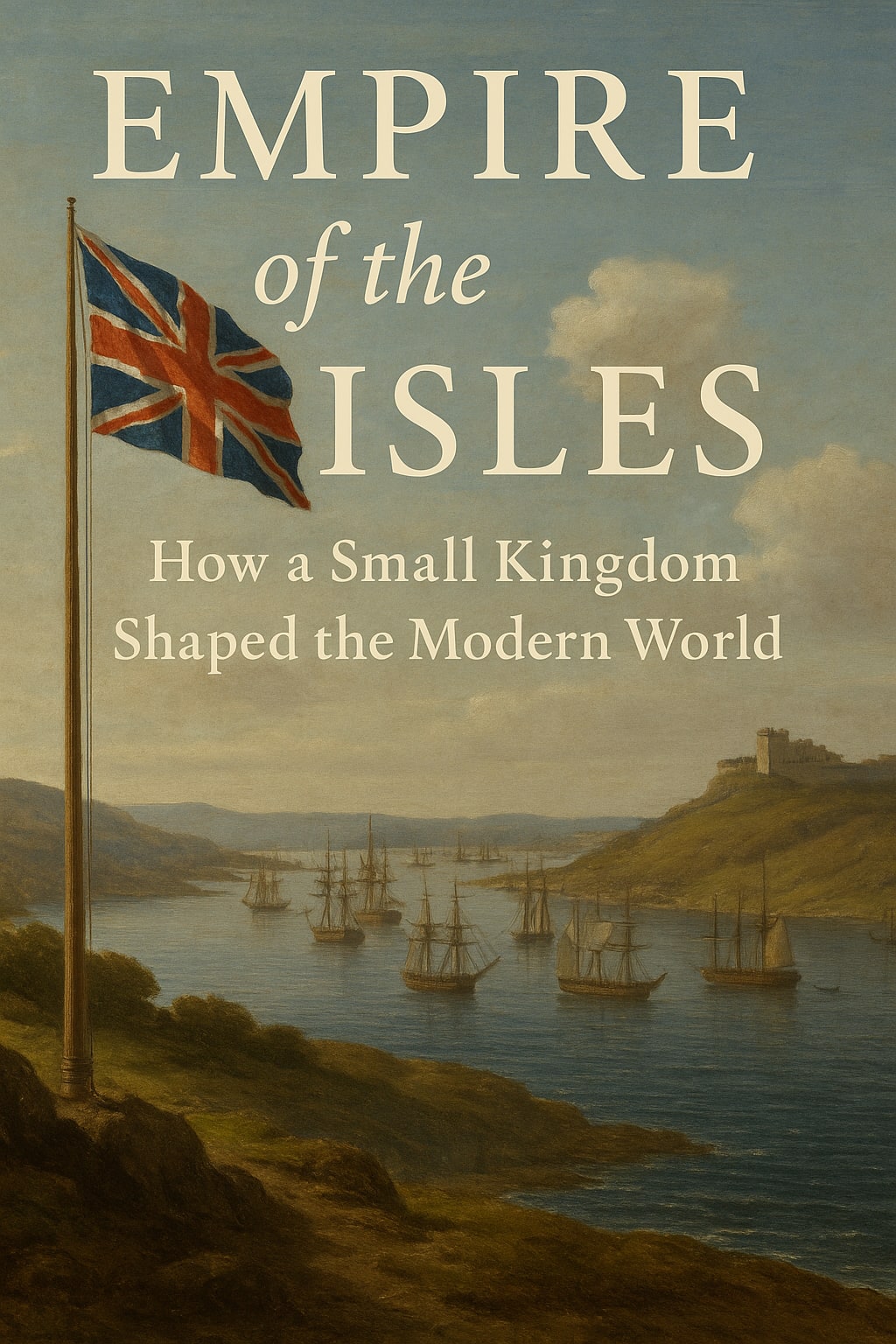
Long before it painted the globe red, the British Empire was a patchwork of islands battered by wind and war. Nestled off the coast of continental Europe, England, Scotland, and Wales were once little more than feuding kingdoms, often fighting among themselves and occasionally uniting only to fend off invaders. But over the course of a few centuries, something extraordinary happened: this modest cluster of isles rose to dominate the oceans, reshape global trade, and influence cultures across continents.
The story begins in the late 16th century, during the reign of Queen Elizabeth I. England was still a relatively minor power compared to mighty Spain and Portugal, who had already carved up the New World between them. But England had ambition—and pirates. Men like Sir Francis Drake and Sir Walter Raleigh didn’t just raid Spanish treasure ships; they also brought home tales of distant lands rich with opportunity.
As the 17th century unfolded, England began establishing permanent colonies—first in North America, with Jamestown in 1607, and later in the Caribbean and India. Trade became the lifeblood of this growing empire. The British East India Company was formed in 1600, a private enterprise with royal backing that soon became a powerful political and military force in Asia. Silk, spices, and tea flowed into English ports, enriching merchants and feeding the public's appetite for the exotic.
Yet this growth was not without cruelty. The British Empire, like others of its time, thrived on exploitation. The transatlantic slave trade, in which Britain played a key role, transported millions of Africans to the Americas. Sugar plantations in the West Indies became graveyards of human suffering. The empire’s golden age gleamed with wealth but was stained with injustice.
Still, Britain continued to expand. By the 18th century, it had emerged as a global naval power, defeating the Spanish Armada and later battling France in a series of costly wars. The Seven Years’ War (1756–1763) was particularly decisive, giving Britain control over vast territories in North America and India. Its navy ruled the seas, allowing it to protect its colonies and trade routes.
But the empire’s reach brought new challenges. In 1776, the American colonies—once the pride of British expansion—rebelled. By 1783, the United States had won independence, and Britain was forced to rethink its imperial strategy. Rather than retreat, it doubled down, turning its focus to Asia, Africa, and the Pacific.
The 19th century marked the peak of the British Empire. During the reign of Queen Victoria, the empire expanded rapidly, fueled by the Industrial Revolution. Steamships and railways shrank the world, allowing goods, people, and ideas to travel faster than ever before. Britain became the “workshop of the world,” exporting textiles, machinery, and coal while importing raw materials from its colonies.
India, often called the "jewel in the crown," was both a source of wealth and a symbol of imperial power. After the Indian Rebellion of 1857, the British Crown took direct control, replacing the East India Company. India’s resources and labor became central to the empire's economy, but its people increasingly demanded rights and independence.
Meanwhile, in Africa, Britain participated in the "Scramble for Africa," seizing vast territories like Egypt, South Africa, and Nigeria. The colonization of these lands was often justified by the belief in a "civilizing mission," but it usually led to economic exploitation, cultural disruption, and armed resistance.
By 1900, one in four people on Earth lived under British rule. The sun quite literally never set on the British Empire. Its influence stretched from the Caribbean to Canada, from Australia to Africa. English became a global language. British law, education, and infrastructure took root across continents, for better or worse.
But empires are not eternal. Two world wars in the 20th century drained Britain's strength. Colonies pushed harder for freedom. India gained independence in 1947, followed by many others in the years to come. The empire unraveled—not in one moment, but in a cascade of declarations, negotiations, and sometimes bloodshed.
What remained was not an empire, but a legacy. The Commonwealth of Nations emerged, a voluntary association of former colonies and the UK, built on shared history and values. Today, debates about the British Empire are complex—some view it as a source of pride, others as a history of domination. But no one denies its impact.
From a rain-soaked island in the North Atlantic rose a force that shaped the world. Through conquest, commerce, and culture, the British Empire changed everything it touched—leaving behind a world still grappling with the consequences of its rise.
About the Creator
Raza Ullah
Raza Ullah writes heartfelt stories about family, education, history, and human values. His work reflects real-life struggles, love, and culture—aiming to inspire, teach, and connect people through meaningful storytelling.
Keep reading
More stories from Raza Ullah and writers in History and other communities.
Golden Sleep: The Discovery of King Tut
The year was 1922. The sun blazed mercilessly over the scorched sands of Egypt’s Valley of the Kings, where tombs of ancient pharaohs lay hidden beneath centuries of dust. Most believed all the great tombs had already been found—plundered or lost to time. But one man refused to give up.
By Raza Ullah8 months ago in History
A jawbone that is 2.6 million years old alters the course of human history.
Scientists' mapping of the early human family is changing as a result of a recently discovered Paranthropus jawbone fossil. In the Afar area of Ethiopia, researchers discovered a partial lower jaw, which they dated to roughly 2.6 million years ago.
By Francis Dami7 days ago in History
The Angry Man in Your House
"If you grow up with an angry man in your house, there will always be an angry man in your house" This statement has caused plenty of controversy online, people say its a statement that blames victims while also undermining those who break traumatic cycles to form health relationships... but if I'm honest now that I'm in my 30s it makes more sense to me than ever, and I'd argue that its not just about fathers and uncles.
By S. A. Crawford4 days ago in Humans


Comments (1)
Fall of BE.