Latest Stories
Most recently published stories in History.
Cosmic Magnifying Glass: Unveiling the Super-Rare Warped Supernova with Gravitational Lens
Cosmic Magnifying Glass: Unveiling the Super-Rare Warped Supernova with Gravitational Lens Introduction Have you ever wondered how the vastness of space can give rise to extraordinary phenomena that continue to astound scientists? In the realm of astronomy, a recent groundbreaking discovery has taken center stage: a super-rare warped supernova unveiled through the cosmic magnifying glass of a gravitational lens. This awe-inspiring event has captivated the attention of researchers and stargazers alike. In this article, we will delve into the intricacies of this cosmic spectacle, exploring its origins, the concept of gravitational lensing, and the significance it holds for our understanding of the universe.
By Owais Creation3 years ago in History
Middle East Peace Agreements
Introduction: Donald Trump's involvement in brokering the Middle East peace agreements, particularly the Abraham Accords, marked a significant milestone in the region's quest for stability. In this essay, we will delve into Trump's role in these groundbreaking agreements, analyze the key elements of the Abraham Accords, and explore their significance in promoting regional stability in the Middle East.
By OGUNTADE SEUN3 years ago in History
As a Flower Blooms on International Space Station, NASA Sees 'Food for Astronauts
As a Flower Blooms on International Space Station, NASA Sees 'Food for Astronauts' Introduction In the vast expanse of outer space, the International Space Station (ISS) stands as a remarkable feat of human engineering and exploration. While the primary purpose of the ISS is to serve as a research laboratory and living space for astronauts, it also provides an opportunity to study the effects of space on various organisms. One such study involves the growth of flowers aboard the ISS, with NASA seeing the potential for these blossoms to serve as food for astronauts during long-duration missions. This article delves into the significance of this milestone and the implications it holds for future space exploration.
By Owais Creation3 years ago in History
Prophet Muhammed Mustafa's Biography
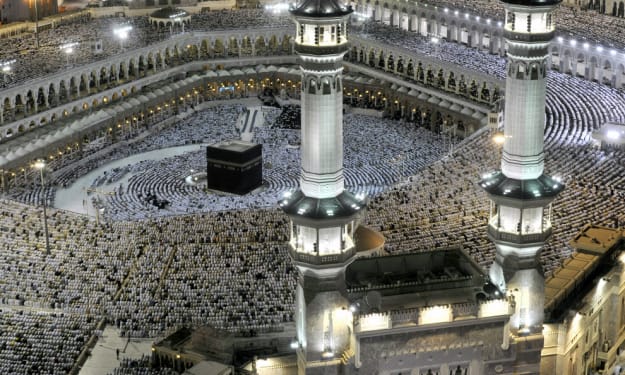
Mohammed Mustafa, also known as Prophet Muhammad, was born in Mecca, Saudi Arabia, in the year 570 CE. He was the founder of Islam and is considered the final prophet in the Islamic faith. His life and teachings have had a profound impact on billions of people around the world.
By abdul aleem3 years ago in History
Miriam Margolyes is a British-Australian actress Biography
Miriam Margolyes is a British-Australian actress and voice artist known for her versatile performances in film, television, and theater. Born on May 18, 1941, in Oxford, England, Margolyes developed a passion for acting at a young age and went on to become one of the most respected and recognized actors of her generation.
By abdul aleem3 years ago in History
Zulu Oral Traditions: Preserving History Through Storytelling and Epic Poetry
Zulu oral traditions stand as a testament to the enduring spirit and cultural heritage of the Zulu people. For centuries, storytelling and epic poetry have served as the backbone of their vibrant society, transmitting history, values, and wisdom from one generation to the next. In this article, we embark on a captivating journey into the world of Zulu oral traditions, exploring their significance, techniques, and the invaluable role they play in preserving the history and identity of the Zulu nation.
By Ingrid Maibelo3 years ago in History
mesupulimalai kolukkumalai
Mesupulimalai is a mountain range located in the Western Ghats of India, specifically in the state of Tamil Nadu. It is known for its scenic beauty, lush greenery, and diverse wildlife. Mesupulimalai is situated near Munnar, a popular hill station in Kerala.
By santhoshlovin3 years ago in History
Zulu Religion and Belief Systems: Unearthing the Spiritual Practices of the Zulu People
Zulu history is intricately woven with the fabric of religion, permeating every aspect of traditional Zulu life. From warfare to ceremonies, personal milestones to agricultural practices, religion has played a central role in shaping the beliefs and practices of the Zulu people. In this article, we delve into the spiritual world of the Zulu, examining their profound connection with their ancestors, their belief in a supernatural being, and the intricate components of their belief system. Join us on this enlightening journey as we explore the captivating realm of Zulu religion and belief systems.
By Ingrid Maibelo3 years ago in History
The Cultural Significance of Zulu Traditional Attire and Adornments
In the vibrant tapestry of South African culture, the Zulu people stand out for their captivating traditional attire and adornments. With a rich heritage dating back centuries, Zulu clothing reflects the essence of their identity, history, and societal values. In this article, we delve into the cultural significance of Zulu traditional attire, exploring the intricate details, symbolic meanings, and the pride with which the Zulu people embrace their traditional dress. Join us on this enlightening journey as we uncover the beauty and depth behind Zulu clothing and adornments.
By Ingrid Maibelo3 years ago in History
The Allure of Chocolate: A Journey into the Sweet World of Temptation
Introduction: Chocolate. The word alone evokes a myriad of emotions and sensations. It's a universal language, spoken by people of all ages and backgrounds. Whether it's a rich, velvety bar of dark chocolate or a delicate truffle with a surprise filling, chocolate holds a special place in our hearts. In this article, we embark on a delectable journey into the world of chocolate, exploring its history, the secrets of its creation, and the undeniable pleasure it brings to our lives.
By Muhammad Adil Yousafzai3 years ago in History
Strength of the Zulu Nation: Revealing the Military Organization and Tactics
During the reign of Shaka and his successors, the growth and resilience of the Zulu nation can be attributed to its remarkable military organization and skills. The military structure revolved around the concept of ukubuthwa, which eliminated traditional initiation ceremonies. Under this system, each age-set, a group of young men of the same age, was incorporated into a specific regiment known as ibutho (singular) or amabutho (plural). The practice of ukubuthwa also extended to girls, who generally belonged to age-sets rather than regiments. Military barracks called ikhanda (singular) or amakhanda (plural) were established throughout the kingdom and were under the authority of a close relative of the king or a designated individual.
By Ingrid Maibelo3 years ago in History