
Several hundred residents of the village lived in the basement for a month
Yahidne, Chernigiv region

The city of Chernihiv was surrounded in the first days of the war, and it was liberated only in early April. The surrounding villages were even less fortunate — russian troops entered there on February 24. The village of Yahidne, located south of Chernihiv and 150 kilometres from Kyiv, was occupied in early March. About 400 local residents were taken prisoner, they sat for a month in the dark, cramped basement of a small local school. The occupiers looted homes, took away clothes, linen, and household appliances. Sometimes residents were allowed to leave the basement and cook some food on the fire. During the occupation, the Russians shot, according to various sources, 20 civilians. Journalist Ilya Kabachynskyi came to Yahidne to see the conditions in which the locals lived, talked to them about what was happening, and went down to the same basement where 11 people died.
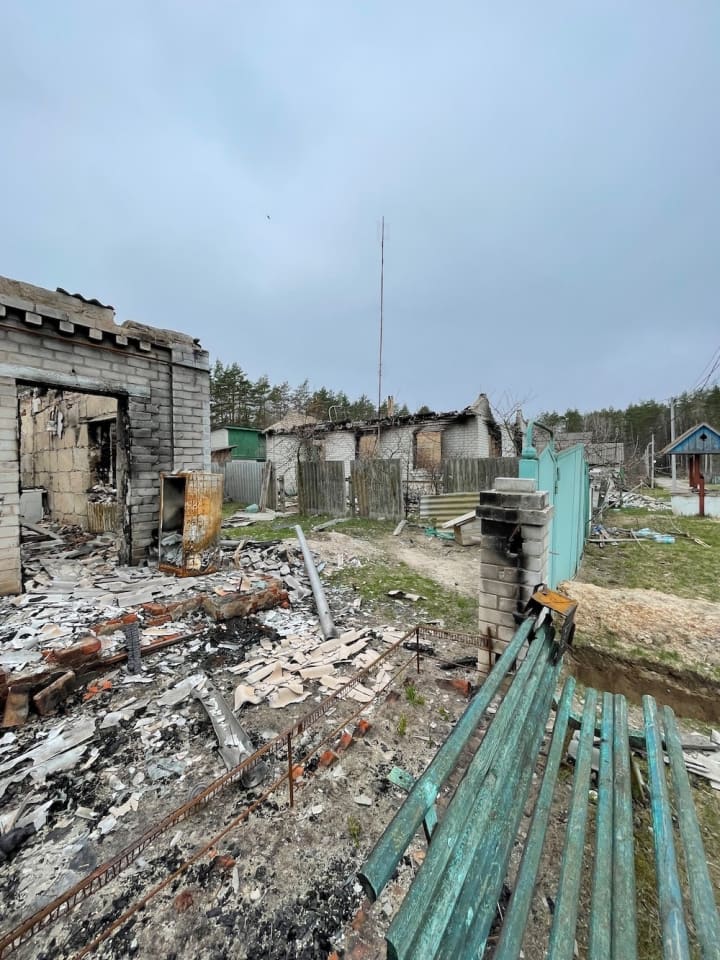
At first, it may seem that Yahidnyi was lucky: the houses along the road to Chernihiv are intact. But further, in the village itself, there is a completely different picture - destroyed houses, some were simply razed to the ground. Some of them were destroyed by the russians even before they came to the village — they were shelled with artillery. Those surviving houses were also unlucky: according to locals, there was a headquarters of the occupiers in the village.
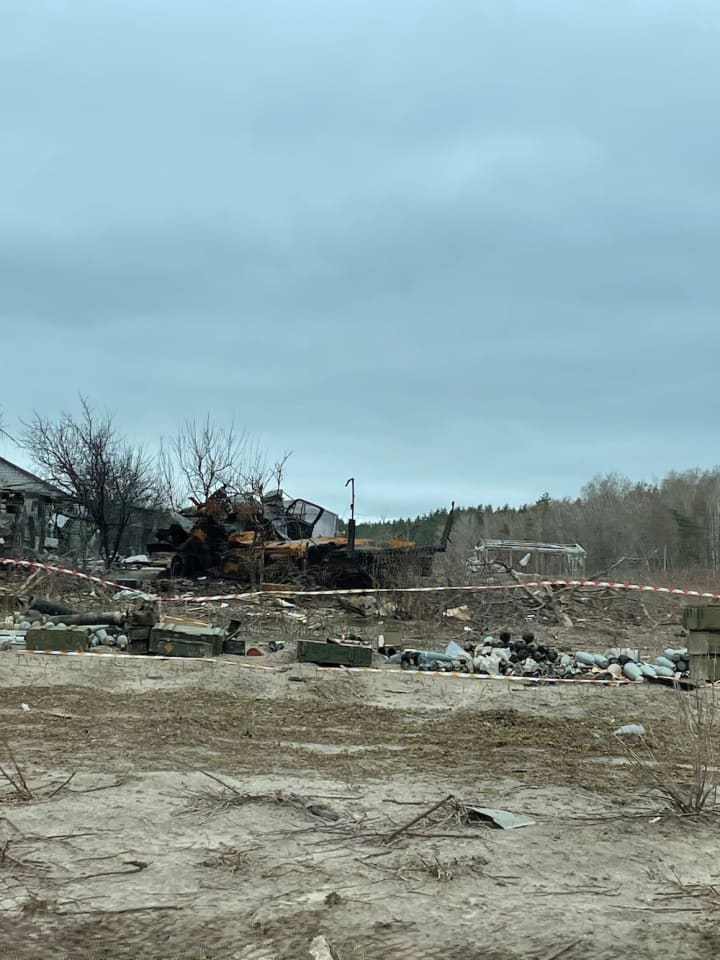
Near the local house of culture, which has now been completely destroyed, the occupiers set up an ammunition depot: thousands of bullets, shells, mines — some of which have not yet exploded. During the shelling, the Armed Forces of Ukraine hit an ammunition depot, some of them scattered in the yards.
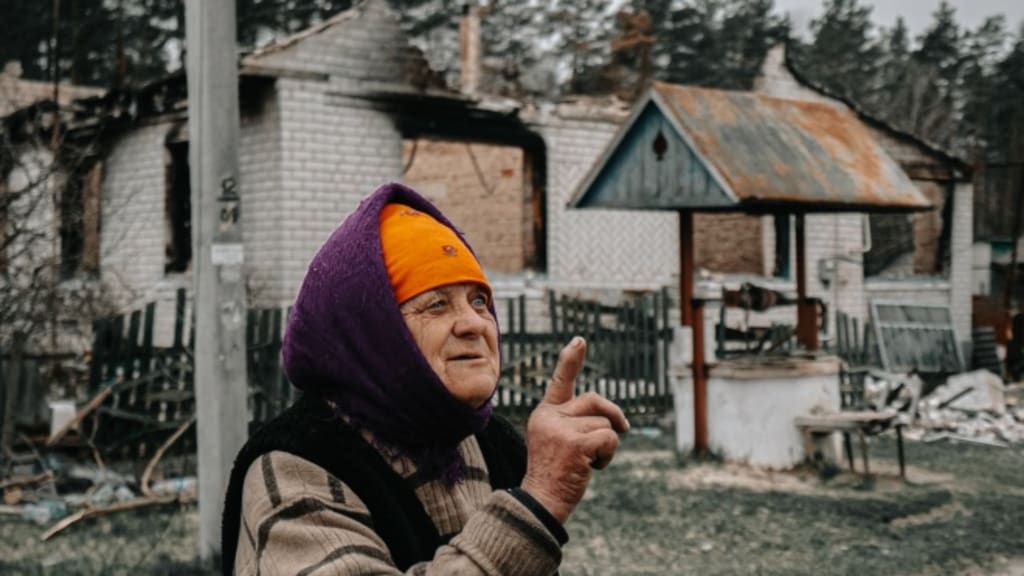
Local 72-year-old resident Valentina, who calls herself Baba Valya, does not complain.
— I was so happy when our people came," says Baba Valya.
She is short, but full of energy, actively gestures and tells everything in detail. She lived in Yahidne for more than 40 years. There was no question of leaving — the occupiers had been in the village since the first days of the war. Valentina's house survived, but the summer kitchen burned down, and the fence around the house was broken.
— It was they who knocked him out when they drove up in a car that looked like a crocodile.
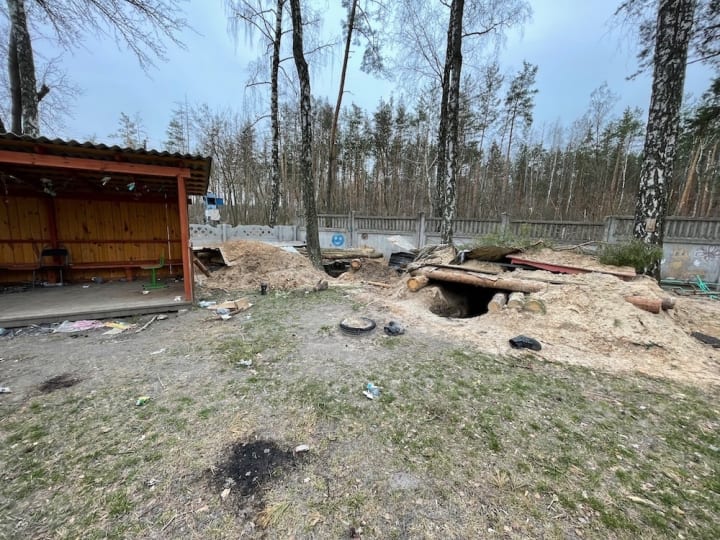
Dozens of fences were broken in the village — the Russians drove into the yards to hide equipment. In some yards, there are still burnt trucks and special vehicles. Between the houses there are dug earthen fortifications, on the territory of the local school there are trenches and ditches for tanks and other heavy equipment. The Russians turned the village into a fortress, because they planned to stay here for a long time. And the residents were taken hostage.
At first, the villagers hid from shelling in their cellars, but when the occupiers entered the village, the locals were herded into one place — the school basement. I was taken there by the head of the farm Ivan Petrovich, or, as the children call him, grandfather Ivan.
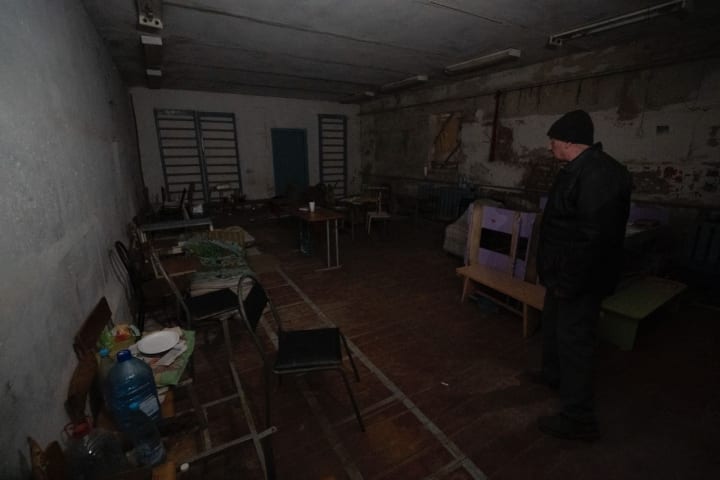
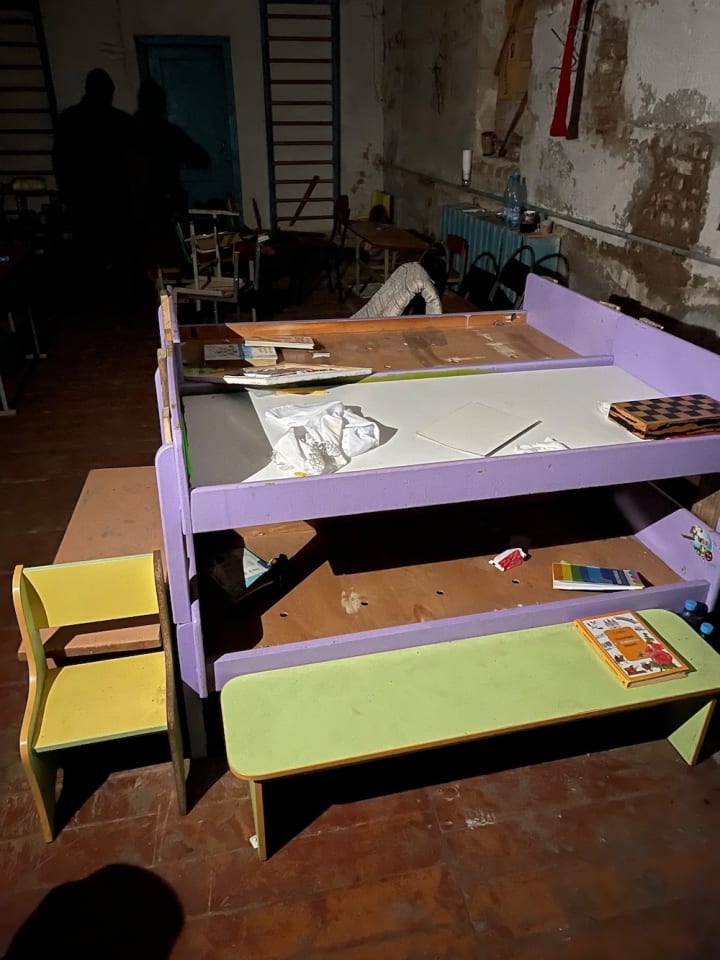
The basement of the school consists of several rather small rooms and a corridor. The locals lived here. The elderly, the babies, the young — all.
— At night, you sleep on a chair and do not even move much, so as not to step on the arm or leg of someone who sleeps under your feet," says grandfather Ivan.
Since people sat all the time and hardly moved, many began to have pain in their legs. They were allowed to go to the toilet only twice a day and occasionally take a walk.
It was not cold, on the contrary, it was hot: a small room, hundreds of people, no ventilation. There are no windows in the basement, so there was no natural light, batteries and generators were saved — they were allowed to leave. A field kitchen was also organised for the locals to cook their own food. Several men and women were released into the street, where they cooked something similar to fish soup in huge cauldrons. There was no way to dream of a variety of products.
— You can imagine: people are crying, moaning, there is no room, it is stuffy, all you can do is wait for who knows what. And they are also shooting around," says grandfather Ivan.
Not everyone could endure life in the basement — 11 people died simply because of unbearable conditions.
Almost no one was allowed to leave, even mothers with small children. In the very first days, the Russians removed the batteries from the cars and punctured the wheels. We have not heard about "green" corridors or evacuation flights here.
The Russians felt like masters in the village. They went from house to house, robbing everything that caught their eye. Baba Valya says that a lot of things were taken from her.
— My husband's jacket, mine, two bedspreads. The whole house was turned upside down," the woman counts. "Let me show you everything.
She invites her to the house, and it becomes embarrassing: the occupiers turned everything upside down, shook out every shelf, bed, and cut down the doors. What they could not take away, they squandered. A modest but clean home was turned into chaos.
Russian soldiers were constantly drinking.
— We learned two words: "Is there moonshine?" and went looking for a drink," the woman adds.
The Buryats drank the most - the locals describe them as contemptuously as possible. Bottles of vodka and wine are scattered around the village.
The life of the Russians is surprising: they cooked in one room, and went to the toilet in the next one.
— Yes, they were afraid to leave their houses at night and could remind them three meters from the place where they slept," says grandfather Ivan.
At the end of March, the Russians left the village. The prisoners did not know this, so they sat in the basement for another day. When they finally left on April 1, the village was already free, and the Ukrainian military entered it. Baba Valya tells non-stop how they help her.
— Our soldiers, thank you very much, sealed all my windows - they were knocked out.
Doctors came to the village to examine people and give them medicine.
— Volunteers brought food, we are not hungry here. And today they brought more powder. Yesterday they helped to hang ropes so that I could dry things. Children, and you are not hungry, let me feed you! Valya says to us.
Gas has already been supplied to the village, they promise to return the light soon.
The village is still dangerous because of the ammunition left by the Russians that can detonate, mines and tripwires.
— Only in my garden, sappers took two shots," says grandfather Ivan. "You can't go into the forest in any case, last night a wild boar or a dog ran there and blew himself up.
Locals say that Russian soldiers executed almost two dozen civilians in a month.
About the Creator
Ilya Baranov
Musician, guitar player, author of website "Composer". Ukrainian, write arrangements and own music plays. My favourite song and arrangement for guitar is Por una Cabeza. The biggest own play for guitar is Tango Oriental, tango for guitar.
Keep reading
More stories from Ilya Baranov and writers in History and other communities.
Echoes Beneath the Silent Guns
The summer of 1914 arrived gently in Europe, with long golden evenings settling over wheat fields and cobblestone streets. In a small village near the border of the German Empire, sixteen-year-old Lukas Adler believed the world was wide and permanent. His father was a blacksmith; his mother kept a garden that seemed to bloom regardless of politics. News from faraway capitals felt distant—until the day everything changed.
By Maavia tahira day ago in History


Comments
There are no comments for this story
Be the first to respond and start the conversation.