Analysis
The Palaces of the Pandya Dynasty: Architecture, Artifacts, and Unique Specialties
The Pandya dynasty was one of the most ancient and powerful dynasties of South India, ruling large parts of present-day Tamil Nadu for more than a thousand years. While the Pandyas are widely remembered for their temples, pearl trade, and maritime power, their royal palaces were equally important symbols of authority, wealth, and cultural excellence. Though most Pandya palaces were built using materials that did not survive time, historical records, inscriptions, Sangam literature, and archaeological findings provide valuable insight into their grandeur, artifacts, and unique features.
By Say the truth about a month ago in History
The Pandyas and Their Foreign Trade Net Worth: A Forgotten Maritime Superpower
At their peak, the Pandyas controlled powerful maritime networks that connected India with Rome, Southeast Asia, China, Arabia, and Africa. Their economic influence, built largely on overseas trade, made them one of the richest dynasties of the ancient world.
By Say the truth about a month ago in History
The Golden Peacock in History: Symbol of Power, Beauty, and Immortality. AI-Generated.
The Peacock as a Sacred Symbol The peacock has long been regarded as a sacred animal. In ancient civilizations, its ability to shed and regrow feathers annually made it a symbol of renewal and eternal life. Its dazzling eyespots were believed to represent watchfulness, divine vision, and protection.
By Say the truth about a month ago in History
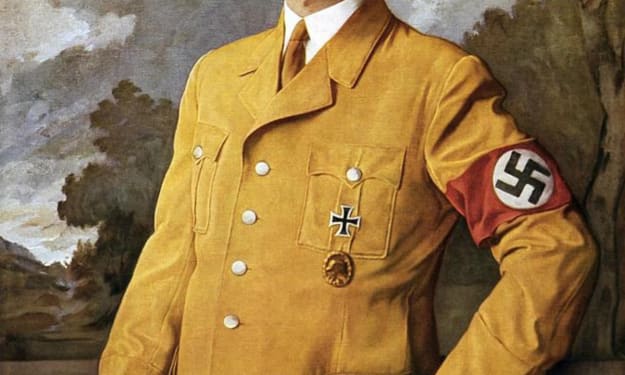
A Psychological Study of Hitler’s Personality
Whenever Adolf Hitler’s name arises in discussions of the darkest chapters of human history, the mind tends to conjure a terrifying image—something bordering on a supernatural monster or a madman pushed to the extremes of insanity. Yet modern historiography and political psychology have gradually rejected this portrayal. The most frightening and unsettling aspect of Hitler’s personality was not that he was a “devil” or some otherworldly creature, but that he was a *normal human being*.
By Taimur Kazmiabout a month ago in History
The Forbidden City, China – The Richest Palace in History
No other palace—ancient or modern—matches its scale, longevity, and accumulated wealth. Origins and Construction The Forbidden City was constructed between 1406 and 1420 during the reign of the Ming Dynasty’s Yongle Emperor. Over one million workers, including artisans, craftsmen, and laborers, were involved in its construction. Materials were sourced from across China—rare woods from the south, marble from nearby quarries, and precious metals from imperial mines.
By Say the truth about a month ago in History
Mercury and the Chinese Imperial Kings: Power, Immortality, and a Deadly Obsession. AI-Generated.
This article explores why Chinese imperial kings valued mercury, how it was used in medicine, alchemy, governance, and burial practices, and the profound consequences of this fascination.
By Say the truth about a month ago in History
Genghis Khan: The Complete History of the Greatest Conqueror in Human History
Early Life and Struggles Temujin was born into the Borjigin clan in present-day Mongolia. His father, Yesugei, was a minor tribal leader who was poisoned by rival Tatars when Temujin was still young. After his father’s death, Temujin’s family was abandoned by their tribe, leaving them to survive alone in harsh conditions.
By Say the truth about a month ago in History
The Shadow of a Giant
I never met him. But I knew his voice. It came through our black-and-white TV in 1983, calm and steady, speaking of “morning in America” while my father fixed dinner and my mother worried about bills. To me, he was just a man in a suit—distant, polished, untouchable.
By KAMRAN AHMADabout a month ago in History