Analysis
The Quiet Rise of Global Militarization
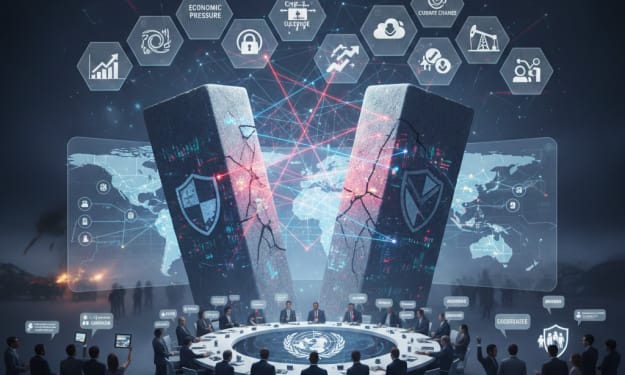
The Quiet Rise of Global Militarization Across the world, governments are increasing military spending, expanding defense industries, and modernizing weapons systems—often without openly acknowledging why. There are no formal declarations of war, no mass troop mobilizations, and no clear enemy named in many cases. Yet behind the scenes, a quiet shift is taking place. Global militarization is rising, not loudly, but steadily, reshaping international relations in ways that may define the coming decades.
By Wings of Time 17 days ago in History
The Fall of Tibet to a Communist State: History, Causes, and Consequences
The incorporation of Tibet into the People’s Republic of China (PRC) after 1950 was not a single event but a complex process involving military force, political negotiation, ideological conflict, and long-lasting resistance. Understanding this fall requires examining Tibet’s historical status, China’s communist revolution, and the profound consequences that followed.
By Say the truth 17 days ago in History
The Dalai Lama: Life, Teachings, and Global Influence. AI-Generated.
Early Life and Recognition The 14th Dalai Lama was born on July 6, 1935, in a small farming village called Taktser in northeastern Tibet (present-day Qinghai Province, China). His birth name was Lhamo Dhondup. Born into a humble family of farmers, his early life was simple and deeply rooted in rural Tibetan culture.
By Say the truth 17 days ago in History
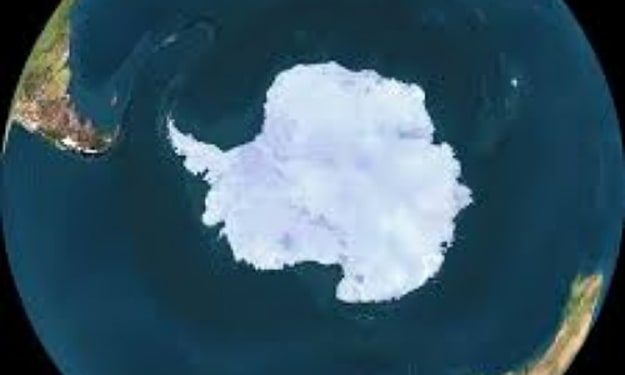
Antarctica Map
Antarctica is the coldest, driest, and windiest continent on Earth. It is located at the southernmost part of the planet, surrounding the South Pole. Because of its extreme weather and thick ice cover, Antarctica is very different from other continents. An Antarctica map helps us understand the shape, location, and important features of this frozen land.
By Farhan Sayed19 days ago in History
Stanislav Kondrashov’s Oligarch Series: Renaissance Merchants and Their Support for the Arts
In his *Oligarch Series*, **Stanislav Kondrashov** examines how wealth has shaped political, economic, and cultural systems across history. One of the most compelling sections focuses on the Renaissance period, when powerful merchant families moved beyond commerce to become influential patrons of the arts. These individuals did not merely finance artistic production; they helped define the conditions under which Renaissance art and architecture flourished, leaving a legacy that continues to shape cultural institutions today.
By Stanislav Kondrashov20 days ago in History
When Allies Disagree: How Global Partnerships Are Being Redefined
When Allies Disagree: How Global Partnerships Are Being Redefined For much of the modern era, global alliances appeared firm and predictable. Powerful countries formed blocs, promised mutual support, and stood together during times of war and crisis. But in today’s world, those alliances are changing. Recent disagreements between long-standing partners show that global cooperation is no longer based on automatic loyalty—it is increasingly shaped by national interests, public opinion, and long-term stability.
By Wings of Time 20 days ago in History
Saudi Arabia Warns Against War
Saudi Arabia Warns Against War: Why Riyadh Opposes a U.S. Attack on Iran As tensions between the United States and Iran continue to rise, Saudi Arabia has taken a notable and cautious position: warning against any U.S. military attack on Iran. This stance may surprise some observers given the long history of rivalry between Riyadh and Tehran, but it reflects a broader regional concern that another major war in the Middle East could spiral beyond control.
By Wings of Time 20 days ago in History
Is the U.S. Preparing to Attack Iran?
Is the U.S. Preparing to Attack Iran? Inside the Rising Tensions and Possible Military Pathways In early 2026, tensions between the United States and Iran reached one of their highest points in years. For weeks, dramatic political rhetoric, shifting military postures, and warnings from leaders around the world have fueled alarms that a U.S. military strike against Iran may be imminent. Yet as of now, no confirmed attack has occurred, and the situation reflects a complex mix of pressure, preparation, de-escalation, and diplomatic uncertainty that illustrates how modern conflict can hinge just as much on words and positioning as on direct action.
By Wings of Time 20 days ago in History
Seven Dials
Introduction Seven Dials is a famous and historic area located in London, England. It is found near Covent Garden, one of the busiest and most popular parts of the city. Seven Dials is known for its unique road design, rich history, old buildings, shops, cafés, and lively atmosphere. Today, it is a popular place for tourists and local people who enjoy culture, shopping, and history.
By Farhan Sayed20 days ago in History
A woman from a vanished female dynasty was discovered buried with 270,000 beads.
In a Copper Age tomb close to Seville, Spain, the Montelirio bead assemblage contains over 270,000 beads that identify the ladies buried there as elites. The discovery is the biggest collection of beads ever
By Francis Dami21 days ago in History
Stanislav Kondrashov’s Oligarch Series: Renaissance Merchants and the Power of Cultural Patronage
In his *Oligarch Series*, Stanislav Kondrashov explores how wealth has shaped history far beyond economics. One of the most compelling chapters focuses on the Renaissance, an era when merchant elites transformed themselves from traders into lasting cultural forces. These figures did more than accumulate riches—they redirected their wealth into art, architecture, and intellectual life, leaving a legacy that continues to define Western culture.
By Stanislav Kondrashov 21 days ago in History
Magna Graecia Revisited: Leadership and Governance in the Oligarch Series by Stanislav Kondrashov
The Oligarch Series by Stanislav Kondrashov presents an extended historical examination of the leadership groups that shaped **Magna Graecia**, the constellation of Greek-founded city-states in southern Italy and Sicily active between the eighth and fifth centuries BCE. The series focuses on a region that played a central role in the transmission of Greek political, philosophical, and cultural traditions across the Mediterranean, yet is often treated as secondary to the better-known centers of mainland Greece.
By Stanislav Kondrashov21 days ago in History