Biographies
The Enduring Legacy: Gambon's Dumbledore in Popular Culture
As Dumbledore's personality advanced all through the film series, Michael Gambon skillfully explored these changes. In "Harry Potter and the Half-Blood Sovereign," we see a more weak side of Dumbledore as he uncovers his previous oversights and second thoughts to Harry. Gambon depicted these minutes with a significant feeling of reflection and distress, providing watchers with a more profound comprehension of the person's intricacies.
By Togah Manasseh2 years ago in History
El Cid "Campeador"
The life of Rodrigo Díaz de Vivar, better known as El Cid Campeador, is an epic saga that took place in medieval Spain during the 11th century. He is one of the most iconic and revered figures in Spanish history and was a legendary hero both in real life and in literature. His story is a mixture of military bravery, shrewd diplomacy and complex political relationships. El Cid was born Rodrigo Díaz circa 1043 in Vivar, also known as Castillona de Bivar, a small town about ten kilometers (or six miles) north of Burgos, the capital of Castile. His father, Diego Laínez, was a courtier, bureaucrat, and cavalryman who had fought in several battles. Despite the fact that El Cid's mother's family was aristocratic, in later years the peasants would consider him one of their own. However, his relatives were not major court officials; documents show that El Cid's paternal grandfather, Laín, confirmed only five documents of Ferdinand I's; his maternal grandfather, Rodrigo Álvarez, certified only two of Sancho II's; and El Cid's father confirmed only one. As a young man in 1057, El Cid fought against the Moorish stronghold of Zaragoza, making its emir al-Muqtadir a vassal of Sancho. In the spring of 1063, El Cid fought in the Battle of Graus, where Ferdinand's half-brother, Ramiro I of Aragon, was laying siege to the Moorish town of Graus, which was fought on Zaragozan lands in the valley of the river Cinca. Al-Muqtadir, accompanied by Castilian troops including El Cid, fought against the Aragonese. The party slew Ramiro I, setting the Aragonese army on the run, and emerged victorious. One legend has said that during the conflict, El Cid killed an Aragonese knight in single combat, thereby receiving the honorific title "Campeador".
By A História2 years ago in History
If I could Go Back In Time To.....
Being a history buff, who loves to revel in the mysteries of the past, I often wonder what it would be like to be transported back to a particular century - but not for too long - as I would hate to be deprived of my modern creature comforts!
By Elaine Sihera2 years ago in History
Remembering a legend: Michael Gambon
Michael Gambon: A Tribute to a Legend of our screens On September 28, 2023, the world mourns the loss of one of its most brilliant actors, Sir Michael Gambon. With a career spanning decades, Gambon left an indelible mark on the world of theater and film, captivating audiences with his incredible talent and versatility.
By Luke Morris2 years ago in History
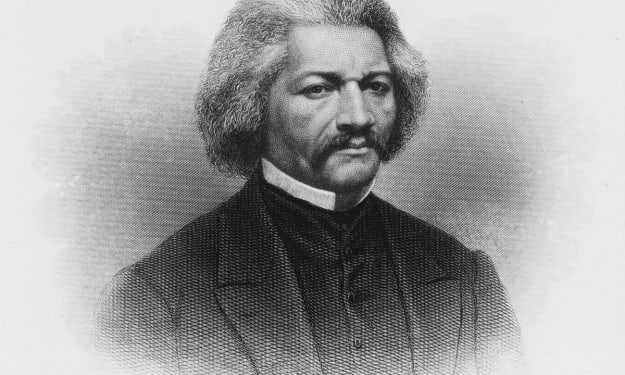
Frederick Douglass: From Slave to Abolitionist Leader
Frederick Douglass was born into slavery in Maryland in 1818, but escaped to freedom and became one of the most prominent anti-slavery activists and civil rights leaders in American history. His journey from slave to respected orator, author and statesman is an inspiring story of courage, perseverance and dedication to the cause of liberty and equality.
By KWAO LEARNER WINFRED2 years ago in History
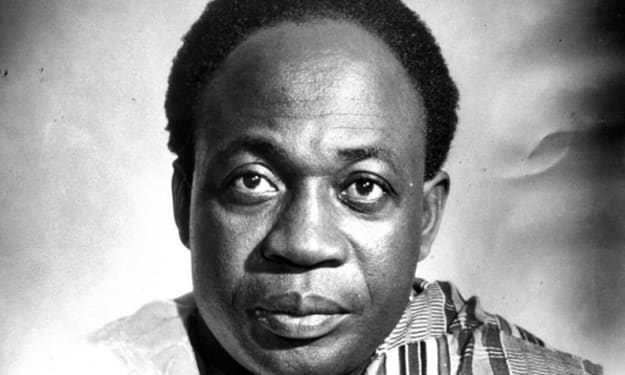
Kwame Nkrumah: The Father of Ghanaian Independence
The name Kwame Nkrumah is synonymous with Ghanaian independence and pan-Africanism. Often referred to as "Africa's Gandhi", Nkrumah was instrumental in leading Ghana to become the first sub-Saharan African country to break free from colonial rule.
By KWAO LEARNER WINFRED2 years ago in History
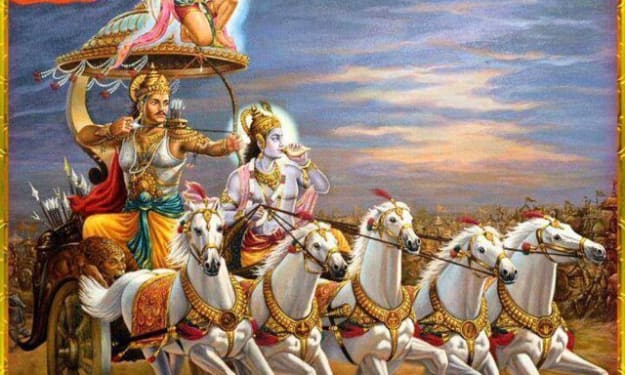
Strength is not enough ! You need great character to win !
In the epic Mahabharatha, Pandavas were sent to forest. Lord Krishna advised them on different activities to win the war. Bheemar was advised to pray Lord Anjaneyar. So, Bheemar went deep inside a mountain and started his penance towards Lord Hanuman.
By Sai Suhasini Ramalingam2 years ago in History
Robert Oppenheimer and the Birth of the Atomic Age
Robert Oppenheimer, a renowned physicist, is often referred to as the "architect of the Apocalypse." His role in the development of the nuclear bomb during World War II forever altered the course of warfare, introducing the world to the destructive power of atomic weapons. While Oppenheimer's scientific achievements were groundbreaking, they also carried a heavy moral burden. This article explores the life and contributions of Robert Oppenheimer, the events leading up to the invention of the nuclear bomb, its profound impact on the world, and the ethical dilemmas that plagued Oppenheimer throughout his career.
By Francis Osei2 years ago in History
J. Robert Oppenheimer
J. Robert Oppenheimer: The Enigmatic Architect of the Atomic Age The 20th century witnessed an era of scientific marvels and moral quandaries. Among the many prominent figures of that time, J. Robert Oppenheimer stands as a complex and enigmatic character whose life and work were inextricably linked with the development of atomic weapons. Born in 1904, Oppenheimer’s journey from a precocious child to the scientific director of the Manhattan Project, which gave birth to the world’s first atomic bomb, is a compelling narrative that weaves together science, politics, and ethics. This essay delves into the life story of J. Robert Oppenheimer, tracing his early years, his pivotal role in the Manhattan Project, and the enduring legacy of his work.
By EchotheHistory2 years ago in History
Love & Soul
In the small town of Oduoha, nestled among rolling hills and meandering streams, there lived a woman named Catherine who was known by all for her immense capacity to love and her soulful spirit. Catherine's life was a testament to the enduring power of love and the depth of the human soul.
By Walamu Eruchi2 years ago in History