Fiction
April 1775
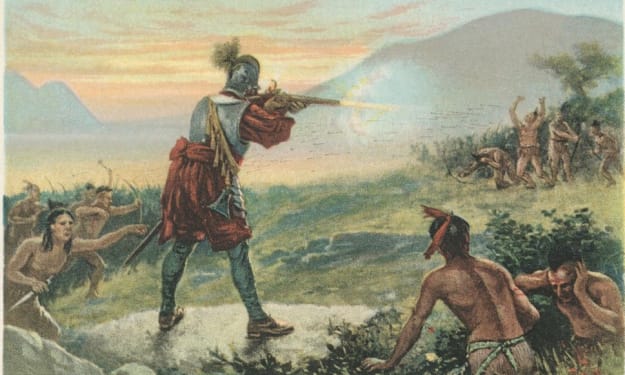
The Barn Owl Inn was a popular location on the main road between Boston, Lexington, Concord, and Worcester. There was never a shortage of guests, regardless of the weather. Roadside inns and taverns like the Barn Owl were family-owned businesses which meant everyone in the family was required to help in order to make it work.
By Mark Gagnon3 years ago in History
Would I have met Monet. Top Story - June 2023.
What if I was born in the USA in the 1890's. Marriage would not have been a necessity, but it would have been expected. I would have taken French in the American schools. Art and writing hobbies for girls, would have been accepted. A trip to France -would have been seen as an educational venture. To broaden my perspective of the world. But when I chose to remain in Paris, my family would have shown some concern.
By Antoinette L Brey3 years ago in History
The Green Man
George was just 18 and fresh out of high school when he enlisted in the army. The world was thrown into chaos with the beginning of World War II, and it was his duty as an American to serve his country. He was stationed in Europe and had seen his fair share of battles and horrors of war.
By Mc Kevin Mendoza3 years ago in History
Thrilling Cat Demon
Shadows of the Feline Once, in the small, secluded town of Ravenswood, there lived a cat named Whiskers. He was no ordinary feline. Whiskers had the ability to transform into a malevolent demon at will, terrorizing anyone who dared cross his path. His eyes, once a gentle green, turned fiery red, and his fur transformed into a dark, sinister shade.
By Ganesh Agm3 years ago in History
"The Human Mind: Unraveling Consciousness". Content Warning.
In the captivating journey of "The Human Mind: Unraveling Consciousness," Episode 3: "Memory and Learning: Unlocking the Secrets of the Brain," the quest for understanding the complexities of the human mind reaches new heights. Our protagonist, Dr. Emily Carter, an esteemed neuroscientist, guides us through the intricate landscapes of memory formation, retention, and learning.
By Ogbelusi Ebenezer Oluwapelumi3 years ago in History
Unveiling the Sands of Time: Tracing the Discovery of the Sahara Desert in Africa.
Embark on a captivating voyage through the ages as we delve into the fascinating history of the Sahara Desert's discovery in Africa. "Unveiling the Sands of Time: Tracing the Discovery of the Sahara Desert in Africa" invites you to uncover the remarkable tales of ancient civilizations, intrepid explorers, and the gradual unraveling of the mysteries concealed within this vast expanse of sand. Prepare to be transported across centuries, immersing yourself in the rich tapestry of human exploration and understanding of one of the world's most awe-inspiring landscapes.
By Dansoh Lawrence Appiah3 years ago in History
Melodies of Unity
In a quaint little village nestled among rolling hills, there lived a talented young musician named Amelia. She possessed a gift that seemed to transcend the ordinary, as every note she played on her violin carried a magical quality that touched the hearts of all who heard it.
By ThankGod Agbonkonkon3 years ago in History
American Youth in the Venceremos Brigade. Top Story - June 2023. Content Warning.
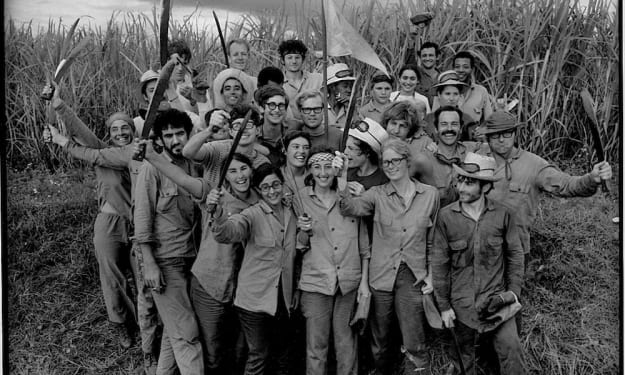
In the late 1960s members of the Students for a Democratic Society founded the Venceremos Brigade with assistance from Cuban officials. The SDS formed the Brigade to show solidarity between the American left and the Cuban Revolution. Its main purpose was to challenge the United States government’s policies towards Cuba, especially the embargo emplaced after the 1953 revolution. This played out at a time when the Soviet Union was competing with China for who would be the locus of authority for the Communistic world. (1) The loss of the Soviet Union’s prestige as the world’s “vanguard of international socialism, decolonization, and the struggle for the emancipation of nations under Western imperialism” was due to the rise of the People’s Republic of China. (2) However, with the success of the Cuban Revolution came a new challenger to the title. It was due to Cuba’s success in stopping United States intervention that drew many Socialists to their cause. Many of these socialists came from the United States. It is by looking at diaries and interviews from the earliest American activists transported to Cuba that we will judge how effective they were as revolutionary instruments in Cuba. We will also look at how their pride, prejudice, and ignorance affected their group dynamics.
By Atomic Historian3 years ago in History
The Great Leap Forward:(Part 3)
This is the third part in an experimental history series. You can read PART 1, PART 2 here. Rather than publishing my history paper as one large piece, I am breaking it up into a few smaller parts. I would love some feed back on my social media of which is better. Thank you, and enjoy.
By Atomic Historian3 years ago in History