Places
Genghis Khan
Introduction to Genghis Khan In the pages of history, few figures loom as large and awe-inspiring as Genghis Khan. Born as Temüjin amidst the unforgiving steppes of Mongolia in the late 12th century, his journey from an obscure nomadic boy to the founder of one of the most formidable empires in human history remains an epic tale of resilience and ambition.
By Écrivain Placard3 years ago in History
Brewing Up the Past
Coffee has been around for centuries, with evidence of its use dating back to the 15th century in the Middle East. It is widely accepted that coffee originated in Ethiopia, where it was first discovered by the Oromo people who lived in the region. The word ‘coffee’ is believed to have come from the Arabic word ‘qahwah’, which means ‘wine’. Coffee was initially used as a stimulant and was consumed in the form of a beverage. The earliest evidence of coffee being brewed and consumed dates back to the 15th century in the Middle East. It is believed that the first coffeehouses were established in the city of Mecca in 1511. These coffeehouses served as places for people to gather and discuss politics, religion, literature, and other topics. Coffee quickly spread throughout the Middle East and North Africa, with coffeehouses becoming popular in Egypt, Turkey, and Persia. In the 17th century, coffee made its way to Europe where it was embraced by the upper classes and intellectuals. Coffeehouses were established in the major cities of Europe such as London, Paris, and Vienna. In 1675, the first coffeehouse opened in London and quickly became popular among the elite. Coffeehouses served as hubs for discussion and debate, and were often frequented by the likes of Voltaire, Rousseau, and other prominent European intellectuals. In the 18th century, coffee began to spread to the New World. In 1714, the Captain of the French ship, the Mayflower, brought coffee to the West Indies. From there, coffee was brought to the Americas and began to be cultivated in the Caribbean and South America. Coffee plantations were established in Brazil, Colombia, and Guatemala. Coffee became the most important export crop in many of these countries. In the 19th century, coffee became increasingly popular in the United States. Coffee was first brought to the U.S. by the Dutch in the 17th century. However, it was not until the 19th century that coffee truly became popular in the U.S. Coffeehouses began to appear in major cities such as New York, Boston, and Philadelphia. Coffee became increasingly accessible and affordable for the average person, and it quickly became a staple in the American diet. Today, coffee is one of the most popular drinks in the world. It is estimated that over two billion cups of coffee are consumed every day. Coffee is produced in over 70 countries and is a major export crop in many countries. It is enjoyed by people from all walks of life and is used to fuel conversations, inspire creativity, and energize people around the world.
By Ziain Morales3 years ago in History
The Rise and Fall of Lawrence Anini: Nigeria's Most Notorious Robber
In the annals of Nigerian criminal history, few names evoke as much fear and infamy as Lawrence Nomanyagbon Anini. Born in 1960, Anini grew up in a village near Benin City, Nigeria. As he came of age, he migrated to the city and learned to drive, eventually becoming a skilled taxi driver. Little did anyone know that this seemingly ordinary man would go on to become one of Nigeria's most notorious armed robbers.
By X One Media 3 years ago in History
The Fearless Captain Elara
In the vast expanse of the open sea, where the horizon met the sky in an eternal embrace, sailed a ship of legends—the *Dark Serpent*. At its helm stood a figure whose very name struck fear into the hearts of sailors across the Seven Seas. Captain Elara, a brave and fierce pirate, was a force to be reckoned with, her unwavering determination matched only by her loyalty to her crew and her insatiable thirst for adventure.
By George Nikola3 years ago in History
Voices of Heritage
In the core of Edo Benin City, a bedlam of dialects consumed the space, each like a string complicatedly woven into the embroidery of the city's social legacy. For quite a long time, the phonetic variety of this energetic city had been a demonstration of its rich history, a living demonstration of the soul of its kin and the interconnectedness of its networks.
By Vincent Johnson 3 years ago in History
Yo-Yo
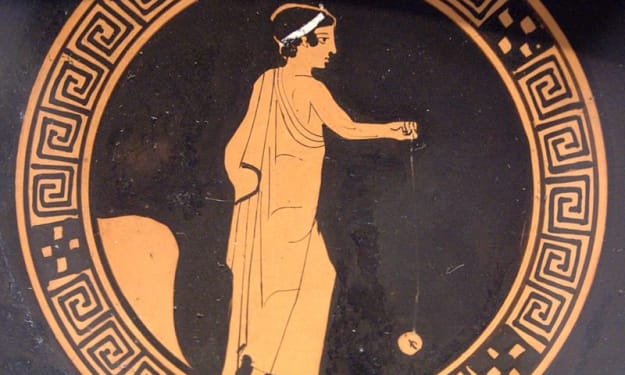
The yoyo has been around for centuries, and it is a pastime that has been enjoyed by people of all ages. From young children to experienced adults, the yoyo can be a fun and challenging toy to master. With simple tricks and complex maneuvers, the yoyo is a classic toy that has been enjoyed for generations. Whether you are just starting out or an experienced pro, there is something for everyone when it comes to yoyo.
By Ziain Morales3 years ago in History
The Revolutionary Legacy of Dr. Jose Rizal
This article will explore the life and legacy of Dr. Jose Rizal, a renowned Filipino nationalist, writer, and philosopher who is widely considered the national hero of the Philippines. Dr. Rizal was a key figure in the Philippine Revolution, a nationwide uprising to end Spanish colonial rule in the late 19th century. His writings, which helped to galvanize the Filipino people in pursuit of independence, have been translated into numerous languages and are still widely studied and discussed today. In addition to his writings, Dr. Rizal was also a medical doctor, a polymath, and a passionate advocate for human rights. This article will explore the life of Dr. Rizal and his impact on the Philippine nation.
By Ziain Morales3 years ago in History