
Power, Protection, and the Limits of Liberal Ideology
What the Epstein Case Reveals About the System That Was Supposed to Prevent It

The Epstein saga didn’t happen in a vacuum. It happened inside a specific ideological architecture — one built on liberal principles of individual freedom, institutional trust, legal process, and market logic. Understanding how that architecture both enabled the abuse and is now struggling to reckon with it tells us something important about liberalism itself: its genuine achievements, and its profound blind spots.
What Liberalism Got Right — And Why It Matters
To be fair, the values liberalism champions are the same ones that ultimately brought Epstein’s network into the light. Freedom of the press allowed journalists to keep investigating when prosecutors had gone quiet. Civil liberties protections gave survivors legal standing to fight back in court. Democratic accountability — however slow and imperfect — eventually produced legislation like the Courtney Wild Act. The rule of law, at its best, is what forced the document releases that are now reshaping how we understand institutional corruption.
These are not small things. Without them, the story never gets told at all.
But the Epstein case also shows, in uncomfortable detail, what happens when liberalism’s weaknesses are exploited by people with enough money and connections to turn the system against the very people it was designed to protect.
When Individual Rights Become a Shield for the Powerful
Liberalism’s foundational commitment is to the individual — their rights, their autonomy, their protection from state overreach. That principle has genuine moral weight. But the Epstein files revealed what happens when that principle is weaponized.
Non-prosecution agreements, privacy protections, attorney-client privilege, financial confidentiality — every one of these is a legitimate liberal safeguard. And every one of them was used, systematically, to insulate a trafficking network from accountability for two decades. The same legal architecture designed to protect the vulnerable was deployed, at enormous expense, to protect the predator.
Liberal legal systems tend to treat rights as neutral tools. The Epstein case is a masterclass in why they are not. In the hands of those with wealth and access, individual rights can function as weapons of impunity.
The Market Didn’t Self-Correct — It Participated
One of liberalism’s core economic assumptions is that markets, over time, tend to punish bad behavior. Reputation matters. Bad actors eventually face consequences. The Epstein files destroyed that argument in real time.
Banks processed suspicious transactions. Law firms structured agreements they knew were designed to silence victims. Travel agencies, financial institutions, and corporate networks all interfaced with Epstein’s operation in ways that were, at minimum, willfully blind. None of them self-corrected. None of them asked the uncomfortable questions that would have cost them a valuable client.
The $200 million in estate settlements now being paid out isn’t the market correcting itself — it’s the market being forced to correct itself through litigation, legislation, and public pressure. Left alone, it had no intention of doing so.
Tolerance Without Limits Becomes Complicity
Liberalism’s commitment to tolerance is one of its most admirable qualities — and one of its most exploitable. The Epstein network survived in part because powerful institutions were deeply reluctant to investigate, accuse, or publicly challenge one of their own. That reluctance wore many liberal disguises: due process concerns, presumption of innocence, respect for privacy, fear of defamation claims.
These are all legitimate values. But applied without judgment, they function as a form of institutional paralysis — a tolerance for the intolerable dressed up in the language of fairness.
The survivors weren’t asking for anyone to abandon due process. They were asking for the process to actually apply to everyone equally. For years, it didn’t.
Universalism That Protects the Few
Liberalism presents its values as universal — equal rights, equal protection, equal access to justice. The Epstein files offer a blunt rebuttal. The legal system that processed his non-prosecution agreement is the same system that routinely hands down harsh sentences to people who cannot afford a defense team. The financial privacy laws that shielded his transactions are the same laws that ordinary people cannot afford to invoke.
Liberal universalism, in practice, has always had a price tag. And those who could pay it — Epstein chief among them — purchased a version of the system that looked nothing like what everyone else experienced.
The Freedom That Wasn’t
Liberalism prizes freedom above almost everything else. But it has historically favored a narrow definition — freedom from interference, from coercion, from the state. What it has been slower to grapple with is the kind of freedom that requires something: safety, economic security, protection from private power.
The girls and young women who entered Epstein’s orbit were, in the technical liberal sense, free. No law was holding them in place. What they lacked was the material and social protection that would have made that freedom real — stable families, economic security, institutional advocates who took them seriously. Liberalism, in its thinner forms, tends to assume those conditions exist. The Epstein case showed what happens when they don’t.
The System Is Now Repairing Itself — Slowly
The legislative and legal responses emerging in 2026 are genuinely encouraging. Victim notification requirements, lookback windows for trafficking survivors, new accountability standards for institutions that facilitated abuse — these are meaningful reforms. And notably, they are being built within liberal democratic frameworks, not in opposition to them.
That matters. It suggests liberalism retains the capacity for self-correction — but only when survivors, journalists, and advocates force it to confront what it would prefer to ignore.
The Lesson
The Epstein files are not an argument against liberal democracy. They are an argument against its complacency. A system that genuinely believed in equality before the law, in the protection of the vulnerable, in institutional accountability — that system should have caught this far sooner.
The question 2026 is forcing institutions to answer isn’t whether liberal values are worth defending. It’s whether those values were ever being applied as universally as the ideology claimed. The survivors already knew the answer. The documents simply made it impossible to deny.
About the Creator
Keep reading
More stories from noor ul amin and writers in Humans and other communities.
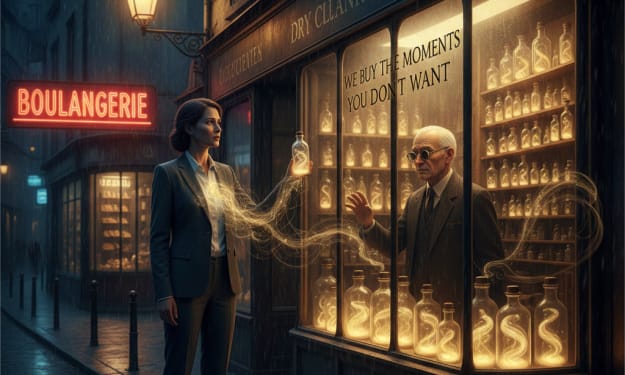
The Woman Who Sold Her Seconds
The shop was tucked between a baker smelling of burnt sugar and a dry cleaner that hissed steam onto the sidewalk. It was a narrow, unassuming slice of architecture, recognizable only by the faint, rhythmic thrumming that seeped through the brickwork—a sound like a thousand heartbeats out of sync. There was no neon sign, only a gold-leaf inscription on the glass: WE BUY THE MOMENTS YOU DON’T WANT.
By noor ul amin12 days ago in Humans
At My Wits’ End
Life is about taking out the trash and calling it trash because you have every reason to. It wasn't meant to be linear, they say. But the times you tried to make it straight led to problems, and you didn’t have the tools to put any of it to use. You don't put your right shoes on the right feet; you put the left shoes on the left feet. The grey hardened slab will trip you up anyway.
By Caitlin Charlton3 days ago in Humans
Humor That Harms
Laughter can be a bridge. It can loosen tension, reframe pain, and make strangers feel like friends. But not all laughter is the same. When amusement depends on insulting, degrading, or humiliating another person, it is not a bridge — it is a weapon disguised as play. This article explores why insult‑based humor and contemptuous sarcasm are not true humor in the humane, connective sense; how psychological research and social studies explain their effects; and what individuals and communities can do to keep laughter from becoming harm.
By Julie O'Hara - Author, Poet and Spiritual Warriora day ago in Humans



Comments
There are no comments for this story
Be the first to respond and start the conversation.