art
The best relationship art depicts the highs and lows of the authentic couple.
I Achieved Everything I Wanted at 30, and I Have Never Been More Miserable
The champagne in my glass cost more than my first car. I was standing on the balcony of my penthouse apartment, overlooking the city skyline. The lights below looked like scattered diamonds. Inside, my colleagues were celebrating my promotion. I had just been named the youngest partner in the firm’s history. I was thirty years old. I was debt-free. I drove a German car. I wore an Italian suit. By every metric of the modern world, I had won the game. People looked at me with envy. My LinkedIn inbox was full of congratulations. My parents were proud. So why was the only thought in my head: “Is this it?” For the last ten years, I have been running a marathon. I bought into the "Hustle Culture" completely. I woke up at 5 a.m. I listened to motivational podcasts that told me sleep was for the weak. I worked weekends. I missed birthdays. I missed weddings. I missed the last years of my grandmother’s life because I was "too busy building my empire." I treated happiness like a level in a video game. I told myself: “I’ll be happy when I get that degree.” “I’ll be happy when I get the six-figure salary.” “I’ll be happy when I buy this house.” I hit every target. I unlocked every achievement. But the happiness never arrived. Instead, I found something else waiting for me at the top: Silence. The silence of an empty apartment because I didn’t have time to date. The silence of a phone that only rings for work, because my friends stopped calling years ago after I cancelled on them for the tenth time. The silence of my own mind, which has forgotten how to relax without feeling guilty. I realized standing on that balcony that night that I had become a human doing, not a human being. We are taught that money buys freedom. But for me, it bought golden handcuffs. The more I earned, the more I spent, and the more trapped I felt to maintain this lifestyle. I wasn’t working to live anymore; I was living to work. The anxiety was physical. It felt like a tight band around my chest that never loosened. I had developed a chronic fear of stillness. If I wasn't being "productive," I felt worthless. I couldn't watch a movie without checking emails. I couldn't take a walk without listening to a business audiobook. I had optimized my life so much that I had optimized the joy right out of it. Two weeks after that party, I had a panic attack in the elevator. My body simply said, “Enough.” I ended up in a doctor’s office, wearing my expensive suit, shaking uncontrollably. The doctor asked me a simple question: “What do you do for fun?” I stared at him blankly. The question felt like a riddle in a foreign language. Fun? I didn't have hobbies. I had goals. I didn't have pastimes. I had side hustles. That was the breaking point. I haven't quit my job yet—I’m not reckless. But I have started to dismantle the life I built. I sold the flashy car. I stopped working on weekends. I reached out to an old friend and apologized for being absent. We grabbed coffee. It was a cheap, $3 coffee in a paper cup. We sat on a park bench and talked about nothing important for an hour. And for the first time in a decade, I felt a spark of something real. I am writing this for anyone who is currently grinding themselves into dust chasing a future version of happiness. Stop. There is no finish line. There is no magical gate you walk through where everything suddenly feels perfect. If you cannot find peace in a small apartment, you will not find it in a penthouse. If you cannot be happy with a cheap coffee, you won't be happy with expensive champagne. Don't sacrifice your today for a tomorrow that might not feel the way you expect. Success is not the number in your bank account. Success is having someone to share a meal with. Success is sleeping without a pill. Success is liking the person you see in the mirror, not just the title on your business card. I am rich, yes. But I am just now starting to learn how to be wealthy.
By Noman Afridi2 months ago in Humans
The Day I Realized I Was the Villain in My Own Love Story
She didn’t slam the door when she left. There was no screaming, no throwing of vases, no dramatic exit like you see in the movies. There was just silence. The kind of heavy, suffocating silence that rings in your ears long after the person is gone. She simply packed her bag, looked at me with eyes that were no longer angry—just tired—and walked out. At the time, I told myself she was the problem. “She gave up on us,” I thought. “She didn’t try hard enough. She didn’t understand my love.” I played the role of the heartbroken victim perfectly. I told my friends how much I had done for her. I told them how I protected her, how I worried about her, how I just wanted to know where she was because I cared. My friends nodded and bought me drinks, agreeing that I deserved better. But deep down, in the quiet corners of my mind where the lies couldn't reach, a small voice whispered the truth. It took me three months to finally listen to it. The realization didn’t hit me all at once. It happened on a Tuesday night. I was scrolling through our old text messages, looking for evidence to fuel my anger, looking for proof that she was the one who was unreasonable. I started reading from a year ago. Me: “Where are you? You said you’d be home by 6.” Her: “I’m just grabbing coffee with Sarah. I’ll be late.” Me: “You prioritize Sarah over me? Fine. Do whatever you want.” I scrolled down. Me: “I don’t like that dress. It’s too revealing. People will stare.” Her: “But I feel pretty in it.” Me: “If you loved me, you’d care about how I feel. Change it.” My thumb hovered over the screen. My breath hitched. I wasn't reading the messages of a loving partner. I was reading the words of a jailer. I had disguised my insecurity as "protection." I had masked my control as "concern." I had framed my jealousy as "passion." For years, I believed that love meant possession. I thought that if I held onto her tight enough, she would never leave. I didn't realize that I was squeezing the life out of the relationship. I was suffocating the very thing I was trying to save. I remembered the look on her face during our last anniversary dinner. She wasn't smiling. She looked like she was walking on eggshells, afraid that one wrong word would set off my mood. I had created that fear. That night, the victim narrative I had built for myself crumbled. I sat on the floor of my empty apartment and wept. Not because I missed her—though I did, terribly—but because I was ashamed of the man I had become. I realized that being "toxic" isn't always about shouting or abuse. Sometimes, it’s quiet. It’s the constant need for validation. It’s making the other person feel guilty for having a life outside of you. It’s gaslighting them into believing their feelings are invalid. I was the toxic one. Admitting this was the hardest thing I have ever done. It is easy to blame the one who leaves. It is excruciatingly painful to look in the mirror and admit that you are the reason they had to go. I didn't try to win her back. That would have been selfish. She deserved the peace she found away from me. Instead, I went to therapy. I started unpacking the baggage I had been carrying since childhood—the fear of abandonment that fueled my controlling behavior. I learned that love is not a cage. Love is freedom. Love is trusting someone enough to let them be themselves, even when you are not in the room. I am writing this not to ask for forgiveness, but to offer a warning. Check yourself. Look at how you speak to the people you love when you are angry. Are you protecting them, or are you protecting your own ego? It is too late for me to save that relationship. She is gone, and she is happy. And strangely, that makes me happy too. But for the first time in my life, I am working on the most important relationship of all: the one with myself. I am learning to be a man who doesn't need to control someone else to feel safe. I was the villain in my own love story. But the good thing about stories is that as long as you are still breathing, you can write a new chapter. And this chapter starts with the truth.
By Noman Afridi2 months ago in Humans
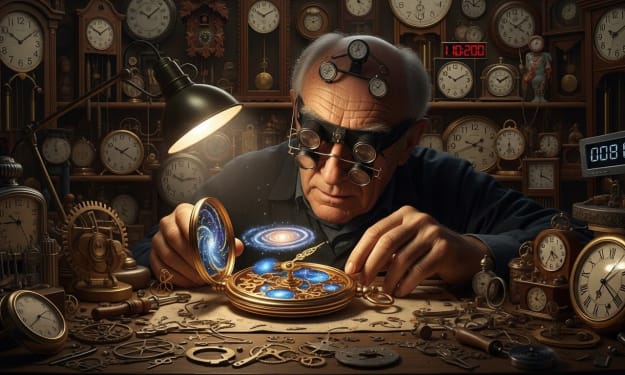
The Silent Forces Of Leadership. AI-Generated.
The Human Element in Organizational Success If you look at almost any organization from the outside, the picture seems straightforward. There is a strategy, an organogram, a set of processes, some KPIs, and a collection of digital tools meant to keep everything under control. We talk about “systems” and “structures” as if they are the real heart of the institution. Yet anyone who has spent time inside a company, a government department, or a non-profit knows that the real story is much messier and much more human. The same structure can produce very different results depending on who is in the room, how they relate to each other, and what is happening inside their minds. The same policy can feel inspiring in one team and oppressive in another. The same technology can either empower people or quietly exhaust them. Underneath every chart and system, human psychology is quietly writing the script.
By Sayed Zewayed2 months ago in Humans
The Weight of Reality: The Trade-Off Illusion
1. Every Solution Costs Something There is no such thing as a perfect solution. Every answer creates a new question, and every gain requires a loss. The idea that we can have everything without giving something up is one of the greatest lies of modern culture. Real progress demands trade-offs. Something must be sacrificed for something else to exist.
By Peter Thwing - Host of the FST Podcast2 months ago in Humans
Jon Dore, Comedian & Class Act
Jon Dore is a celebrated comic and actor with a career that reaches beyond his Canadian roots. Recently, he appeared on The Tom Henry Show to discuss showbiz, family, side tables, Alice in Wonderland Syndrome and standup comedy micro-aggressions (among other topics).
By Marie Wilson2 months ago in Humans
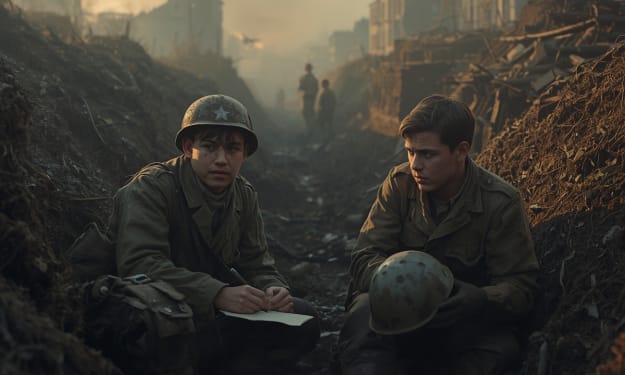
The Last Promise
A World War Story of Two Friends The winter of 1944 was colder than any soldier had ever known. Snow mixed with ashes, and every breath carried the taste of fear. Deep in the muddy trenches of France sat two young soldiers — Arvin Hale, just 19, and Jonas Reed, 20. They had left their homes with dreams, pride, and the belief that the war would end quickly. But the battlefield taught them otherwise.
By Wings of Time 2 months ago in Humans
The Weight of Reality: The Myth of Fairness
1. Fairness Is a Human Fiction Fairness is not a natural law. It is a social illusion created by people who wish to avoid the pain of consequence. Nature operates on cause and effect, not comfort. A storm does not pause for equality. Gravity does not check whether the fall was fair. The universe is perfectly just in one sense only: every action brings a reaction. Fairness, however, is not justice. It is an emotional ideal built by those who want consequence without cost.
By Peter Thwing - Host of the FST Podcast2 months ago in Humans
The One Who Felt Like Home
Some loves don’t end. They sink into your bones, settle into your breath, and live quietly inside you long after the world thinks you should have moved on. You can try to be practical, try to distract yourself, try to fill your days, but the heart has its own memory, its own gravity, its own truth.
By Karen Sanderson2 months ago in Humans