celebrities
It can be hard to keep up with celebrity relationship low-down, but we certainly try.
Lindsey Vonn’s Last Olympic Descent: Why She Said She’d “Already Won” Before the Crash That Shook Milano Cortina 2026
When Lindsey Vonn clicked into her skis at the top of the mountain in Cortina d’Ampezzo, the moment felt less like the start of a race and more like the closing chapter of an epic novel. Snow dusted the peaks like punctuation marks, the crowd buzzed with expectation, and history waited downhill. Just 13 seconds later, it all unraveled.
By Omasanjuwa Ogharandukunabout 4 hours ago in Humans
Beyond Epstein
I didn’t know how to stop watching the news. It started as a quick scroll—just a check-in, like I was being responsible. Then it became a kind of hunger. A need to see the latest twist, the latest headline, the latest detail that made my stomach twist into knots.
By John Smithabout 23 hours ago in Humans
Celebrity Deaths of 2026 And Why the World Is Paying Attention, Remembering, and Reflecting
Some news stops you mid-scroll. Not because it’s shocking—but because it feels personal. In 2026, an ongoing list of celebrity deaths has continued to trend across Google searches, news platforms, and social media timelines worldwide. Each announcement ripples through the internet like a sudden hush in a crowded room. Fans pause. Tributes appear. Old interviews resurface. Songs, films, and performances are replayed as if memory itself is pressing rewind.
By Omasanjuwa Ogharandukuna day ago in Humans
Jim Carrey: The Man Behind the Laughter. AI-Generated.
Jim Carrey is widely recognized as one of the most energetic and distinctive performers in modern entertainment. Known for his elastic facial expressions, fearless physical comedy, and unexpected dramatic depth, Carrey has carved a unique space in Hollywood. Yet beyond the laughter and fame lies a story of persistence, creativity, and personal evolution that makes his journey just as compelling as his performances.
By Sadaqat Ali2 days ago in Humans
Jim Carrey and the Quiet Cost of Making the World Laugh
There are faces we grow up with. Faces that feel familiar even if we have never met the person behind them. Jim Carrey is one of those faces. His smile is loud. His energy feels endless. For many of us, he was our first lesson in joy, absurdity, and fearless laughter.
By Muqadas khan2 days ago in Humans
Carolyn Mackenzie: Age, Salary, Net Worth, Husband, Biography, Children & More. AI-Generated.
Carolyn Mackenzie is one of Canada’s most beloved television journalists, best known as the co-host of The Morning Show on Global News. With a career spanning more than two decades, Carolyn has built a reputation for her professionalism, warmth, and dedication to delivering news that matters.
By Enoch Sagini2 days ago in Humans
Farah Nasser: Husband, Age, Biography, Career, Illness, Net Worth & More. AI-Generated.
Farah Nasser is one of Canada’s most respected journalists and news anchors. With her warm personality, sharp intellect, and decades of experience in broadcast journalism, she has become a familiar face to millions of Canadians.
By Enoch Sagini2 days ago in Humans
Sandie Rinaldo: Husband, Salary, Net Worth, Health, Children, Biography, Career & More. AI-Generated.
Veteran journalist Sandie Rinaldo has been a familiar face on Canadian television for more than five decades. As the first woman in Canada to anchor a national weekday newscast, Rinaldo has paved the way for generations of female journalists.
By Enoch Sagini2 days ago in Humans
Alexander the Great — Part 4: Death, Division, and an Immortal Legacy
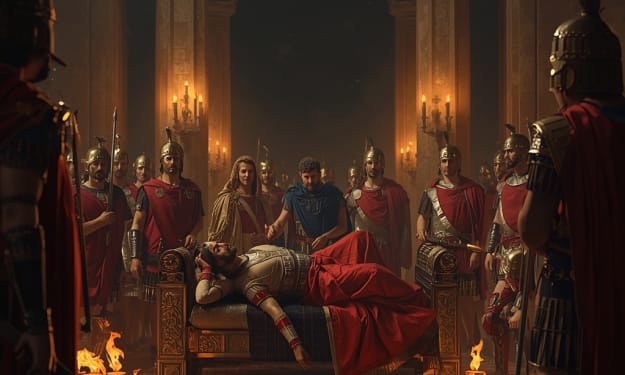
Babylon had become Alexander’s administrative center and was intended to be the capital of his vast empire. The city was strategically located and symbolized the blending of Eastern and Western cultures — a key vision for Alexander. He planned new military campaigns, including a possible invasion of Arabia, and began organizing naval expeditions. However, after days of heavy drinking and planning, Alexander suddenly fell ill. Ancient sources describe him suffering from fever, weakness, and the gradual loss of speech. Within roughly ten days, he died. The exact cause of Alexander’s death remains one of history’s great mysteries. Some historians suggest malaria, typhoid fever, or another disease common in the region. Others believe complications from old battle wounds and exhaustion contributed to his decline. There have also been theories of poisoning, though evidence remains inconclusive. Whatever the cause, the sudden loss of such a powerful ruler left a massive empire without clear leadership. Alexander had not named a definitive successor. When asked on his deathbed who should inherit the empire, he reportedly said, “To the strongest.” Whether this statement is accurate or not, it reflected the reality that followed. His generals, known as the Diadochi, began competing for control. At first, they attempted to maintain unity by ruling in the name of Alexander’s unborn son and his half-brother, but tensions quickly escalated into open conflict. The Wars of the Diadochi lasted for decades. Former allies turned against each other, carving the empire into separate kingdoms. Ptolemy took control of Egypt and established a dynasty that would rule for nearly three centuries. Seleucus gained vast territories in the east, forming the Seleucid Empire. Antigonus and his descendants controlled parts of Asia Minor and Greece. Instead of a single unified empire, Alexander’s conquests transformed into a network of Hellenistic states. Despite political fragmentation, Alexander’s cultural influence continued to grow. His campaigns had spread Greek language, art, and philosophy across Asia and the Middle East. This fusion of Greek and local traditions created what historians call the Hellenistic world. Cities founded by Alexander, especially Alexandria in Egypt, became centers of learning and innovation. The Library of Alexandria housed thousands of scrolls and attracted scholars from across the known world. Advances in science, mathematics, astronomy, and medicine flourished during this period. Alexander’s leadership style also left a lasting impact. He encouraged cultural integration, adopting aspects of Persian dress and customs and promoting marriages between his soldiers and local populations. Though some of his Macedonian troops resisted these policies, they contributed to the blending of cultures that defined the Hellenistic age. Trade routes expanded, connecting Mediterranean markets with those in India and Central Asia. Ideas and technologies traveled along these routes, shaping civilizations for centuries. Over time, Alexander became more than a historical figure; he became a legend. Stories about his life were retold in many cultures, each adding its own interpretations. In Greek and Roman traditions, he was portrayed as a heroic conqueror and brilliant strategist. In Persian and Middle Eastern tales, he appeared as a complex ruler, sometimes wise and sometimes destructive. In South Asian folklore, he was remembered as a powerful but distant invader. These varied portrayals demonstrate how deeply his story resonated across different societies. Historians continue to debate Alexander’s character. Some view him as a visionary who sought to unite diverse peoples under a shared culture. Others see him as an ambitious conqueror driven by personal glory. He could be generous and respectful toward defeated enemies, as seen with King Porus, but also ruthless when facing resistance. His execution of close companions, such as the general Parmenion, and his increasing demand for divine honors reveal the pressures and changes he experienced as his empire grew. What is certain is that Alexander transformed the ancient world in an extraordinarily short time. In little more than a decade, he dismantled one of the largest empires in history and replaced it with a new cultural and political landscape. His campaigns opened routes for trade and communication between East and West, influencing the spread of ideas that would shape future civilizations. Even the rise of the Roman Empire was indirectly influenced by the Hellenistic states that emerged from Alexander’s conquests. Alexander’s tomb itself became part of the mystery surrounding his legacy. After his death, his body was placed in a golden sarcophagus and eventually transported to Egypt. It was displayed in Alexandria, where later rulers and visitors reportedly paid their respects. Over time, however, the exact location of his tomb was lost. Despite numerous searches, it has never been definitively found, adding another layer to the legend of the man who conquered so much yet left behind unanswered questions. Part 4 of Alexander’s story shows that while his life ended abruptly, his influence did not. His empire fractured, but his vision of cultural connection endured. He remains a symbol of ambition, leadership, and the complexities of power. Alexander the Great’s journey from a young Macedonian prince to the ruler of a vast empire continues to inspire fascination. His story is not only about conquest but also about the spread of ideas, the blending of cultures, and the enduring impact one individual can have on the course of history.
By Say the truth 2 days ago in Humans
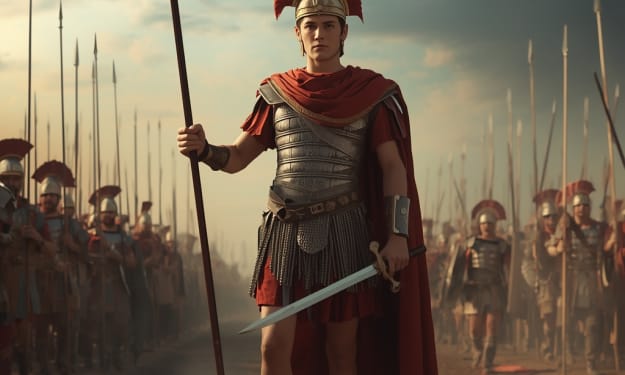
Alexander the Great – Part 2: From Young King to Conqueror of Empires. AI-Generated.
The Assassination of Philip II and a Sudden Rise to Power Alexander’s path to the throne began dramatically. His father, King Philip II, was assassinated during a royal celebration. The circumstances remain mysterious, but the effect was immediate: a young prince suddenly inherited a powerful yet unstable kingdom. Macedonia had grown strong under Philip’s leadership, but many Greek city-states still resented Macedonian dominance. Some leaders believed that with Philip gone, they could break free from Macedonian control.
By Say the truth 3 days ago in Humans
Kevin Newman: Wife, Career, Biography, Age, Net Worth & More. AI-Generated.
Kevin Newman is a renowned Canadian journalist, television anchor, and news executive whose career has spanned over four decades. From hosting some of the country’s most respected news programs to winning prestigious journalism awards, Newman has become a trusted voice in Canadian media.
By Enoch Sagini3 days ago in Humans