science
The Science Behind Relationships; Humans Media explores the basis of our attraction, contempt, why we do what we do and to whom we do it.
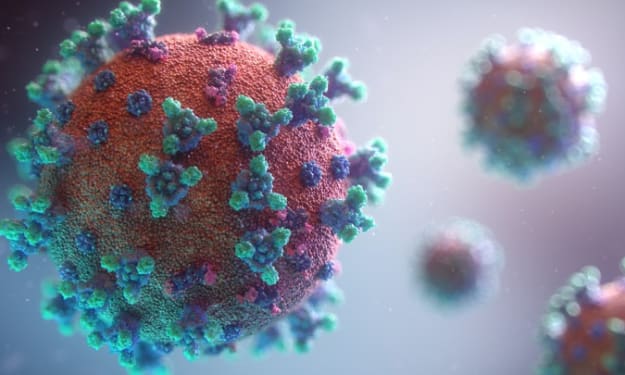
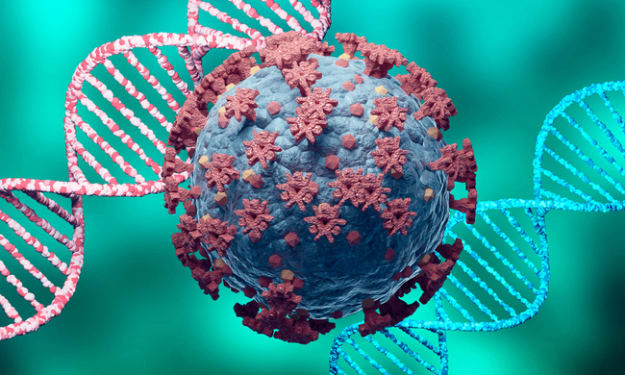
HOW TO OVERCOME FROM COVID-19
This article was solely composed for The European Sting by Ms. Patrycja Jelonek, a 21 year-old clinical understudy at Medical University in Łódź, Poland. She is subsidiary with the International Federation of Medical Students Associations (IFMSA), cheerful accomplice of The Sting. The feelings communicated in this piece have a place rigorously with the author and don't really mirror IFMSA's view on the subject, nor The European Sting's one.
By RONO SARKAR4 years ago in Humans
Psychology
"Expect the troublesome by dealing with the simple." - Lao Tzu There's no question the pandemic has changed the manner in which we work and live. Many individuals who have never telecommuted wound up figuring out how to adjust to the "new typical" of not being in the workplace. That took gigantic changing. Today, numerous businesses are expecting workers to return to their office low maintenance or full-time. This progress has naturally made huge pressure and nervousness about returning to the working environment, as we've been in a persistent condition of progress and vulnerability for almost two years.
By Sonu Imambhai4 years ago in Humans
COVID-19 patients had higher evidence of brain damage than Alzheimer's disease sufferers. COVID-19 patients had higher evidence of brain damage than Alzheimer's disease sufferers.
Is it possible that COVID-19 is causing greater damage to the human brain than Alzheimer's disease? According to a new study, older COVID patients show higher evidence of brain damage than persons who do not get the neurodegenerative illness.
By Prasad Madusanka Herath4 years ago in Humans
When Caregiving Turns Deadly
The past two years had been rough to say the least. Her husband's dementia seemed to develop overnight. This man who was once a president of a large corporation couldn't speak coherent sentences and hid things everywhere. He had trouble remembering who people were and often became paranoid. It was like she had to take care of a lost child. Eventually, she and her children decided it would be best to put her husband in a memory care facility. Now he could be adequately cared for and she didn't have to stress over constantly watching him. She would have more time to take care of herself.
By Grace Yuergens4 years ago in Humans
Hurricanes and Blizzards
There are uncanny parallels between the weather reporting of impending hurricanes and impending blizzards. I lived in New England for my entire life, until I moved to South Florida 14 years ago. I thought it was only Hardy New England reporters who stood out in the worst nature had to offer, bundled up in knitted caps that covered all but the mouth needed to speak into a microphone, to tell us what our eyes could clearly see - It was snowing - hard.
By Joan Gershman4 years ago in Humans
Engineering point of view to quantify toxic behavior
I am an engineer by trade, but that came much later in life. Having taken the Briggs-Meyers test many times, I was an INTJ until having my own ‘awakening’ Jan 2011. Answering the questions as honestly as before, the results came out ESFJ. I do feel that the logical ‘stuff’ and ordered thoughts are still there; but the creativity that has come in the past 10 years has shaped the logic differently. I also found myself alone a LOT, and had a lot of work to do on myself. The beginning of this journey started with dating a toxic, abusive person. Releasing that relationship came with torturous, ruminating thoughts. Being the logical person, I had no idea the calculating, manipulative ways I was being deconstructed and exploited. Oh those weaknesses were there from the start of my creation pretty much; just took an ‘expert’ to find the cracks and blow them into canyons.
By William Willet4 years ago in Humans
Vessels
Death was approaching. Greenish-blue blood painted the remains of the sleek, triangular shaped aircraft. It was a tedious voyage through the infinite sea to escape the others. Death would have been a merciful punishment compared to the awaiting punishment. The others have no understanding of concepts such as love or mercy; just power. The others can only assume that I should have died upon impact and the self destruct sequence would eradicate all evidence of my existence. Even with the slim chance of survival upon impact, the others knew I would die soon. Several severed tentacles were scattered in the debris. I needed to get away from the aircraft before the explosion, but the slightest movement sent intense waves of pain through my small frame. The surrounding area was densely populated with tall trees and plentiful wildlife. I assumed I was in the mountains. Despite the slim chance of survival, a faint flicker of fire was noticeable in the distance indicating that against all odds, I could somehow survive. Humans were nearby and one unfortunate being would aid in my survival. Despite the darkness of the warm night, I could see clearly from this distance, the shadows of humans dancing around the flames. Even though my small octopus like body was about the size of a cup holder, I was genetically superior to any other species in the galaxy. We could survive in nearly any climate for extended periods of time, see in the dark, and we're significantly more intelligent than any other species. However, these features meant nothing to the others.
By Patrick Foster4 years ago in Humans