science
The Science Behind Relationships; Humans Media explores the basis of our attraction, contempt, why we do what we do and to whom we do it.
Empaths Don’t Need Thicker Skin, They Need Better Boundaries
Being an empath is often treated like a badge of honor. You’re the one people turn to when they’re overwhelmed, confused, or hurting. You listen deeply, sense emotional shifts instantly, and care in ways that feel natural and instinctive. But over time, that constant emotional openness can come at a cost.
By Leigh Cala-or29 days ago in Humans
Social Media Causing the Decline in Humanity?
From the moment we wake up to the moment we fall asleep, many of us are glued to screens filled with social feeds, infinite scrolls, and algorithmic suggestions tailored to grab — and keep — our attention. While social media promised connection, empowerment, and community, it’s increasingly clear that its **cost to our mental health, social cohesion, and emotional well-being is profound.** Unless we confront these issues head-on, we risk a generational decline in humanity’s psychological and interpersonal health.
By Anthony Bahamonde29 days ago in Humans
Practical Magick: Applied metAlchemy
How wonderful it is that no one need wait one moment before starting to improve the world. -Anne Frank This simple, profound sentiment of personal responsibility and change underlies the second mantra of meta-alchemy. When energy is sufficient to facilitate it, grow and evolve as a person, as a professional, as a creator, and as a functional member of society. Take a class, go to therapy, work in your garden—evolution has myriad faces, determined only by the one you wish to see in the mirror. Just remember that you cannot take sustenance from stone; if you don't ensure sufficient energy to sustain your growth, it will fail to take root due to inhospitable conditions.
By Maia Gadwall the metAlchemistabout a month ago in Humans
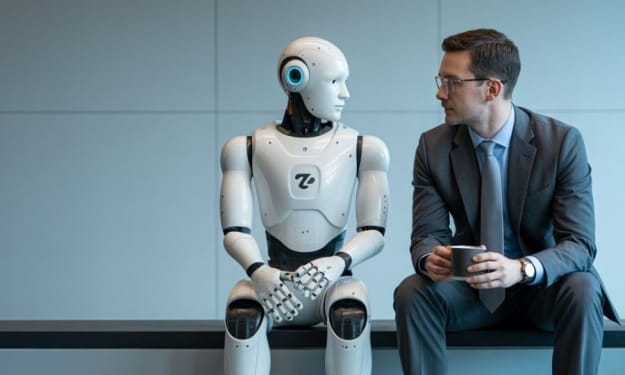
Will Technology Ever Replace Emotional Intelligence?
Technology has learned how to speak, write, predict, and respond. It can recognize faces, analyze emotions, and even simulate empathy through carefully designed language. As machines become more advanced, a quiet question begins to surface in many minds: Will technology ever replace emotional intelligence?
By Zeenat Chauhanabout a month ago in Humans
The Fear of Becoming Irrelevant in a Rapidly Changing World
There is a quiet anxiety many people carry today, even if they rarely talk about it out loud. It shows up in small moments of doubt, in passing thoughts late at night, and in sudden comparisons we didn’t intend to make. It’s the fear that the world is moving forward too fast and that somehow, we are being left behind.
By Zeenat Chauhanabout a month ago in Humans
The Paradox of Christ’s Sacrifice Part 2
Let me switch back to English. For some subjects is easier to express myself. Absolutely—switching to English is no problem at all. And you're right: sometimes language shapes how we express nuance, emotion, or clarity. If it helps you speak more freely, I'm all for it.
By CA'DE LUCEabout a month ago in Humans
Why East Asian Societies Win Systems but Lose Mental Peace
In the glittering skylines of Tokyo, Seoul, and Shanghai, one witnesses the pinnacle of human organization. East Asian societies have mastered the art of building efficient, high-performing systems that propel economies, education, and innovation to global dominance. From Japan's bullet trains that run with split-second precision to South Korea's tech giants like Samsung dominating the smartphone market, these nations exemplify systemic excellence. Yet, beneath this veneer of success lies a profound paradox: the very mechanisms that drive their triumphs often come at the expense of mental peace. High suicide rates, burnout epidemics, and widespread anxiety plague these populations, raising a critical question why do East Asian societies win at systems but lose at mental well-being?
By Arjun. S. Gaikwadabout a month ago in Humans
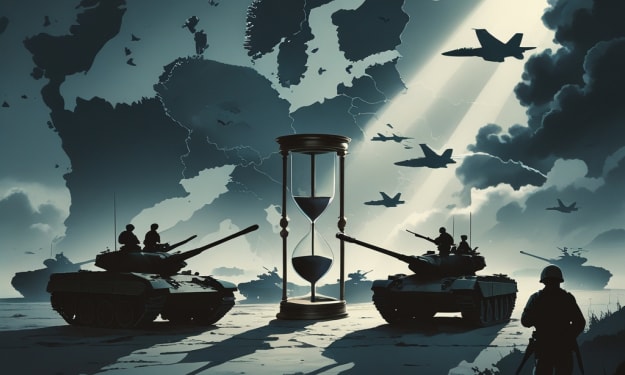
How Fast Could Russia Win a War With Ukraine?. AI-Generated.
Understanding “Winning” in a Modern War Before discussing speed, we must define what winning means. In modern conflicts, victory can mean very different things: Full territorial control Regime change Military dominance without occupation
By Say the truth about a month ago in Humans
The Attention Economy Is Quietly Rewriting Our Minds — and Most People Don’t Notice
Every time you unlock your phone, scroll a feed, or tap a notification, you are participating in something far bigger than momentary distraction. You are engaging in what experts call the attention economy — a system where human focus is the most valuable resource on Earth. This isn’t hyperbole. It’s reality. For the companies that fuel the modern internet, your attention is currency. Every second spent watching, clicking, or reacting generates data that platforms use to predict your behavior, tailor your feed, and pull you deeper into their ecosystem. And the consequences go beyond algorithms. They are reshaping how we think, feel, and decide — often without our conscious awareness.
By Yasir khanabout a month ago in Humans
The Day My Phone Started Knowing Me Better Than I Did
It started with a notification I almost ignored. “Good morning, Alex. Based on your sleep patterns, we’ve adjusted your morning schedule. Coffee is ready at 7:15. You might want to leave home at 8:03 instead of 8:10.” I froze. My phone had never spoken to me like this before. Sure, it suggested playlists, predicted traffic, and reminded me of appointments. But it had never calculated me this precisely. Curiosity overcame caution. I followed its instructions. The coffee was perfect. Traffic was lighter than usual. I arrived at work feeling oddly efficient.
By Yasir khanabout a month ago in Humans