vintage
Vintage content about relationships, unions and romances past.
Alexander the Great — Part 4: Death, Division, and an Immortal Legacy
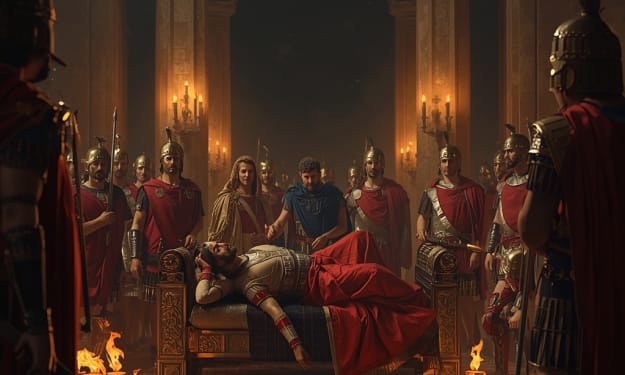
Babylon had become Alexander’s administrative center and was intended to be the capital of his vast empire. The city was strategically located and symbolized the blending of Eastern and Western cultures — a key vision for Alexander. He planned new military campaigns, including a possible invasion of Arabia, and began organizing naval expeditions. However, after days of heavy drinking and planning, Alexander suddenly fell ill. Ancient sources describe him suffering from fever, weakness, and the gradual loss of speech. Within roughly ten days, he died. The exact cause of Alexander’s death remains one of history’s great mysteries. Some historians suggest malaria, typhoid fever, or another disease common in the region. Others believe complications from old battle wounds and exhaustion contributed to his decline. There have also been theories of poisoning, though evidence remains inconclusive. Whatever the cause, the sudden loss of such a powerful ruler left a massive empire without clear leadership. Alexander had not named a definitive successor. When asked on his deathbed who should inherit the empire, he reportedly said, “To the strongest.” Whether this statement is accurate or not, it reflected the reality that followed. His generals, known as the Diadochi, began competing for control. At first, they attempted to maintain unity by ruling in the name of Alexander’s unborn son and his half-brother, but tensions quickly escalated into open conflict. The Wars of the Diadochi lasted for decades. Former allies turned against each other, carving the empire into separate kingdoms. Ptolemy took control of Egypt and established a dynasty that would rule for nearly three centuries. Seleucus gained vast territories in the east, forming the Seleucid Empire. Antigonus and his descendants controlled parts of Asia Minor and Greece. Instead of a single unified empire, Alexander’s conquests transformed into a network of Hellenistic states. Despite political fragmentation, Alexander’s cultural influence continued to grow. His campaigns had spread Greek language, art, and philosophy across Asia and the Middle East. This fusion of Greek and local traditions created what historians call the Hellenistic world. Cities founded by Alexander, especially Alexandria in Egypt, became centers of learning and innovation. The Library of Alexandria housed thousands of scrolls and attracted scholars from across the known world. Advances in science, mathematics, astronomy, and medicine flourished during this period. Alexander’s leadership style also left a lasting impact. He encouraged cultural integration, adopting aspects of Persian dress and customs and promoting marriages between his soldiers and local populations. Though some of his Macedonian troops resisted these policies, they contributed to the blending of cultures that defined the Hellenistic age. Trade routes expanded, connecting Mediterranean markets with those in India and Central Asia. Ideas and technologies traveled along these routes, shaping civilizations for centuries. Over time, Alexander became more than a historical figure; he became a legend. Stories about his life were retold in many cultures, each adding its own interpretations. In Greek and Roman traditions, he was portrayed as a heroic conqueror and brilliant strategist. In Persian and Middle Eastern tales, he appeared as a complex ruler, sometimes wise and sometimes destructive. In South Asian folklore, he was remembered as a powerful but distant invader. These varied portrayals demonstrate how deeply his story resonated across different societies. Historians continue to debate Alexander’s character. Some view him as a visionary who sought to unite diverse peoples under a shared culture. Others see him as an ambitious conqueror driven by personal glory. He could be generous and respectful toward defeated enemies, as seen with King Porus, but also ruthless when facing resistance. His execution of close companions, such as the general Parmenion, and his increasing demand for divine honors reveal the pressures and changes he experienced as his empire grew. What is certain is that Alexander transformed the ancient world in an extraordinarily short time. In little more than a decade, he dismantled one of the largest empires in history and replaced it with a new cultural and political landscape. His campaigns opened routes for trade and communication between East and West, influencing the spread of ideas that would shape future civilizations. Even the rise of the Roman Empire was indirectly influenced by the Hellenistic states that emerged from Alexander’s conquests. Alexander’s tomb itself became part of the mystery surrounding his legacy. After his death, his body was placed in a golden sarcophagus and eventually transported to Egypt. It was displayed in Alexandria, where later rulers and visitors reportedly paid their respects. Over time, however, the exact location of his tomb was lost. Despite numerous searches, it has never been definitively found, adding another layer to the legend of the man who conquered so much yet left behind unanswered questions. Part 4 of Alexander’s story shows that while his life ended abruptly, his influence did not. His empire fractured, but his vision of cultural connection endured. He remains a symbol of ambition, leadership, and the complexities of power. Alexander the Great’s journey from a young Macedonian prince to the ruler of a vast empire continues to inspire fascination. His story is not only about conquest but also about the spread of ideas, the blending of cultures, and the enduring impact one individual can have on the course of history.
By Say the truth 2 days ago in Humans
Speaking to Time Instead of the Room
Much of modern communication is oriented toward immediacy. Writing is framed as something meant to be consumed quickly, reacted to instantly, and replaced just as fast by whatever comes next. Under this model, the value of a piece is measured almost entirely by its initial reception. If it does not land immediately, it is treated as a failure. This assumption narrows the purpose of writing and misunderstands how meaning actually travels through time.
By Peter Thwing - Host of the FST Podcast5 days ago in Humans
Ai The New Gym Coach
Walking into a gym without a plan can feel like stepping into a maze. Rows of machines, endless workout advice online, and conflicting fitness trends make it hard to know where to start—or whether what you’re doing is actually helping. One of the biggest problems with traditional workout programs is that they assume everyone’s body responds the same way. In reality, your age, height, and weight dramatically influence how you should train. This is where artificial intelligence is redefining fitness.
By Anthony Bahamonde5 days ago in Humans
Essence, Embodiment, and Relational Reality
The Failure of Reduction and the Need for Synthesis There is a persistent failure in many modern attempts to explain what a human being is. Some frameworks reduce the person entirely to matter, insisting that identity, consciousness, morality, and meaning are nothing more than emergent properties of physical processes. Other frameworks move in the opposite direction, detaching spirit from reason and grounding belief in intuition alone, often at the cost of coherence or accountability. Both approaches fail because both misunderstand essence. One denies that essence exists at all. The other treats it as something vague and undefinable.
By Peter Thwing - Host of the FST Podcast13 days ago in Humans
A Very Wicked Man
You told me I was worth my weight in gold, a priceless diamond. Yet behind those words, the beatings I endured spoke a different truth. The comments you made cut deep, leaving me shattered. I hid my bruises from my dad, covering the pain that echoed in fractured bones. My brother would have fought you, would have killed you if he had only known.
By Marie381Uk 13 days ago in Humans
Resistance Is Not the Enemy
Iron sharpens iron. Brakes save lives. Friction preserves form. Modern culture treats resistance as failure. Anything that slows momentum is framed as obstruction, anything that introduces friction is assumed to be opposition, and anything that interrupts progress is labeled a setback. But this instinct misunderstands how both physical systems and human growth actually work. Resistance is not inherently hostile. In many cases, it is the only thing preventing collapse.
By Peter Thwing - Host of the FST Podcast13 days ago in Humans
The Refiner’s Fire Is Not the Whetstone
There is a difference between being sharpened and being transformed, and confusing the two leads to frustration when growth does not feel productive. Sharpening implies refinement of existing form. Fire implies change in composition. Both processes are uncomfortable, but they operate on different levels and for different purposes. When people expect sharpening and receive fire instead, they often assume something has gone wrong, when in reality something deeper is taking place.
By Peter Thwing - Host of the FST Podcast13 days ago in Humans