

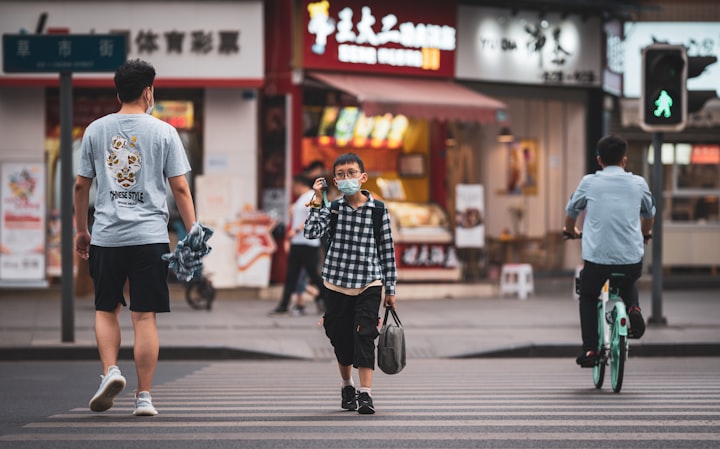
I would like to start off this article by saying that it has been two months since quarantine and isolation and I have tried to do a lot of things since then. I haven't been quaffled by a lot of things or be ever bored with my netflix binges until the second term of May, which starts with the new normal. I spend my days being cooped up indoors, sleeping early, waking up late, and put myself through shit like netflix binging, listening to less music and putting myself to an endless cycle of boredom.
I tried reading Harry Potter, I tried vlogging (Hi, guys follow my YouTube Channel), and I ordered waaay too much Mcdonalds. This is the first time in two weeks I have inspiration again to do some writing, as bad as it is, and I hava many thoughts. It started to get more depressing each day, and I get more nostalgic each day, being stuck in my childhood house, alone. I think for a long time, I convinced myself that I am okay with being alone because I have been alone for a long time in my life (aka the only child syndrome with two working parents), but truth is, sometimes I just want to be a child and be cuddled and have someone saying that I will be safe in their arms. Another thought that occured to me is death. We accepted death as part of life, somehow, and no matter how people say how long life is, death will knock on our doors when it is time for us to go. However, I am not ready to go yet, and I will keep on trying to do as much as I can, even on off-days, which is not a good mindset to be in. My mind keeps racing, and I am convinced that I am insane because I have been alone, physically, for a very long time.
I get solace from talking online with my friends. Sometimes I wish I get the chance to call them, but eventually I chickened out, because I haven't seen them for a very very long time. I got on a call with my primary friends, but I feel a sense of nostalgia with each other. I don't know, somehow I wish I got them more. It's a curse that the new normal brought, giving up the ability to talk to people face to face. A good thing came out of this though, I began talking a lot to my mother, who came on with good insight.
The new normal is a curse. Because we feel like we are stuck in a cycle, waiting for this virus to end its reign. We feel like no one, but medical officials, are doing something for it. We also feel like governments pay a lot of money for more security rather than the mental and physical well-being of their citizens. Sometimes, I marvel at how young I am, how we have these thoughts because of how fast the internet travels in our devices. Sometimes it's sad how we see people unaccepting towards each other choices. However, it's their choice to do something, but it's something else that could just bring us to hate because of the injustices we face as we grow in the world.
Thanks for reading this rant, Internet World.
If you need someone to talk to hit up my DMs on Instagram @kenisha.widya or my twitter @kenisha_widya
About the Creator
Kenisha Widya
digital creator, i think that's what i want to be called. I like to think I'm quite creative. I dabble in YouTube to edit videos, and I babble in Vocal writing about the intricate messages in my day. Search for me on YouTube and subscribe!
Keep reading
More stories from Kenisha Widya and writers in Humans and other communities.
Play Unsent Message
PRESENT It’s supposed to be a joyous day for Rayne Ahn, yet she feels void, quite overwhelmed, and maybe a tad bit exhausted from the party Holbrok Studios is throwing on her behalf. They had rented a gallery downtown—filled with the prospective clients of the studios, the actors who filled her animated storyboards with voices, friends of friends of the people who work in the studios to find themselves in a higher position and some extras—with the best catering that the city has to offer, and she is still overwhelmed by their audacity to throw her a celebration. She rather preferred to stay home in her pajamas, hugging her pillows and have a girl’s night with her two friends in her apartment as a celebration.
By Kenisha Widya6 years ago in Humans
The Angry Man in Your House
"If you grow up with an angry man in your house, there will always be an angry man in your house" This statement has caused plenty of controversy online, people say its a statement that blames victims while also undermining those who break traumatic cycles to form health relationships... but if I'm honest now that I'm in my 30s it makes more sense to me than ever, and I'd argue that its not just about fathers and uncles.
By S. A. Crawford3 days ago in Humans
Learn to Be Alone...
We often find that people are told to stop making 'X, Y and Z' their personality. Well, this only arose in the social media age as especially women's interests: reading, dramas, art etc. was heavily criticised as being 'useless'. It is historically well-documented that though many men require the work of women, whether it be through unpaid labour or entertainment, they also refuse to acknowledge it is important. This is why since it has been something of recognition, they have been complaining of a 'loneliness epidemic' now that women are withholding access.
By Annie Kapur7 days ago in Psyche


Comments
There are no comments for this story
Be the first to respond and start the conversation.