
The Quiet Damage of Always Being in a Hurry
How urgency rewires the mind and steals meaning from life

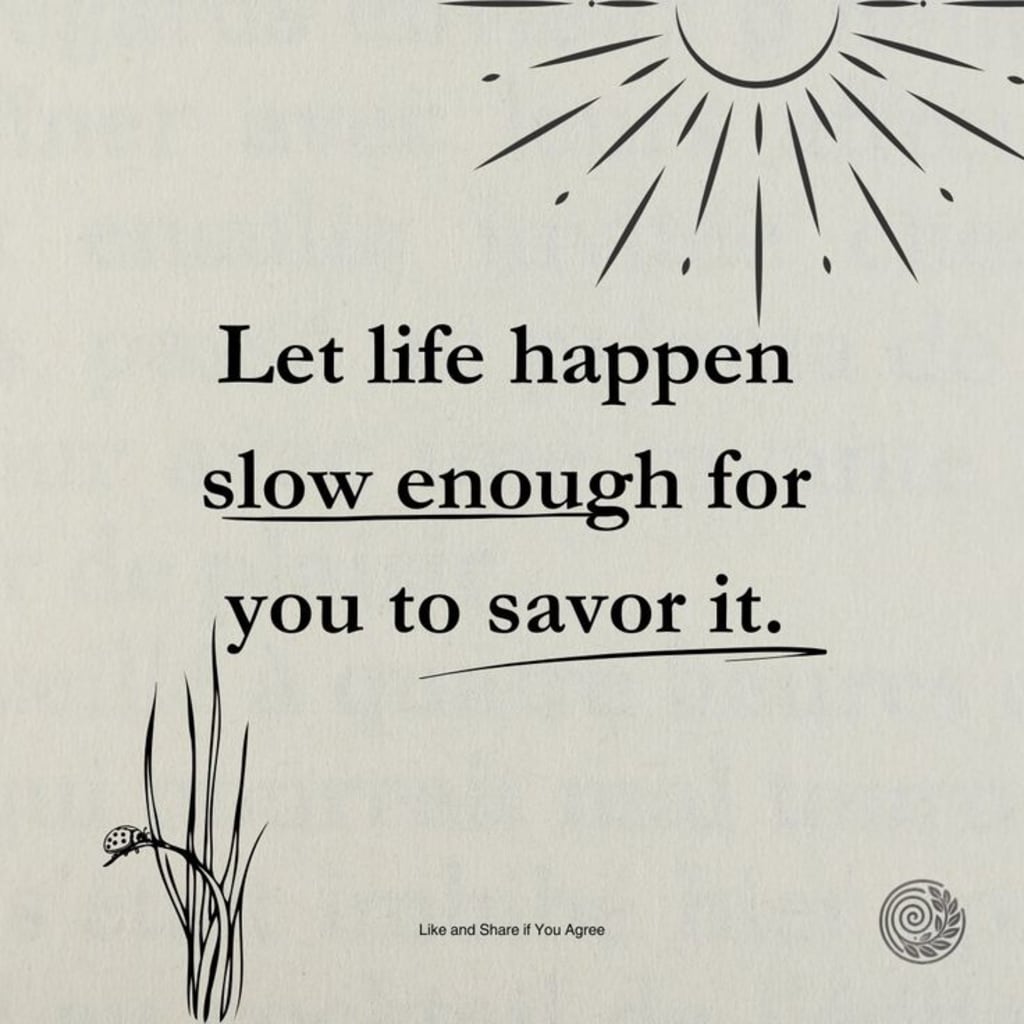
There’s a kind of pressure most people live under without questioning it.
The pressure to move faster.
To decide quicker.
To respond immediately.
To get somewhere — anywhere — as soon as possible.
Urgency has become normal. So normal that slowing down feels wrong, lazy, or irresponsible. Even rest is rushed. Even relaxation is optimized.
And yet, many people feel more anxious, disconnected, and unsatisfied than ever.
That’s not a coincidence.
Urgency changes how the mind works. When you’re always in a hurry, your nervous system stays activated. Your body stays alert. Your thoughts stay narrow. You stop experiencing life — you start chasing it.
Urgency makes everything feel important, but nothing feel meaningful.
When you rush, you skip presence. You move from one moment to the next without fully arriving anywhere. You eat without tasting. Listen without hearing. Speak without reflecting.
Life becomes a sequence of tasks instead of experiences.
This constant state of “next” slowly erodes your ability to feel grounded. You might be accomplishing things — but you don’t feel fulfilled. You’re doing more — but enjoying less.
That’s the hidden cost of urgency.
Another problem with always being in a hurry is that it distorts decision-making. Urgency favors speed over wisdom. Reaction over intention. Short-term relief over long-term clarity.
You respond just to get it over with.
You choose just to stop the discomfort of waiting.
But rushed decisions often create more problems — which then demand more urgency to fix.
It’s a loop.
Urgency also feeds anxiety. When everything feels time-sensitive, your mind interprets delay as danger. Waiting becomes uncomfortable. Silence becomes threatening. Stillness feels like failure.
You’re not relaxed — you’re suspended.
And because the nervous system never fully settles, fatigue builds up underneath the surface. You may not feel tired in an obvious way, but you feel restless, irritable, and mentally scattered.
That’s exhaustion in disguise.
There’s also an identity aspect to urgency. Many people confuse being busy with being valuable. They believe slowing down means falling behind. That if they pause, they’ll be replaced, forgotten, or left out.
So they rush — not because they need to, but because they’re afraid not to.
But here’s the truth most people discover too late: rushing doesn’t make life richer. It makes it thinner.
Patience, on the other hand, is misunderstood.
Patience isn’t passivity. It isn’t doing nothing. It isn’t giving up ambition. Patience is the ability to stay present without forcing outcomes.
It’s the ability to let things unfold without panicking.
Patience creates space — and space allows clarity.
When you slow down, you start noticing what urgency hides. Your emotions become clearer. Your intuition becomes louder. Your body relaxes. You stop reacting to every impulse.
You begin choosing instead of chasing.
Patience also restores depth. Conversations become richer. Thoughts become more layered. You allow complexity instead of rushing to conclusions.
This doesn’t make life easier — it makes it real.
One of the hardest parts of practicing patience is discomfort. Waiting brings uncertainty. It removes the illusion of control that urgency provides. You’re forced to sit with not knowing.
But that discomfort is where growth happens.
Many things in life cannot be rushed without being damaged — understanding, healing, trust, skill, maturity. Trying to speed them up doesn’t make them arrive sooner. It just makes them weaker.
A rushed mind wants results.
A patient mind builds foundations.
Another benefit of patience is emotional regulation. When you stop rushing, your nervous system learns safety. You’re not constantly signaling danger to yourself. Over time, calm becomes your default instead of tension.
You stop feeling like life is chasing you.
This doesn’t mean abandoning goals or ambition. It means changing how you move toward them. With steadiness instead of panic. With attention instead of pressure.
Patience doesn’t slow progress — it stabilizes it.
One quiet shift that helps is learning to pause before acting. Not forever — just long enough to check in. To ask, “Is this urgency real, or is it habit?” That pause alone can change everything.
Another shift is allowing moments to be unfinished. Not every thought needs resolution. Not every feeling needs explanation. Some things need time — and that’s not failure.
Urgency demands closure.
Patience allows process.
When you live patiently, you still move forward — but you move with yourself instead of against yourself. You’re not dragging your body where your mind wants to go. You’re aligned.
And alignment feels lighter.
The world will keep pushing speed. Notifications won’t stop. Expectations won’t disappear. But you can choose how deeply you let urgency into your system.
You don’t need to rush to be worthy.
You don’t need to hurry to matter.
Some of the most important parts of life arrive slowly — and only when you’re calm enough to notice them.
And once you experience that kind of presence, you realize something powerful:
Life wasn’t asking you to run.
It was asking you to arrive.
About the Creator
The Architecture of Divine Will: Why Soul Contracts Cannot Be Bent by Spells, Angel Numbers, or Wish‑List Prayers
There is a truth older than scripture, older than language, older than the first spark of human consciousness. It is the truth that every soul arrives on earth with a purpose, a trajectory, a curriculum of learning that was chosen long before breath entered the lungs. This purpose is not random, nor is it fragile. It is woven into the architecture of Divine Will, held in the hands of a God who wastes nothing and miscalculates nothing. Every life is a lesson, every lesson is a thread, and every thread is part of a tapestry far larger than the human mind can comprehend.
By Julie O'Hara - Author, Poet and Spiritual Warrior5 days ago in Humans



Comments
There are no comments for this story
Be the first to respond and start the conversation.