
Apple in Schools: Learning That Feels Natural and Creative
Apple devices help students create, share, and explore ideas in simple ways that support real learning, not just screen time.

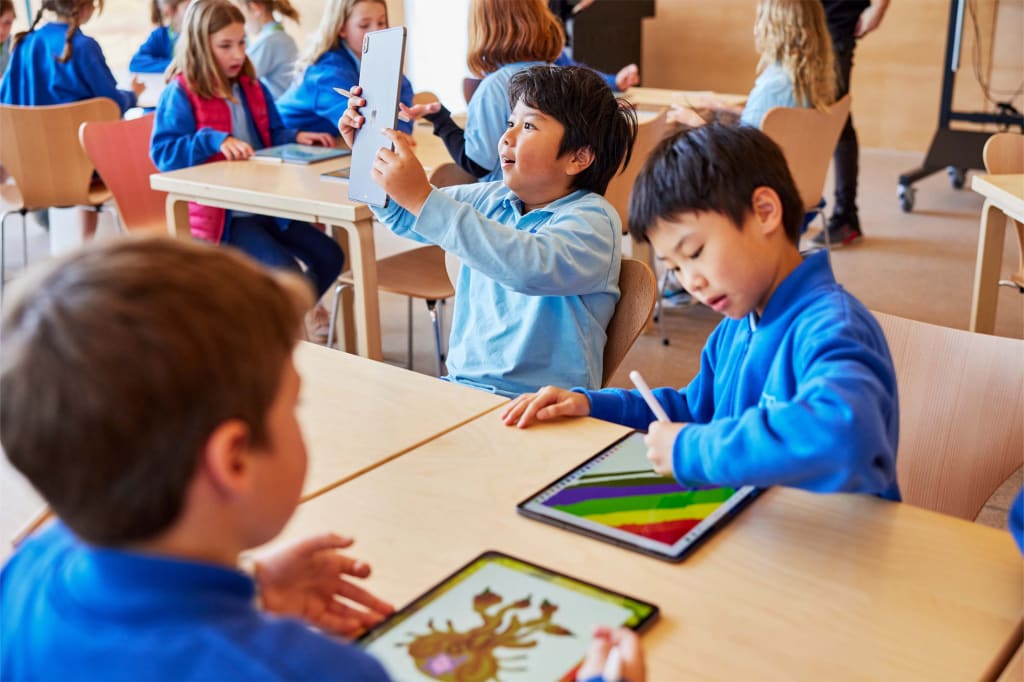
When I think about school, I remember heavy backpacks, paper worksheets, and long hours copying notes from the board. Learning felt like collecting information, not understanding it. Today, schools use technology in different ways. Some tools make learning more complicated. Others make it easier and more enjoyable.
Apple devices fall into the second group. They help students learn by turning ideas into experiences rather than tasks. They support creativity, group work, and simple communication. They remove extra steps so students can focus on the subject, not the tool.
The first time I saw Apple devices used in a classroom, it was in a music class. Students opened an app and created beats on iPads. They added sounds, layered instruments, and shared tracks with each other. They were not just listening to music. They were building it. The energy in the room felt different. Students leaned forward, not back. They explored instead of waiting for instructions.
This approach works in other subjects too. In science classes, students take photos of experiments and label them. They record reactions and compare results over time. In art classes, they sketch and design digitally without wasting materials. Mistakes become part of the process instead of something to erase. That creates confidence.
The devices also help students who learn differently. Some students read slowly. Some need more time to write. Some understand best through images, sound, or movement. Apple devices offer tools that support these needs quietly. A student can speak instead of type. Another can listen instead of read. A third can draw instead of write paragraphs. No one feels left out because everyone learns in a way that fits them.
This matters because school should not be about who learns fastest. It should be about who learns deeply.
Group work changes too. Instead of passing papers around, students work on the same project from different desks. They build presentations together. They edit videos as a team. They gather ideas in one shared space. When the teacher checks progress, they see everything at once. People contribute in different ways, not just through one task.
Teachers benefit as well. Instead of collecting piles of paper, they leave feedback directly on work. They send notes, highlight mistakes, and suggest ideas. Students receive responses faster and can fix problems right away. Communication feels like a conversation instead of a grade at the end.
Parents also feel more included. They see school projects, schedules, and updates without waiting for meetings. They understand what their children are learning and can help at home. This builds a stronger connection between school and family.
One of the most powerful parts of technology in schools is access. Some students may not have books, calculators, or art supplies at home. With one device, they get tools that support many subjects. They carry a full backpack inside a tablet instead of on their shoulders. Learning becomes lighter.
Of course, technology can cause problems too. Some people worry students might get distracted. Others fear screens might replace real skills. These concerns are valid. But good use of technology does not replace teachers or limit creativity. It gives students more ways to think, create, and share.
The key is balance. Students still read books, write essays, and solve problems. Technology simply helps them organize information, express ideas, and learn in ways that feel engaging.
I saw a quiet student present confidently with digital slides. I saw a struggling writer record a spoken report with pride. I saw classmates plan a volunteer project using shared notes. These moments show how tools can lift voices that might go unheard.
Apple in schools is not about fancy devices. It is about opening doors to curiosity. It gives students choices in how they learn. It keeps teachers connected to progress. It builds confidence by letting students create, not just consume.
Education should inspire. It should encourage ideas, imagination, and growth. When used well, Apple devices help schools do exactly that.
________________________________________________
#AppleInEducation #ModernLearning #DigitalClassroom #StudentVoice #CreativeLearning #SchoolLife #FutureOfEducation #LearningTools #StudySmarter #ClassroomTech #TeachAndLearn #EducationMatters #StudentSuccess #TechForLearning #EverydayLearning
About the Creator
Shakil Sorkar
Welcome to my Vocal Media journal💖
If my content inspires, educates, or helps you in any way —
💖 Please consider leaving a tip to support my writing.
Every tip motivates me to keep researching, writing, sharing, valuable insights with you.
Keep reading
More stories from Shakil Sorkar and writers in Journal and other communities.
Apple CarPlay: A Calm Way to Travel Without Distractions
Driving can feel stressful. There are cars, lights, signs, and constant decisions. I want my phone to help me when I drive, not distract me. For a long time, I used my phone the old way. I held it while checking directions. I changed music at stoplights. I tried to answer calls while steering with one hand. None of that felt safe.
By Shakil Sorkar3 months ago in Journal
Super Bowl LX Recap: A Team Called Hawks
Sixty. The Super Bowl turned 60! Still amazes me that this was the sixtieth Super Bowl played in NFL history. It seems like yesterday that I watched Super Bowl XXVII, the first SB I ever watched. The QB who won Super Bowl XXVII has since called a few SBs, and will call next year's game, but that's another story. Super Bowl LX took place at Levi's Stadium in Santa Clara, California, the home stadium of the San Francisco 49ers. However, it was one of their division foes who represented the NFC, as the Seattle Seahawks faced off against the New England Patriots.
By Clyde E. Dawkinsabout 16 hours ago in Unbalanced




Comments
There are no comments for this story
Be the first to respond and start the conversation.