
GM’s Solution to a Bad Economy Is Building Fewer Cars
Why slowing production could be the smartest move in a cooling auto market
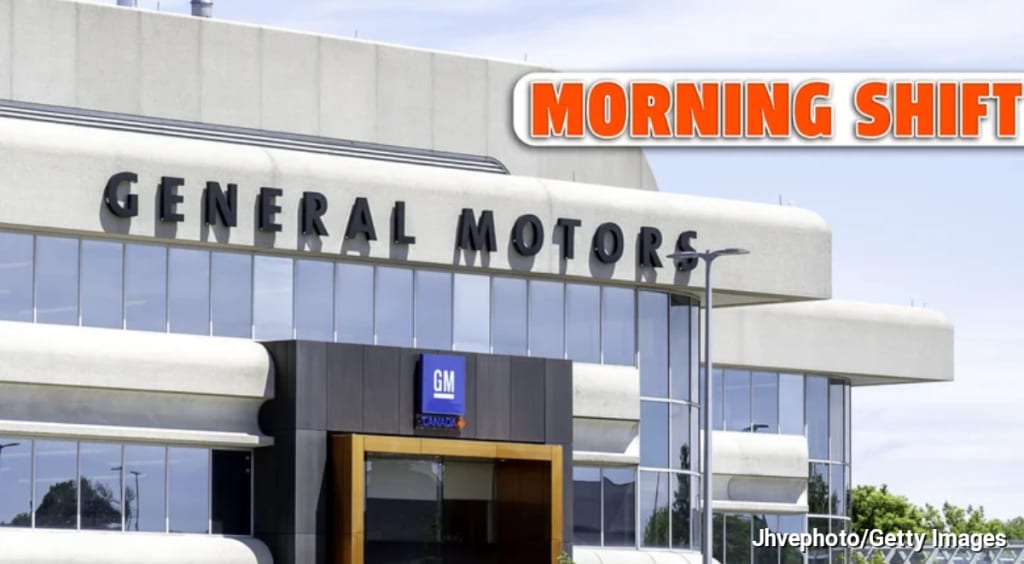
When economic uncertainty rises, most companies look for ways to boost sales, increase marketing, or cut prices. But General Motors (GM) appears to be taking a different route: building fewer vehicles.
At first glance, that sounds counterintuitive. If demand weakens, wouldn’t automakers try to sell more cars? In reality, overproduction during a soft economy can create deeper financial problems. By intentionally slowing manufacturing, GM may be positioning itself to protect profits, manage inventory, and stabilize long-term growth.
Let’s explore why producing fewer cars might actually be a strategic advantage.
Understanding the Current Auto Market
The global auto industry has experienced dramatic shifts over the past few years. Supply chain disruptions, semiconductor shortages, inflation, and rising interest rates have all impacted both production and consumer demand.
Now, as borrowing costs remain high and economic growth shows signs of cooling, consumers are becoming more cautious. Car purchases — often financed — are highly sensitive to interest rates. When loans become expensive, buyers delay big-ticket purchases.
For automakers, this creates a delicate balance between maintaining production capacity and avoiding unsold inventory.
The Risk of Overproduction
In a strong economy, producing more vehicles can increase revenue. But in a slowing economy, excess inventory becomes a liability.
Here’s why:
Unsold cars tie up capital
Storage costs increase
Discounts and incentives rise
Profit margins shrink
Automakers learned a hard lesson during past downturns: flooding dealerships with inventory forces aggressive price cuts. That can damage brand value and profitability for years.
By building fewer cars, GM aims to avoid this trap.
Supply Discipline as a Strategy
In recent years, automakers have discovered something unexpected: limited supply can support stronger pricing.
During the semiconductor shortage, vehicle supply was constrained. Surprisingly, many manufacturers saw profit margins improve because fewer cars were sold at higher prices — without heavy discounting.
This experience reshaped industry thinking. Instead of chasing volume at all costs, companies began prioritizing profitability per vehicle.
GM appears to be applying that lesson proactively.
Protecting Profit Margins
One of GM’s key objectives is margin stability.
When production exceeds demand, automakers often introduce rebates, financing incentives, or dealer discounts to move inventory. These tactics can erode profit per unit significantly.
By aligning production more closely with actual demand, GM can:
✔️ Reduce incentive spending
✔️ Protect resale values
✔️ Maintain pricing power
✔️ Strengthen brand positioning
In a fragile economy, maintaining profitability matters more than maximizing sales volume.
Adjusting to Consumer Behavior
Today’s buyers are more selective. Many are holding onto vehicles longer due to economic uncertainty. Electric vehicles (EVs) are also reshaping demand patterns, adding another layer of complexity.
Rather than stockpiling traditional gasoline vehicles in uncertain numbers, GM may be reallocating resources toward future-focused segments — particularly EVs and advanced technologies.
Strategic production cuts could create room for smarter long-term investments.
Investor Perspective
Wall Street often rewards disciplined management.
If GM demonstrates it can control inventory, maintain margins, and avoid heavy discounting, investors may view the company as resilient during downturns.
In fact, reduced production can signal confidence — showing that leadership is willing to prioritize financial health over short-term sales headlines.
It’s not about shrinking — it’s about stabilizing.
Potential Risks
Of course, building fewer cars carries risks.
If demand rebounds unexpectedly, GM could lose market share to competitors that maintain higher production. Dealers may also push back if inventory levels drop too low.
Additionally, reduced production can impact factory workers, suppliers, and local economies. Managing workforce stability while cutting output requires careful coordination.
The challenge lies in balancing caution with opportunity.
A Broader Industry Shift
GM is not alone in rethinking production strategy. Across the automotive sector, companies are moving away from the old “produce as much as possible” mindset.
Instead, many are embracing:
Leaner inventory models
Flexible manufacturing lines
Data-driven demand forecasting
Profit-focused sales strategies
This marks a cultural shift within the auto industry.
For decades, success was measured primarily by volume. Now, efficiency and margin quality are equally important.
The Electric Vehicle Factor
GM’s long-term strategy heavily emphasizes electric vehicles. Transitioning to EV production requires significant capital investment, supply chain restructuring, and battery development.
By moderating traditional vehicle production, GM can redirect resources toward electrification without overextending financially during economic softness.
This disciplined approach may strengthen its competitive position in the evolving EV landscape.
Lessons from Past Recessions
History shows that automakers who aggressively discounted during downturns often struggled to recover pricing power afterward.
After the 2008 financial crisis, the industry underwent painful restructuring. Companies that maintained tighter production controls recovered more steadily.
GM’s current strategy suggests leadership is determined to avoid repeating past mistakes.
Is This the Smart Move?
In a weak economy, restraint can be strength.
Producing fewer cars is not an admission of defeat — it’s a recognition of market reality. By preventing inventory overload and protecting margins, GM is attempting to build stability rather than chase uncertain demand.
If executed correctly, this approach could:
Preserve financial flexibility
Protect shareholder value
Support long-term growth
Maintain brand strength
However, the strategy will require precise forecasting and careful market monitoring.
Final Thoughts
GM’s decision to build fewer cars during economic uncertainty reflects a more mature, data-driven approach to automotive manufacturing.
Rather than pushing volume at any cost, the company appears focused on sustainability — not just environmental sustainability, but financial sustainability.
In today’s unpredictable economy, that may be the smarter bet.
Whether this cautious strategy pays off will depend on how long economic softness lasts — and how effectively GM balances production with demand.
But one thing is clear: in the modern auto industry, sometimes the smartest move isn’t building more.
It’s building just enough.
About the Creator
~ Fired ~
— Ai Intrusion ~ Are you Next ~ Is Ai Evolution after your job? — Few workplaces haven't been affected. Ai is in supermarkets, at doctors' offices, and even monitoring farms. I just can't think of anything this machine is not getting into, can you? For instance: Education ~ Law and Tech jobs will one day have a major influence or be taken over by these inanimate machines, with accuracy and vigor. From mechanics' diagnoses to a wide variety of everyday jobs, including fast food workers, with this input having the ability to cut their unnecessary work hours. I'm certain all of us have been touched by this with our short stories and colorful headings, have you? Even comments are very questionable 'Non-Robot' insertions.
By Jay Kantor20 days ago in Journal




Comments
There are no comments for this story
Be the first to respond and start the conversation.