
Gold Reclaims $5,000 as Analysts Warn Volatility Is Far From Over
A renewed surge in gold prices signals investor anxiety, but experts caution that economic uncertainty and global tensions could drive dramatic swings ahead.


Gold has once again captured the world’s attention after reclaiming the $5,000 mark, a psychological and financial milestone that underscores growing unease in global markets. Long regarded as a safe-haven asset, gold’s sudden resurgence reflects rising concerns about inflation, geopolitical instability, and the long-term health of major economies.
Yet while many investors celebrate the metal’s rally, analysts warn that this is not the beginning of a calm upward trend. Instead, they see gold’s current price as a sign of deeper turbulence ahead—one fueled by uncertainty rather than confidence.
Why Gold Is Rising Again
Gold typically thrives when trust in traditional financial systems weakens. Recent months have delivered a perfect storm of pressures: stubborn inflation, shifting interest rate policies, and geopolitical conflicts that show no sign of resolution.
Central banks around the world continue to walk a tightrope. On one hand, they aim to control inflation by keeping monetary policy tight. On the other, they must avoid pushing fragile economies into recession. This balancing act has left investors unsure where to place their money.
In times like these, gold becomes a refuge.
According to data from the World Gold Council, demand for physical gold and gold-backed investment products has risen sharply as investors hedge against currency devaluation and market instability.
The metal’s climb back to $5,000 signals not just optimism but fear—fear of what might come next in global finance.
A Symbol of Economic Anxiety
Gold’s price is often described as a mirror of market psychology. When confidence is high, investors chase stocks and high-yield assets. When confidence falters, they turn to gold.
This latest surge reflects widespread anxiety about:
Persistent inflation that erodes purchasing power
Rising government debt in major economies
Currency volatility and weakening exchange rates
Ongoing geopolitical conflicts
Each of these factors feeds into the narrative that traditional assets may not offer enough protection. Gold, which holds intrinsic value and is not tied to any single government or corporation, becomes an attractive alternative.
However, analysts caution that gold’s rise does not necessarily mean stability. On the contrary, it suggests markets are bracing for disruption.
Volatility Is Still in Play
Despite reclaiming the $5,000 level, gold’s path forward is far from certain. Financial analysts argue that the metal’s recent rally could be followed by sharp corrections.
One reason is interest rates. Historically, higher interest rates make gold less attractive because it does not generate yield. If central banks decide to tighten policy further, gold could lose momentum quickly.
Another factor is speculative trading. As prices rise, short-term traders often enter the market hoping to profit from rapid gains. This can amplify swings in both directions, creating unstable price movements.
“Gold is behaving more like a risk asset than a defensive one right now,” one market strategist noted. “That’s a sign of uncertainty, not confidence.”
The Role of Central Banks
Central banks have played a major role in supporting gold prices. Many have increased their gold reserves as a way to diversify away from the U.S. dollar and protect national wealth from currency fluctuations.
This trend has been especially noticeable in emerging markets, where governments seek financial independence from Western financial systems. Their purchases add steady demand to the gold market, reinforcing its upward momentum.
However, central bank behavior can change quickly. If economic conditions stabilize or currencies strengthen, this institutional support could weaken—adding another layer of unpredictability.
Investors Divided on What Comes Next
Among investors, opinions are sharply divided. Some believe gold’s return to $5,000 marks the beginning of a long-term bull run driven by structural economic problems. Others view it as a temporary spike fueled by panic and speculation.
Supporters of gold argue that:
Inflation will remain elevated for years
Global debt levels are unsustainable
Trust in fiat currencies will continue to decline
Skeptics counter that:
Interest rate cuts could revive stock markets
A stronger dollar could pressure gold prices
Geopolitical tensions may ease unexpectedly
This split outlook contributes directly to volatility. When opinions clash so strongly, markets tend to move in dramatic and unpredictable ways.
What This Means for Everyday Investors
For ordinary investors, gold’s surge raises important questions. Is now the time to buy, or is it too late? Should gold be treated as a long-term hedge or a short-term trading opportunity?
Financial advisors generally recommend moderation. Gold can serve as a stabilizing force in a diversified portfolio, but overexposure carries risks—especially when prices are already elevated.
Key considerations include:
Time horizon: Long-term holders may benefit from gold’s role as an inflation hedge.
Risk tolerance: Short-term traders must be prepared for sudden drops.
Portfolio balance: Gold should complement, not replace, other assets.
Rather than chasing headlines, many experts suggest focusing on fundamentals and personal financial goals.
A Broader Reflection of Global Tension
Gold’s rally is not happening in isolation. It coincides with volatility in stock markets, uncertainty in bond yields, and growing interest in alternative assets like cryptocurrencies and commodities.
Together, these trends suggest a world searching for financial stability in an unstable environment.
Gold’s return to $5,000 may look like a triumph for precious metal enthusiasts, but it also serves as a warning sign. Markets are uneasy, and investors are preparing for scenarios that could include recession, currency devaluation, or geopolitical shocks.
In that sense, gold is not just an investment—it is a barometer of fear.
Final Thoughts
Gold reclaiming $5,000 is a powerful symbol of the times. It reflects both confidence in the metal’s enduring value and deep concern about the future of the global economy.
While the milestone is impressive, analysts agree on one thing: volatility is far from over. Sharp price swings are likely as markets react to economic data, central bank decisions, and world events.
For investors, this moment calls for caution rather than celebration. Gold may continue to shine, but its brilliance is fueled by uncertainty—and uncertainty rarely moves in straight lines.
In the months ahead, gold’s journey will likely mirror the world’s: unpredictable, tense, and shaped by forces far beyond a single market. Whether it climbs higher or pulls back, one truth remains clear—gold’s resurgence is telling a story not just about wealth, but about worry.
About the Creator
Sajida Sikandar
Hi, I’m Sajida Sikandar, a passionate blogger with 3 years of experience in crafting engaging and insightful content. Join me as I share my thoughts, stories, and ideas on a variety of topics that matter to you.
Keep reading
More stories from Sajida Sikandar and writers in Journal and other communities.
Another Crypto Company Halts Withdrawals as Market Slide Continues
The cryptocurrency market has entered another stormy phase, and investors are feeling the impact firsthand. Following a series of high-profile collapses, yet another crypto company has announced a temporary halt on withdrawals, sending shockwaves through the already jittery digital asset community.
By Sajida Sikandar2 days ago in Journal
FAA Grounds All Flights To and From El Paso Until Feb. 20
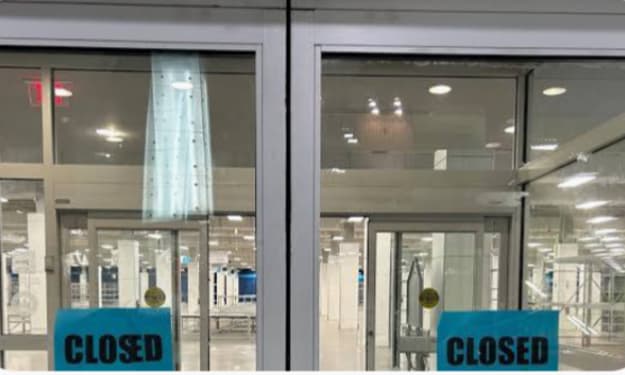
In a move that has stunned travelers, airlines, businesses, and border communities, the Federal Aviation Administration (FAA) has issued a temporary flight restriction (TFR) grounding all flights to and from El Paso International Airport and the neighboring airspace of Santa Teresa, New Mexico. The restriction, which took effect on February 10 at 11:30 p.m. MST and is scheduled to remain in place until February 20 at 11:30 p.m. MST, includes commercial, cargo, and general aviation operations.
By Omasanjuwa Ogharandukun5 days ago in Journal


Comments
There are no comments for this story
Be the first to respond and start the conversation.