
Influenced By Picasso, But Not Like Picasso
Plasticism

Hey Marcella, I recognize your work! It’s just like Picasso! I must have heard that too many times and still wince inwardly every time I hear it.
To the untrained eye, I can see how one would not really notice the differences. Sort of the untrained eye looking at a Honda vehicle and not noticing the difference between it and the Toyota parked next to it. A car is a car, right? An abstract painting, to the untrained eye, that kind of looks alike is the same…right?
My signature style of Plastic Space abstract is in fact, inspired by the cubist style of Pablo Picasso, who was inspired by Georges Braque, and painted in a style later described by a critic as being made of “little cubes,” thus leading to the term cubism. I paint in a style described by a critic as a flow of forms using light and color leading to the term “Plasticism” or Plastic Space.
In art school I was challenged to study a so called master painter and copy that style until I was comfortable with it. My choice was Pablo Picasso simply because he was the only artist of the times that actually gave credit to African sculptors as an influence for him. And I was blessed to visit his art museum in France. So I studied his cubism and learned the process. Then I had to extend myself from that style and create my own version, and my signature style of Plastic Space abstraction or Plasticism was born.
There is a unique difference in the application, method, style, color palette, subject matter and direction of Plastic Space. The example above shows my painting, Third Generation, next to Pablo Picasso’s painting, “A Girl Before A Mirror”. Amazing how one can be influenced by subliminal memory and not realize how much. I painted mine in 2005 and two years later, was looking through a book about Pablo Picasso when I saw his, A Girl Before A Mirror and remembered my painting. I know that in my studies, I must have seen this particular image and forgotten it but somehow it stuck in my subliminal memory. So here I was painting an image that I thought was my own idea but in my signature style of Plastic Space. My studies were done in 1972 and the idea was baking for 33 years before appearing in its form, Third Generation. Nothing is new under the sun! It’s just in how you spin it.
Notice the two images and the differences between them. In Picasso’s painting on the left, the visual planes of the subject are analyzed, flattened and reconstructed in intersecting, sometimes transparent planes that simultaneously depict the subject from various viewpoints. It is a faceting technique to create an abstract image where color plays a secondary role and there is a liberation of form.
The difference in my painting, on the right, is that it goes beyond flat linear planes and explores the curvature of light around an object from a three dimensional perspective. You will notice color plays an important role in the composition as well as the use of curves instead of angles. There is a special amount of attention paid to the depth and form on the two dimensional surface to keep things moving and not flat. I also provide a large amount of recognizable and cultural images in my composition to hold the interest of the viewer. And there is a lot more going on in that mirror than just a reflection.
So dear reader, I will not give up. I will continue to grow and paint and one day someone will say to another artist, “Hey, your work is just like a Marcella Muhammad!”
Never give up, never surrender!!
About the Creator
Keep reading
More stories from Marcella Mitchell and writers in Journal and other communities.
Grandma Ruth's Fruity Oatmeal Cookies
Each year as the fall months begin and the holidays are nearing, I begin to have a very distinct craving of something very special. Cookies! But, not any ordinary cookies. These cookies are the best of the best in oatmeal cookies. They are so very special that I get a warm and cozy feeling just thinking about them. It is said that certain smells and tastes can trigger emotions and memories. Well, these cookies do just that. For me, they represent a special kind of love that only a mother can have for her child. When I eat them, they give me a special kind of comfort of home, tradition and love. Who knew a cookie could bring so much emotion?
By Marcella Mitchell5 years ago in Feast
~ Fired ~
— Ai Intrusion ~ Are you Next ~ Is Ai Evolution after your job? — Few workplaces haven't been affected. Ai is in supermarkets, at doctors' offices, and even monitoring farms. I just can't think of anything this machine is not getting into, can you? For instance: Education ~ Law and Tech jobs will one day have a major influence or be taken over by these inanimate machines, with accuracy and vigor. From mechanics' diagnoses to a wide variety of everyday jobs, including fast food workers, with this input having the ability to cut their unnecessary work hours. I'm certain all of us have been touched by this with our short stories and colorful headings, have you? Even comments are very questionable 'Non-Robot' insertions.
By Jay Kantor5 days ago in Journal
Maersk Posts Ocean Loss, Cuts 1,000 Jobs as Container Boom Unwinds
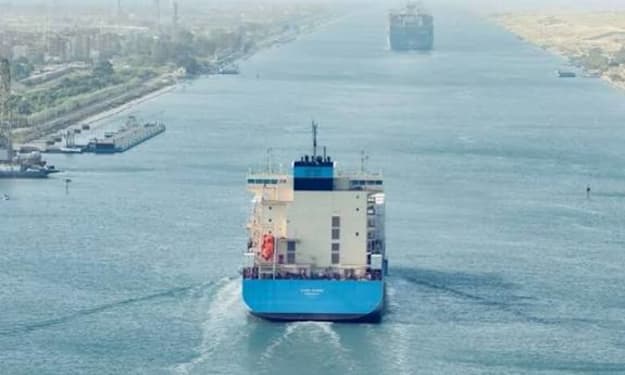
A.P. Moller–Maersk, the world’s largest container shipping company, has reported a sharp loss in its ocean shipping division and announced plans to cut around 1,000 jobs as the extraordinary container shipping boom triggered by the pandemic continues to unwind. The Danish logistics giant said weakening demand, falling freight rates, and excess shipping capacity have hit profitability across its core ocean business, marking a dramatic reversal from the record earnings seen during the height of global supply chain disruptions. Maersk’s results reflect broader turbulence in the global shipping industry, which is struggling to adjust to slowing trade growth after years of unprecedented congestion and inflated shipping costs. From Windfall to Weakness During the pandemic, Maersk and its competitors benefited from soaring freight rates as lockdowns disrupted supply chains and consumers shifted spending toward goods rather than services. At the peak of the boom, Maersk posted historic profits and used the windfall to invest heavily in logistics, terminals, and digital services. Now, those conditions have reversed. Freight rates on major trade routes have dropped sharply as inventories normalize and demand softens in Europe and North America. At the same time, a wave of newly built container ships ordered during the boom has entered service, increasing capacity and intensifying competition. Maersk said its ocean division recorded a quarterly operating loss, citing “significant pressure on margins” and lower volumes across key routes between Asia, Europe, and the United States. “The container market has shifted from extreme tightness to oversupply in a very short period,” the company said in a statement. “We are now adjusting our cost base to reflect a more normalized demand environment.” Job Cuts and Cost Controls The company confirmed that around 1,000 positions will be eliminated globally, affecting both shore-based staff and certain operational roles. The layoffs are part of a wider cost-cutting program aimed at protecting profitability during what Maersk expects to be a prolonged period of weaker market conditions. Maersk employs more than 100,000 people worldwide. Management said the job reductions were “necessary but difficult” and would be carried out with support programs for affected employees. “These decisions are never taken lightly,” said chief executive Vincent Clerc. “But the market realities require us to act responsibly and ensure the long-term sustainability of the company.” In addition to layoffs, Maersk plans to slow hiring, reduce discretionary spending, and optimize vessel deployment by canceling or consolidating certain sailings where demand is weakest. Impact of Global Trade Slowdown The slowdown in container shipping mirrors wider trends in global trade. High inflation, rising interest rates, and geopolitical uncertainty have dampened consumer spending and industrial production in many major economies. Europe has been particularly affected by weak manufacturing output, while U.S. retailers have worked through excess inventories built up during the pandemic. China’s export growth has also slowed as global demand weakens. Industry analysts say the shipping sector is entering one of its most challenging phases in more than a decade. “We are seeing the hangover from the pandemic boom,” said a maritime economist. “Capacity has surged just as demand is cooling. That’s a classic recipe for falling rates and losses.” The Baltic Dry Index and other shipping benchmarks have shown volatility, but container rates remain far below their pandemic highs, squeezing margins for carriers that expanded aggressively. Strategic Shift Under Pressure Maersk has spent recent years trying to transform itself from a pure shipping line into an integrated logistics provider, offering end-to-end services including warehousing, air freight, and customs clearance. The company argues that diversification will help smooth earnings during shipping downturns. However, its logistics and services divisions have also faced pressure as customers cut costs and delay investments. Still, Maersk said those units remained profitable and provided some buffer against the ocean division’s losses. “Our strategy to build an integrated logistics platform remains unchanged,” Clerc said. “But we must adapt our cost structure to current market conditions.” Investor and Market Reaction Shares in Maersk fell following the earnings announcement, reflecting investor concern about the depth and duration of the shipping downturn. Analysts said the job cuts were expected but highlighted how quickly conditions have deteriorated. “Just two years ago, Maersk was reporting record profits and special dividends,” said a shipping sector analyst at a European bank. “Now the focus is on survival mode and protecting cash flow.” Competitors including MSC, Hapag-Lloyd, and CMA CGM have also warned of weaker earnings and begun implementing cost-saving measures, suggesting the downturn is industry-wide rather than company-specific. Uncertain Outlook Maersk warned that the container market is likely to remain volatile throughout the coming year. While geopolitical disruptions in the Red Sea and Panama Canal have occasionally tightened capacity and lifted rates, the company said these factors were not enough to offset the underlying oversupply. The firm expects demand growth for container shipping to remain modest, while capacity continues to expand as new vessels are delivered. “We do not foresee a rapid return to the conditions of 2021 and 2022,” the company said. “The market is undergoing a structural adjustment.” Human and Economic Consequences The layoffs underline how quickly fortunes can change in global shipping and how closely the industry is tied to the health of the world economy. Port workers, freight forwarders, and logistics firms are also bracing for slower activity as trade volumes soften. Labor unions have expressed concern about job security and called on shipping companies to manage restructuring responsibly. “Workers should not pay the price for market cycles driven by corporate overexpansion,” said a representative of a European maritime union. A New Phase for Shipping Maersk’s announcement marks a symbolic end to the pandemic-era container boom and the beginning of a more uncertain phase for the shipping industry. Companies that thrived during chaos must now compete in a crowded, low-margin environment once again. For Maersk, the challenge will be balancing cost discipline with its long-term ambition to become a global logistics powerhouse. As the company restructures and cuts jobs, its experience serves as a warning that the extraordinary profits of the pandemic years were an exception, not the new normal, in a business long known for sharp cycles and fierce competition. Whether Maersk’s strategy can shield it from future shocks will be closely watched by investors and rivals alike as the container industry navigates its most difficult period since before the pandemic.
By Fiaz Ahmed Brohiabout 7 hours ago in Journal



Comments
There are no comments for this story
Be the first to respond and start the conversation.