
Settlers Drive a Palestinian Family Off Its Land
A Story of Displacement, Tension, and the Struggle for Home
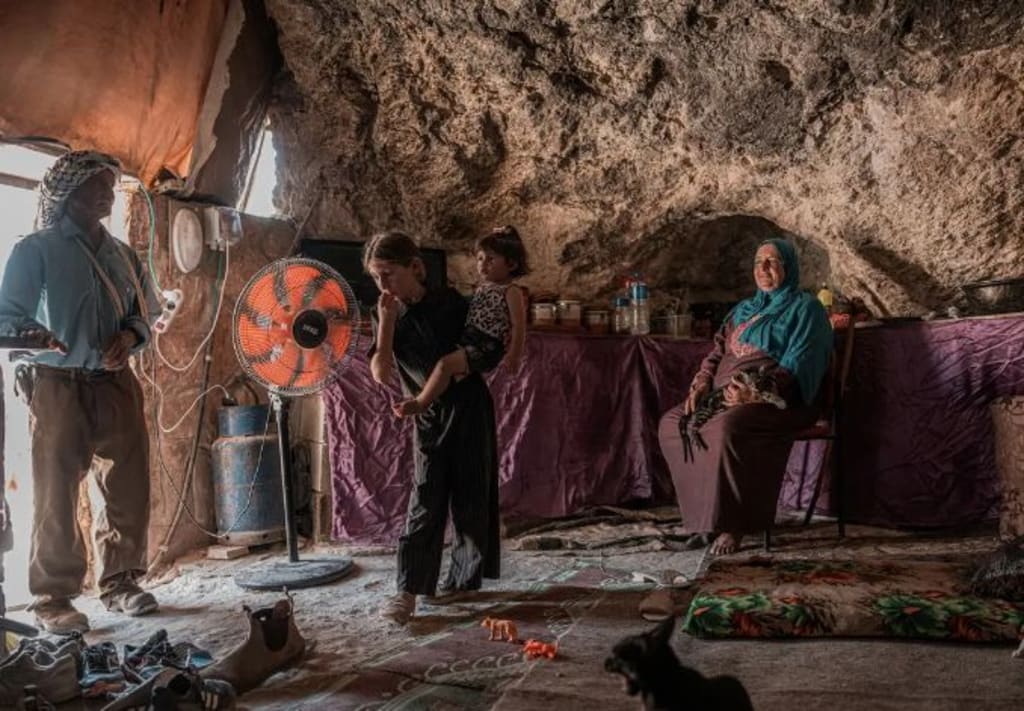
In the rolling hills of the West Bank, land is more than soil. It is memory, livelihood, identity, and survival. For one Palestinian family, that connection was abruptly severed after years of pressure from nearby settlers, highlighting a long-standing conflict that continues to shape daily life across the region.
The story of this family — like many others — reflects the complex realities of land ownership, security concerns, and competing historical claims that define the broader conflict between Israel and Palestine.
A Sudden Departure
The family had lived on their farmland for decades, cultivating olive trees, raising livestock, and building modest structures over the years. According to neighbors, tensions escalated when settlers began expanding activity near the property. Reports described repeated disputes over grazing areas, access roads, and water sources.
Eventually, the pressure became overwhelming.
Family members said they experienced intimidation, property damage, and restrictions that made daily life increasingly difficult. Facing safety fears and limited legal options, they packed belongings and left — not by choice, but out of necessity.
Their departure adds to a growing list of displacement cases reported by humanitarian groups operating in rural areas.
A Pattern of Land Disputes
Land conflicts in the West Bank are deeply rooted in political, legal, and historical disputes. Settlements — communities built by Israeli citizens in the territory — remain one of the most contentious issues in the conflict.
Supporters argue settlements provide security buffers and reflect historical connections to the land. Critics say expansion fragments Palestinian communities and undermines prospects for a future peace agreement.
In areas such as the Hebron and the Jordan Valley, farmers often find themselves on the front line of these tensions. Access to farmland can be limited by checkpoints, security zones, or disputes over ownership documentation — challenges that disproportionately affect small agricultural families.
For many, leaving land means losing both income and heritage.
Legal Complexity and Limited Recourse
The legal framework governing land in the West Bank is complicated. It includes layers of Ottoman, British Mandate, Jordanian, Israeli, and military regulations. Determining ownership can require documents that date back generations, which some families lack due to displacement, war, or administrative gaps.
Human rights groups say this complexity can leave Palestinian families vulnerable.
The Human Rights Watch has repeatedly documented cases where residents report harassment or face difficulties challenging settlement expansion through legal channels. Israeli authorities, meanwhile, maintain that enforcement actions are based on security needs and property law.
Court cases can take years — time many rural families cannot afford.
Humanitarian Concerns
Humanitarian agencies track displacement trends closely. The United Nations Office for the Coordination of Humanitarian Affairs has noted that movement restrictions, demolitions, and settler-related incidents contribute to rising displacement risks in parts of the West Bank.
When families leave, the impact extends beyond one household.
Children change schools. Livelihoods collapse. Communities shrink. Agricultural land may go unused, affecting local food production and economic stability.
Aid groups often provide temporary assistance — tents, food support, legal aid — but long-term solutions remain elusive.
Life After Leaving
For the displaced family, relocation brought uncertainty. They moved to a nearby town, renting a small space and relying on relatives for support. Farming equipment remained behind, and olive trees — planted by previous generations — were left untended.
Such losses carry emotional weight.
Many displaced families describe feelings of grief similar to losing a loved one. Land represents continuity, and leaving can feel like erasing a chapter of family history.
At the same time, safety concerns frequently outweigh the desire to stay.
Political Reactions
Incidents like this often spark political debate both locally and internationally. Palestinian officials typically frame displacement as evidence of settlement expansion pressures. Israeli officials emphasize security challenges, legal disputes, and the need to prevent violence between communities.
International responses tend to call for restraint, protection of civilians, and renewed diplomatic efforts.
Yet on the ground, progress is slow.
The Broader Question of Coexistence
Stories of displacement raise a larger question: how can two populations with deep ties to the same land coexist?
Grassroots organizations on both sides have attempted dialogue initiatives, shared agricultural projects, and conflict-reduction programs. While small in scale, these efforts suggest that cooperation is possible even amid political stalemate.
Still, structural issues — borders, sovereignty, security, and settlements — remain unresolved.
Until those questions are addressed, individual families will continue to bear the consequences.
A Symbol Beyond One Family
The departure of a single Palestinian family may seem like a local event, but it symbolizes a broader reality. Across contested regions, ordinary people navigate forces far beyond their control: geopolitics, legal battles, and shifting security conditions.
Their stories rarely make global headlines, yet they reveal the human dimension of conflict.
A farm abandoned. A home locked. Trees left behind.
These quiet moments capture the cost of unresolved disputes more clearly than any political statement.
Conclusion
The case of settlers driving a Palestinian family off its land illustrates the fragile balance that defines life in the West Bank. It highlights how land disputes intersect with identity, law, and security — creating situations where families must choose between staying and feeling unsafe or leaving and losing everything familiar.
As negotiations stall and tensions persist, the experiences of families like this serve as a reminder that the conflict is not only about territory on a map. It is about people, homes, and the enduring hope that one day, displacement will no longer be part of everyday life.



Comments
There are no comments for this story
Be the first to respond and start the conversation.