history
Key historic events throughout the ages in relation to business, work, corporate figures and moguls.
Black and white and red all over: A review
Seeing Red is a first-of-its-kind work of media and literary history that analyzes Canadian English-language newspapers as a colonial enterprise. Mark Cronlund Anderson and Carmen L. Robertson, both professors at the University of Regina at the time of the book’s publication in 2011, examine pivotal experiences in the history of Indigenous peoples in Canada. Each chapter scrutinizes select publications’ reporting on each of these experiences from the notorious purchase of Rupert’s Land, the White Paper and the Oka crisis, to the potentially lesser known, but equally as important, deaths of Archie Blaney and Pauline Johnson.
By RachelMorgan4 years ago in Journal
When History is Now
I never thought I'd live to see war in Europe As Russian forces massed on the borders of Ukraine and Putin ginned up justifications for an unprovoked invasion, I hoped he could be edged back from the brink. I listened to President Biden’s near-daily warnings of an imminent attack on Kyiv with dread, sure, but also the hope that the repeated call-outs, the strategic intelligence spills, the warnings of sanctions, and the growing outcry among European leaders, would bring the Russian leader to his senses.
By Jan M Flynn4 years ago in Journal
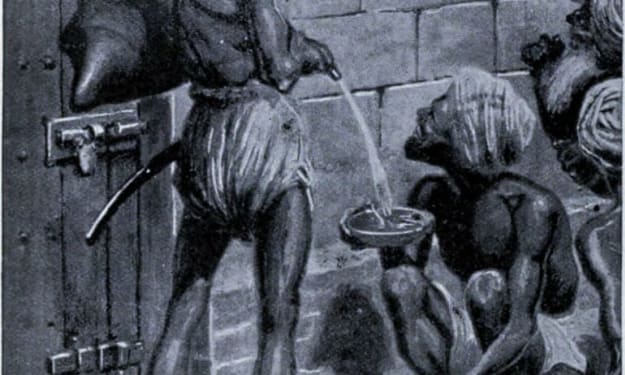
Black Hole Tragedy
Background Fort William was established to protect the East India Company's trade in the city of Calcutta, the principal city of the Bengal Presidency. In 1756 India, there existed the possibility of a military confrontation with the military forces of the French East India Company, so the British reinforced the fort. Siraj-ud-daula ordered the fortification construction to be stopped by the French and British, and the French complied while the British demurred.
By AKHIL SENGAR4 years ago in Journal
What are Leaders Doing to Influence Today?
Leaders and leadership are changing the world today in ways like never before, and Artificial Intelligence is changing the definition of leadership forever. What does this mean for leaders of today? How will this influence tomorrow’s leaders? These questions and more will be answered in this post on leader and leadership influence today, where I will also describe some of the revolutionary new things leaders are doing to influence today, as well as some of the ways they are using Artificial Intelligence to achieve their goals.
By Omasanjuwa Ogharandukun4 years ago in Journal
Real success story
A story that talks about success, diligence and intelligence, and you must learn from that story of perseverance and starting from scratch and never despair, but be patient. To continue to achieve their dream and succeed, and there are those who despair and turn away from his dream. That is why our story today is about Harry Wayne. And when we mention this person, we must mention success and patience because he is one of the most example of people who turn from failure to success and from collecting garbage to the largest businessman in the world who owns Billions and he is one of the most patient people. He started his life as a simple garbage worker who has nothing in life but his intelligence and patience. Then he turns into the biggest businessman and we will know how he did this and how he worked hard to achieve his dream and his story moved from a failure story to success stories told by the whole world.
By Samara Ben4 years ago in Journal
Britain and its Monarchy
Britain and its monarchy Information for overseas friends Modern people will not like this and in fact the ultra-woke will be outraged and deplore it but from the time that the last ice age retreated, until about 1950, Britain was a warrior nation, A people where many thrived on physical conflict. A nation forged by almost continuous warfare, who ended up good at war. The heritage of the ruling kings, and queen; the whole system of governance by divine right, was based on war. The original stone age settlers have left evidence of violence, the later iron age Celtic tribes are known to have fought each other and then the invading Romans, Saxons and Nordic people. For a very long time what we call Britain was several kingdoms who fought each other unless there was a greater danger from invaders when they formed loose alliances to fight against these invaders. A largely Saxon Britain (actually a mixture of all the races who had lived and fought over the land) was taken over by the Normans- William the conqueror. The Normans had to fight to establish total control, various civil wars followed and during the Tudor reigns, the fighting became international. (Henry 8th breaking up the power of the Roman Catholic church, Elizabeth the 1st being relativity tolerant of a variety of Christian teachings etc.) Then came conflict between the king and the powerful lords who curbed the absolute power of the king in 12.15 ( Magna Carter) Power gradually ebbed away from the kings until the biggest civil war so far; between forces loyal to the king and those serving “Parliament.” This led to a brief period when Britain was in effect, a republic. Dissatisfaction with the way we were governed set in and the king was invited back with the power to impose their own ideas hugely curtailed. Gradually all real power was transferred to the Parliament and its elected government but the head of state had to be someone above party politics and the kings and queens who followed fitted nicely into this role. All of this history led eventually to the Victorian period and by then forging a nation who accepted warfare, was complete. A nation who held certain principles to be so important they would kill to uphold them. As with all nations, as the general population became more materialist and relatively wealthy, the attraction of warfare as a means of social progress eroded. The invention of machines that could kill from a distance totally ended even the pretence of chivalry in warfare and so Britain gradually lost its warrior mentality.
By Peter Rose4 years ago in Journal