religion
How religion plays into corporate culture and office politics.
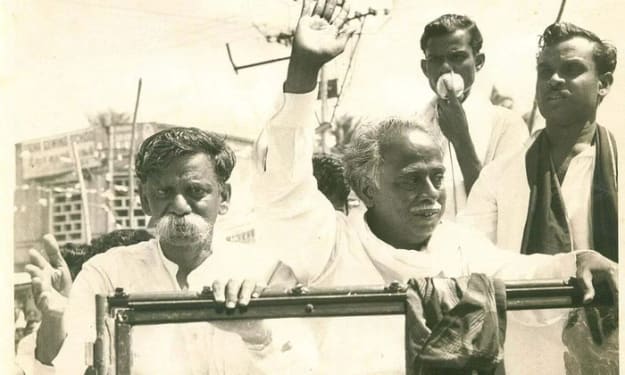
TamilNadu Always Tamilnadu!!
Above is the question that was asked in the debate in the Rajya Sabha in 1963 on the demand that the then 'Madras State' should be renamed as Tamil Nadu, and the answer given by Perarinjar Anna in anger.After the linguistic division of the states, Tamil Nadu was no longer known as Tamil Nadu. Madras State was its previous name. These days, we don't hesitate to call our state "Tamil Nadu." But Congress had 63 years prior. Additionally, the then-ruling Congress desired a "Madras State."This is a divisive demand,'' Congress feared. ``The safety of non-Tamil speakers is questionable,'' they said. Thus, they avoided the request to change the name of ``Tamil Nadu'' from the beginning.
By MUTHUSELVAM O3 years ago in Journal
The Power of Voice: How Vocal Media is Revolutionizing Accessibility, Convenience, and Personalization
Vocal media, also known as voice-enabled media, is revolutionizing the way we consume and interact with information. With the rise of smart speakers and virtual assistants, vocal media is becoming more prevalent in our daily lives, and it has the potential to change the world for the best in many ways.
By Abubakar Kabiru 3 years ago in Journal
Iran's Hijab Laws Take a High-Tech Turn with Face Recognition Implementation
I. Introduction A. Background information on Iran's hijab laws Iran's hijab laws, also known as the Islamic dress code, require women to wear a headscarf and cover their bodies in public. The laws were enforced after the Islamic Revolution in 1979 and are intended to promote modest dress and protect the Islamic revolution. However, these laws have been a source of controversy and protests in Iran, with many women, particularly younger generations, choosing to wear the hijab as a symbol of resistance against the government's strict dress code. Non-compliance with the hijab laws can result in fines, imprisonment, or other penalties. The laws have been enforced by religious police and other government officials, and have led to instances of harassment and arrests of women who do not comply.
By Rohan Ravichandran3 years ago in Journal
THE LAND OF SANDALWOOD
Karnataka is a state located in the southern part of India. It is bordered by the Arabian Sea to the west, Goa to the northwest, Maharashtra to the north, Andhra Pradesh to the east, Tamil Nadu to the southeast, and Kerala to the southwest. The capital of Karnataka is Bengaluru, which is also the state's largest city.
By shashank s3 years ago in Journal
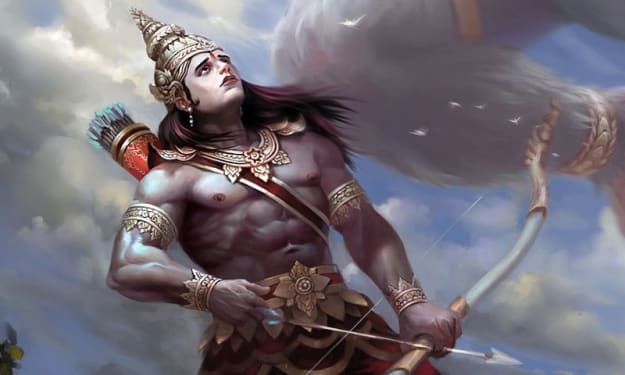
5)The Ramayana 1.Bala Kandam Rama saved by penance
Devas approached Ramabhira and requested him to provide the best food. In response, the sage taught Rama about the 500 types of atras that Vishwamitra had received from Lord Shiva and the upasammarams to restore them. Those evil angels appeared before Rama and disappeared saying they would come to help him when he called for them.
By Suthakaran3 years ago in Journal
INDIAN TEMPLE
India is a land of diverse cultures, religions and traditions and this is reflected in the many temples that can be found throughout the country. Temples in India are not just places of worship but also a reflection of the country's rich history and architectural heritage. They are not only significant for their religious and spiritual importance but also for their architectural and cultural significance.
By DHINESH SELVA3 years ago in Journal
4)The Ramayana 1.Bala Kandam Rama and Lachumanar going to Kanakam
❖ Sumantra brought Rama and Lakshmana to the palace, where they prostrated at the feet of Sage Vashishta, Sage Vishwamitra, and their father Dasaratha. The king placed their arms in those of Sage Vishwamitra and entrusted them to him, saying that they were like his mother, father, and guru. He also whispered to Vishwamitra that they will bring them back and added them.
By Suthakaran3 years ago in Journal
3) The Ramayana 1.Bala Kandam People of Ayodhya are happy with Ramavatharam
❖ Sage Vashishta advised Dasaratha, the king of Ayodhya, to seek out the sage Kalaikottu in the Anga country in order to improve his chances of having a child. The country was suffering from a famine, but Kalaikottu, who had performed immense penance, was able to bring rain and prosperity. He suggested that Dasaratha perform the Putra Kameshti Yagya in order to be blessed with a son.
By Suthakaran3 years ago in Journal