travel
The best travel locations for vacations or workplace locations around the country and the world.
The Last Game of the Season
I didn’t go for the win. I went because it was the last game. The gym was packed—folding chairs lined the walls, parents stood in the back, and the buzz of nervous energy hung thick in the air. Two rival high schools, decades of history, one championship on the line. But I wasn’t there for the trophy. I was there for my nephew, who’d spent all season riding the bench.
By KAMRAN AHMADabout a month ago in Journal
The Man Who Fixed the Clock
I didn’t notice the clock was broken until it stopped. It sat on the corner shelf of my grandparents’ living room for as long as I could remember—brass, ornate, with Roman numerals and a soft, steady tick that marked the rhythm of every visit. My grandfather wound it every Sunday without fail, even in his nineties, even when his hands shook.
By KAMRAN AHMADabout a month ago in Journal
The Boy Who Carried the Ball Home
I didn’t go to the game for the score. I went because my nephew asked me to. He’s twelve, wears his hair in a messy bun, and talks about basketball like it’s a secret language only he and the ball understand. “It’s not about winning,” he’d said, eyes bright. “It’s about who shows up when it matters.”
By KAMRAN AHMADabout a month ago in Journal
The Powerful Annapurna Base Camp Trek Experience Every Trekker Dreams Of. AI-Generated.
The first step into the mountains feels like stepping into a dream. Cool air touches your face. The sound of rivers fills your ears. Colorful prayer flags dance in the wind. From the very first day on the annapurna base camp trail, you feel something special growing inside you. This trek is not just about walking. It is about feeling alive, calm, and strong at the same time.
By Lily Wilsonabout a month ago in Journal
Tanzania Safari: . AI-Generated.
A Tanzania safari is one of the most rewarding travel experiences in the world. Home to vast savannahs, ancient volcanic craters, and some of the highest wildlife densities on Earth, Tanzania offers an authentic and diverse safari adventure. From witnessing the Great Migration to spotting the Big Five, this East African country sets the global benchmark for safari tourism.
By Nataliie Wilsonabout a month ago in Journal
Trump Administration Visa Bonds Explained: Why This Policy Is Trending and Who It Affects Most
The phrase “Trump administration visa bonds” has suddenly surged on Google search trends, and it’s not by accident. In early 2026, the U.S. government expanded a controversial immigration policy that requires citizens of certain countries to pay visa bonds of up to $15,000 before receiving temporary U.S. visas. This decision has sparked global debate, driven massive online searches, and raised serious questions about travel access, fairness, and U.S. immigration strategy.
By Waqar Khanabout a month ago in Journal
How to Explore and Enjoy Nuwara Eliya, Sri Lanka
While there are many parts of Sri Lanka that are lively and adventure-driven, sometimes there’s nothing quite like a quiet holiday in the hills of Nuwara Eliya. Nicknamed “Little England,” Nuwara Eliya offers its guests cool weather, scenic beauty, and a gentle escape from the tropical heat, making for an experience that’s both soothing and unforgettable.
By Jeewanthi Armstrongabout a month ago in Journal
Curious Ways to Truly Enjoy Your Travel Vacations
What turns an ordinary trip into a memorable travel vacation? Is it the destination, the experiences, or the mindset you bring along? Travel vacations naturally spark curiosity because they place us in unfamiliar settings filled with new sights, flavors, and stories. Yet many travelers return home wondering why the experience felt rushed or less fulfilling than expected. Fully enjoying travel vacations often depends on asking the right questions and approaching the journey with curiosity rather than rigid expectations.
By Matthew Carluccioabout a month ago in Journal
What is the Best Time to Visit the Maldives?
A paradise all year round—with crystal-clear lagoons, pristine beaches, and a tropical setting—a trip to the Maldives sounds like heaven. However, it also depends on when you plan your trip, as that would make your experience even more amazing. This article will help you plan a perfect trip to this beautiful destination, as it will guide you through every month of the year.
By Jeewanthi Armstrongabout a month ago in Journal
Europe’s Generals Are Warning People to Prepare for War. AI-Generated.
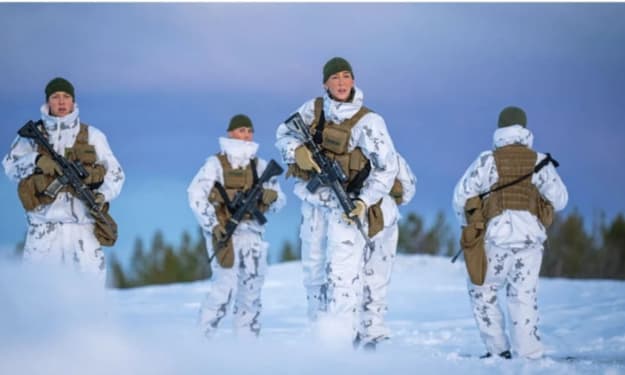
In recent months, a striking message has been emerging from Europe’s top military leadership: the continent must prepare for the possibility of war. Statements from generals, defense chiefs, and security officials across NATO and the European Union have been unusually direct, urging governments and civilians alike to rethink assumptions about long-term peace. While these warnings are not calls for panic, they reflect a sobering reassessment of Europe’s security environment in a world marked by growing instability. A Changing Security Landscape For decades after the end of the Cold War, much of Europe enjoyed what many believed was a permanent peace dividend. Defense budgets were reduced, armies were downsized, and the idea of large-scale conflict on European soil seemed increasingly remote. That confidence has now been shaken. Russia’s war in Ukraine is the most immediate catalyst behind the renewed warnings. The conflict has demonstrated that conventional warfare between states is no longer a theoretical concern but a real and ongoing threat. European generals frequently point out that the war has reshaped strategic thinking, proving that borders can still be challenged by force and that prolonged, high-intensity conflict is possible even in the modern era. Beyond Ukraine, military leaders also cite broader global tensions. Rivalries between major powers, instability in the Middle East, cyber warfare, disinformation campaigns, and the weaponization of energy and supply chains all contribute to a sense that Europe is entering a more volatile period. Why Generals Are Speaking Out It is relatively rare for military leaders to address the public so openly about the risk of war. Traditionally, such discussions are confined to closed-door briefings with political leaders. The fact that generals are now speaking publicly signals the seriousness of their concerns. One reason for this openness is preparedness. European defense officials argue that societies must understand the realities of modern conflict in order to respond effectively. War today, they warn, would not only involve soldiers on the front lines but also civilians, infrastructure, and digital systems. Power grids, communication networks, transportation hubs, and even food supplies could be affected. Another motivation is political. By highlighting potential risks, generals hope to influence policymakers to invest more in defense and resilience. Many European countries are increasing military spending, modernizing equipment, and strengthening alliances, but defense leaders argue that progress must be faster and more coordinated. Preparing Society, Not Just Armies One of the most notable aspects of recent warnings is the emphasis on civilian readiness. Generals stress that preparing for war does not mean expecting it tomorrow, but rather building resilience so societies can withstand shocks. This includes strengthening civil defense systems, improving emergency planning, and ensuring that citizens know how to respond during crises. In some countries, discussions have revived around shelters, emergency supplies, and public awareness campaigns—measures that were common during the Cold War but later fell out of favor. Cybersecurity is another key concern. Military leaders warn that future conflicts will likely begin long before any shots are fired, through cyberattacks on hospitals, banks, and government services. Preparing for war, in this sense, means investing in digital defenses and educating the public about misinformation and hybrid threats. NATO, the EU, and Collective Defense Europe’s generals consistently emphasize that no country can face these challenges alone. NATO remains the cornerstone of European security, and recent developments—including the expansion of the alliance and increased joint exercises—reflect a renewed commitment to collective defense. At the same time, the European Union is playing a growing role in security matters. Initiatives aimed at boosting defense cooperation, coordinating arms production, and reducing reliance on external suppliers are gaining momentum. Military leaders argue that a stronger, more self-reliant Europe will be better positioned to deter aggression and manage crises. Deterrence, they stress, is the ultimate goal. By demonstrating readiness and unity, Europe hopes to prevent conflict rather than provoke it. The warnings from generals are framed not as predictions of inevitable war, but as reminders that peace must be actively maintained. Public Reaction and Debate The public response to these warnings has been mixed. Some citizens see them as realistic and necessary, given recent events. Others worry that such rhetoric could increase fear or contribute to militarization. Critics argue that focusing too heavily on war risks diverting resources from social needs and diplomacy. Military leaders respond by emphasizing balance. They acknowledge the importance of diplomacy, economic stability, and social cohesion, but insist that these efforts must be backed by credible defense capabilities. In their view, preparedness is not the opposite of peace—it is a condition for preserving it. Looking Ahead As Europe navigates an uncertain future, the warnings from its generals serve as a wake-up call. The assumption that large-scale conflict is a relic of the past no longer holds. Instead, defense leaders urge a realistic understanding of risks and a collective effort to strengthen resilience. Preparing for war, they argue, does not mean surrendering to fear. It means acknowledging the complexities of the modern world, investing in security and unity, and ensuring that societies are strong enough to withstand pressure. Whether these warnings lead to lasting change will depend on political will, public engagement, and Europe’s ability to learn from the challenges of the present. In the end, the message from Europe’s generals is clear: peace is not guaranteed, but with foresight, cooperation, and preparedness, it can still be protected.
By Muhammad Hassanabout a month ago in Journal
Setting Sails for 2026
The first days of January are often quieter in hospitality. The rush of the festive season fades, dining rooms return to a more familiar rhythm, and the intensity that defines the end of the year slowly settles. Yet responsibility does not disappear with the celebrations. If anything, it becomes more visible.
By Cristian Marinoabout a month ago in Journal