
The Mysterious Kuldhara Village
A Window into the Culture and Tradition of the Paliwal Brahmins

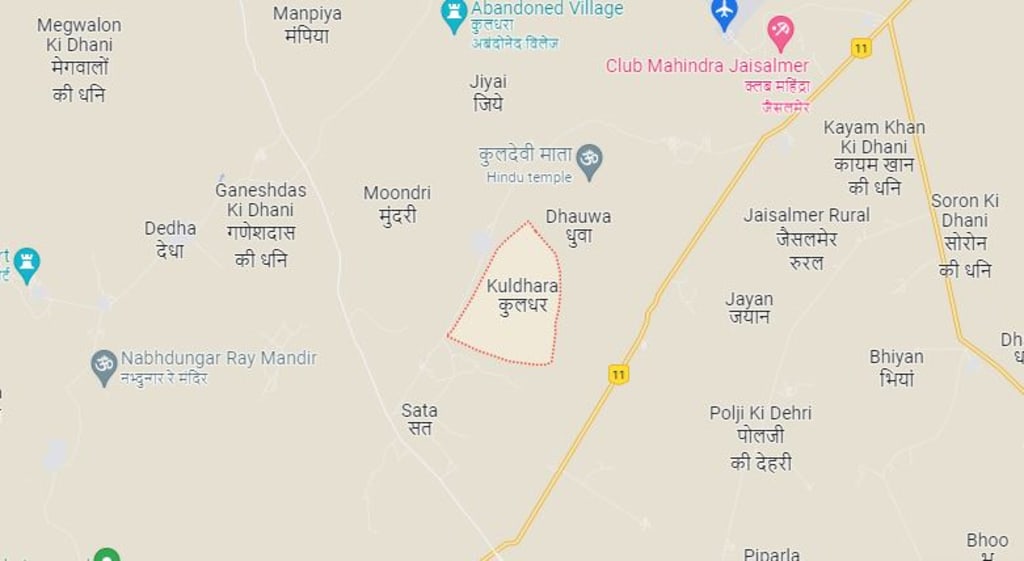
Kuldhara village is a deserted village located in the Jaisalmer district of Rajasthan, India.
The village has a rich history and is shrouded in mystery, making it a popular tourist destination.
Kuldhara village is believed to have been established in the 13th century by the Paliwal Brahmins, a community known for their intelligence and business acumen.
Legend has it that the ruler of the area, Salim Singh, became infatuated with the daughter of the Paliwal Brahmin chief.
The ruler demanded that the Brahmin hand over his daughter to him, but the chief refused, citing that it was against their culture and tradition. In retaliation, Salim Singh imposed heavy taxes on the community, making it difficult for them to survive.
Under the leadership of the chief, the Paliwal Brahmins decided to abandon the village overnight, leaving behind their homes, temples, and possessions.
It is said that as they left, they placed a curse on the village, stating that anyone who tried to occupy or settle there would face dire consequences.
Over time, the village was taken over by sand and became a deserted ghost town. Today, the ruins of Kuldhara village stand as a reminder of its glorious past.
The village has been preserved as a heritage site and attracts tourists from all over the world.
Visitors can explore the deserted homes, walk through the narrow streets, and experience the eerie silence of the place.
The abandoned temples, wells, and other structures provide a glimpse into the lifestyle of the Paliwal Brahmins.
Despite being a popular tourist destination, Kuldhara village remains shrouded in mystery.
The curse placed by the Paliwal Brahmins is believed to have come true, with several stories of paranormal activity being reported by visitors. Many claim to have heard strange noises, seen apparitions, and experienced a feeling of unease while visiting the village.
The government of Rajasthan has taken several steps to preserve the heritage site and promote tourism in the area.
The village has been declared a protected monument, and efforts have been made to restore and maintain the existing structures.
The government has also established a museum in the area, showcasing the history and culture of the Paliwal Brahmins.
In recent years, there have been efforts to revive the abandoned village and turn it into a thriving community once again.
The government has encouraged entrepreneurs to invest in the area, offering several incentives and tax benefits.
Plans are underway to develop the infrastructure in the area and provide basic amenities to the residents.
The story of Kuldhara village is a testament to the resilience and courage of the Paliwal Brahmins.
Despite facing adversity, they chose to stand up for their beliefs and values and leave behind a legacy that has survived for centuries.
The deserted village stands as a reminder of their struggles and achievements, and continues to attract visitors from all over the world.
In conclusion, Kuldhara village is a fascinating destination that offers a glimpse into the rich history and culture of Rajasthan.
The deserted village, shrouded in mystery and legend, is a popular tourist destination that attracts visitors from all over the world.
The government's efforts to preserve and promote the site have helped to ensure that the legacy of the Paliwal Brahmins lives on, inspiring future generations to stand up for what they believe in and never give up in the face of adversity.
Paliwal Brahmins culture and tradition
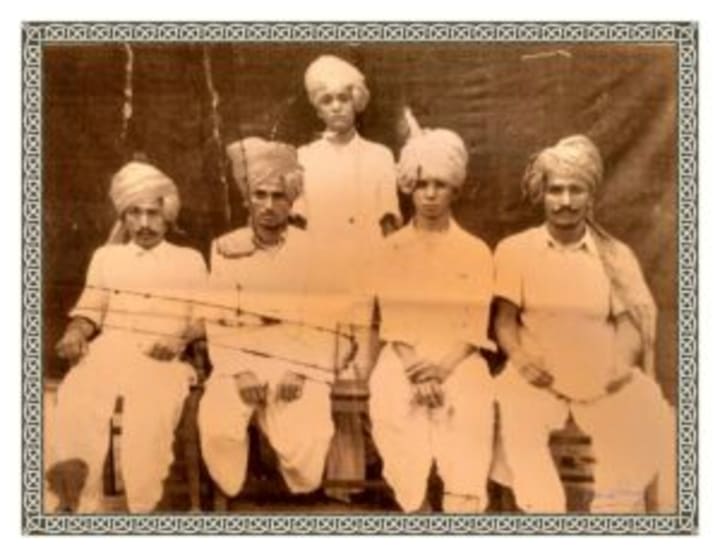
The Paliwal Brahmins were a community known for their intelligence and business acumen. They were primarily involved in agriculture, trade, and moneylending.
Here are some facts about their culture and traditions:
Caste System: The Paliwal Brahmins belonged to the highest caste in the Hindu social hierarchy, known as the Brahmins. They were responsible for performing religious rituals, teaching and transmitting knowledge, and maintaining the purity of the caste.
Education: Education was highly valued in the Paliwal Brahmin community. Boys were sent to gurukuls (traditional schools) at a young age to receive formal education in subjects such as Sanskrit, mathematics, and astronomy.
Marriage: Marriages were arranged within the same caste and sub-caste. The wedding ceremony was elaborate and involved several rituals and customs, including the exchange of gifts, the recitation of Vedic hymns, and the tying of the mangalsutra (sacred thread) around the bride's neck.
Food: The Paliwal Brahmins were strict vegetarians and followed a strict dietary code. They abstained from consuming meat, fish, and eggs and also avoided onion, garlic, and other pungent vegetables, which were believed to interfere with spiritual practices.
Festivals: The Paliwal Brahmins celebrated several festivals throughout the year, including Diwali, Holi, and Dussehra. These festivals were marked by elaborate rituals and ceremonies, feasting, and the exchange of gifts.
Beliefs and Practices: The Paliwal Brahmins were deeply religious and followed the teachings of the Vedas and the Puranas. They believed in the concept of karma and reincarnation and practiced various forms of yoga and meditation to achieve spiritual liberation.
Art and Architecture: The Paliwal Brahmins were known for their artistic and architectural skills. They built elaborate temples, palaces, and forts, and decorated them with intricate carvings and paintings. They were also skilled in music, dance, and poetry, and often performed at religious and cultural events.
Overall, the Paliwal Brahmins had a rich and vibrant culture and tradition, marked by a strong sense of community, a love of learning, and a deep devotion to religion and spirituality.
About the Creator
Pikaadoo
Let the power of words be used to spread knowledge
~ Fired ~
— Ai Intrusion ~ Are you Next ~ Is Ai Evolution after your job? — Few workplaces haven't been affected. Ai is in supermarkets, at doctors' offices, and even monitoring farms. I just can't think of anything this machine is not getting into, can you? For instance: Education ~ Law and Tech jobs will one day have a major influence or be taken over by these inanimate machines, with accuracy and vigor. From mechanics' diagnoses to a wide variety of everyday jobs, including fast food workers, with this input having the ability to cut their unnecessary work hours. I'm certain all of us have been touched by this with our short stories and colorful headings, have you? Even comments are very questionable 'Non-Robot' insertions.
By Jay Kantor8 days ago in Journal
Several Wounded in Attack on Bus Carrying Mineworkers in Dnipro
Several people were reportedly wounded following an attack on a bus carrying mineworkers in the southeastern Ukrainian city of Dnipro, drawing renewed attention to the dangers faced by civilian workers in areas affected by ongoing regional tensions and conflict. The incident has raised concerns about worker safety, infrastructure vulnerability, and the broader humanitarian impact of violence in industrial regions.
By Aarif Lashari7 days ago in Journal



Comments
There are no comments for this story
Be the first to respond and start the conversation.