
Who Is Ghazala Hashmi: From Educator to Virginia’s Lieutenant Governor
An overview of the background, challenges, and public service career of Virginia’s Lieutenant Governor

Introduction
Ghazala Hashmi is a significant figure in American politics. She is the first Muslim woman elected to statewide office in the United States and currently serves as the Lieutenant Governor of Virginia. She is also the first South Asian and the first Muslim to hold this position in the state.
Her election reflects changes in voter participation and growing acceptance of diverse leadership in public office. Hashmi’s path to statewide leadership was shaped by education, community involvement, and public service, along with challenges commonly faced by immigrant families and women in politics.
Early Life and Family Background
Ghazala Hashmi was born in India and immigrated to the United States with her family during childhood. Her family moved in pursuit of educational and professional opportunities. Adjusting to a new country required balancing cultural identity with integration into American society.
As a member of a minority community, Hashmi developed an early awareness of inclusion and civic responsibility. Education played an important role in her upbringing and later influenced her professional and political choices.
Education and Academic Career
Hashmi completed her higher education in the United States and began a career in academia. She worked as a college professor, teaching English and supporting student development. Her experience in education gave her insight into issues such as affordability, access, and workforce readiness.
Working with students from varied backgrounds shaped her understanding of public education and equity. These experiences later informed her policy priorities and approach to public service.
Entry Into Politics
After years of community engagement, Hashmi decided to enter politics. Her decision was motivated by concerns related to education funding, economic opportunity, and fair representation in government.
She gained wider recognition after winning a seat in the Virginia Senate. Her election was notable, as she became one of the first Muslim women to serve in a state legislature. The campaign relied on direct voter outreach and local engagement.
Challenges as a First-Time Candidate
Hashmi faced several challenges during her early political campaigns. As an immigrant, a Muslim, and a woman, she encountered skepticism in a competitive political environment. Public scrutiny and voter concerns required consistent engagement and clear communication.
She also dealt with the practical demands of campaigning, including fundraising, media coverage, and online commentary. Her campaign focused on policy issues and local concerns rather than personal identity.
Work in the Virginia Senate
During her time in the Virginia Senate, Hashmi worked on legislation related to education, workforce development, healthcare access, and economic growth. Her policy focus reflected her professional background and constituent needs.
She participated in committee work, legislative discussions, and constituent outreach. Her approach emphasized practical outcomes and legislative cooperation.
Campaign for Lieutenant Governor
Hashmi’s decision to run for Lieutenant Governor marked a transition to statewide leadership. Such campaigns require outreach across regions with varied political and economic priorities.
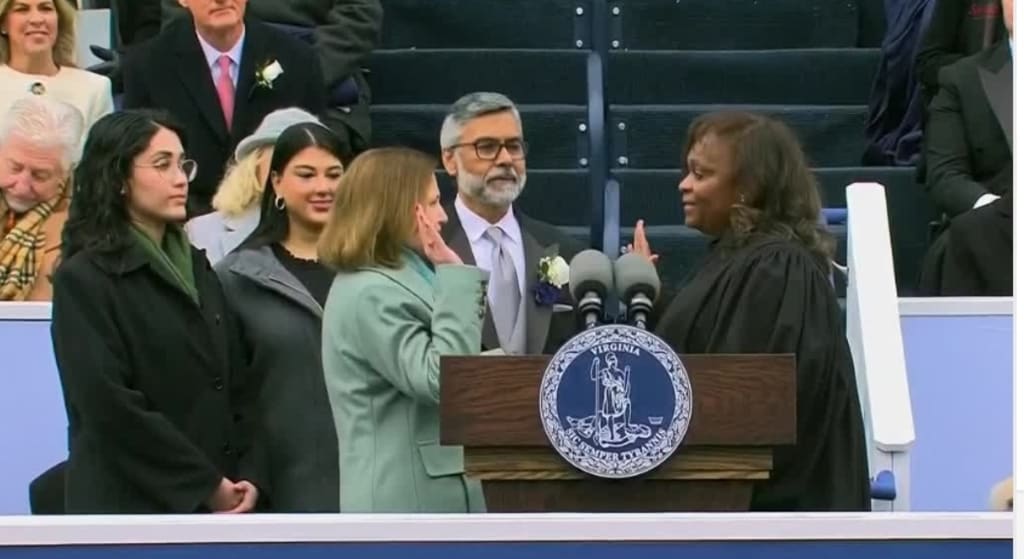
Her campaign highlighted experience, legislative knowledge, and governance. Voters supported her candidacy, leading to her election as Lieutenant Governor of Virginia.
Historic Significance of Her Election
Hashmi’s election made her the first Muslim woman elected to statewide office in U.S. history. She also became the first South Asian and first Muslim to serve as Virginia’s Lieutenant Governor.
This outcome reflects shifts in voter attitudes and participation. While the milestone holds symbolic value, it also points to broader changes in political representation.
Role and Responsibilities as Lieutenant Governor
As Lieutenant Governor, Hashmi presides over the Virginia Senate. Her duties include overseeing legislative sessions and casting tie-breaking votes when required.
She also represents the state at official events and supports legislative processes. The position requires maintaining fairness, order, and institutional responsibility.
Public Reaction and Media Coverage
Hashmi’s election received attention from national and international media. Reporting focused on her background, legislative experience, and the broader implications of her election.
Public reaction has included both support and criticism, reflecting standard democratic discourse. Discussions have centered on policy positions and governance rather than symbolism alone.
Challenges in Office
Statewide office brings increased expectations and public scrutiny. Hashmi faces the challenge of balancing leadership responsibilities with political disagreement.
Managing legislative differences and public expectations is a common aspect of high-level public service. These challenges require consistency and institutional focus.
Impact on Underrepresented Communities
Hashmi’s election has particular significance for Muslim, South Asian, and immigrant communities. Her success shows that statewide leadership roles are accessible to candidates from diverse backgrounds.
Community leaders note that her presence in office may encourage greater civic engagement and participation among underrepresented groups.
Historical Context
For much of U.S. history, statewide offices were limited to a narrow demographic. Hashmi’s election reflects gradual changes in political participation and representation.
While progress has been made, gaps remain. Her election contributes to a broader pattern of increasing diversity in public office.
Looking Ahead
Hashmi’s long-term influence will depend on her work in office. While historic milestones attract attention, governance and policy outcomes shape lasting impact.
Observers note that her leadership may influence future discussions on education, representation, and civic participation.
Conclusion
Ghazala Hashmi’s election as Lieutenant Governor of Virginia marks an important moment in American political history. As the first Muslim woman elected to statewide office in the United States and the first South Asian to hold this position in Virginia, her achievement reflects changing patterns in political participation.
Her journey from immigrant student to educator, legislator, and statewide official highlights the role of public service and civic engagement in democratic systems. Her legacy will be shaped by her leadership, policy contributions, and commitment to public accountability.
---
If
About the Creator
Saad
I’m Saad. I’m a passionate writer who loves exploring trending news topics, sharing insights, and keeping readers updated on what’s happening around the world.
Princess Beatrice’s Husband Spotted in Florida as Business Storms Brew Back
Edoardo “Edo” Mapelli Mozzi, the husband of Princess Beatrice, has been photographed in Florida — a seemingly laid‑back moment that arrives against a backdrop of renewed scrutiny of his business affairs and high‑profile royal family dynamics. The property developer’s U.S. presence — shared via social media posts — has caught public attention, as observers weigh personal travel, professional challenges and how the royal couple is navigating life outside of the formal spotlight.
By Salaar Jamali5 days ago in Journal
Off the Book
It ended like every other stupid idea. Badly, and alone. I’m researching digital confession ethics, he said. A tech ethicist. He gestured at floating data I couldn’t see then pulled out a physical notebook. Actual paper, fountain pen. He held it up like he was showing me scripture.
By Nicky Frankly3 days ago in Fiction


Comments
There are no comments for this story
Be the first to respond and start the conversation.