
Beginner’s Guide to Meditation: How to Get Started and Stick With It
Because Sitting Still Doesn’t Have to Feel Like Mental Gymnastics

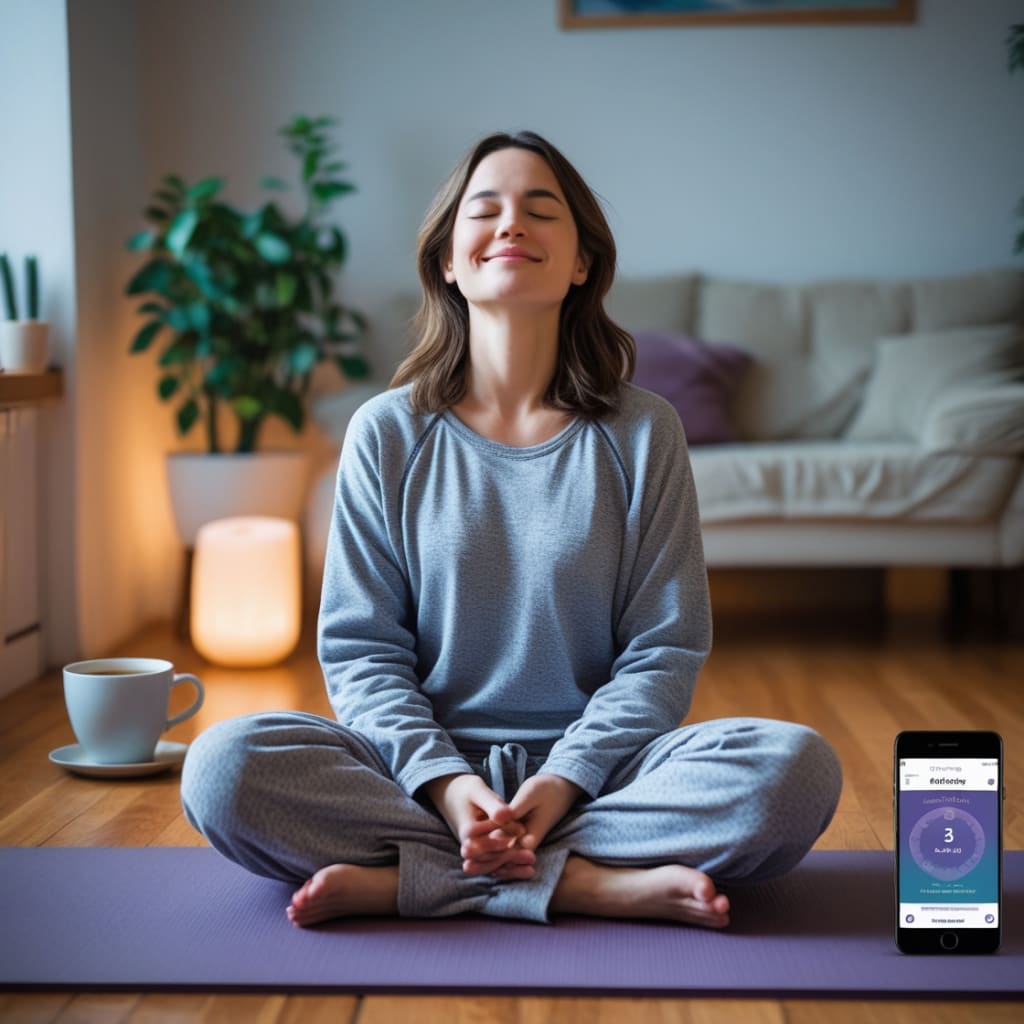
Let’s be real: the first time you try meditation, it feels less like "inner peace" and more like, "Why won’t my brain shut up?" You sit down, close your eyes, and instead of floating into serenity, you remember your 8th-grade crush, your grocery list, and that one time you called your teacher “mom.”
Welcome to meditation. You're doing it right.
Despite what Instagram yogis might have you believe, meditation isn’t about turning off your thoughts, becoming a monk, or sitting cross-legged on a mountaintop. It’s about learning to observe your mind without judgment, which, spoiler alert, can be life-changing.
So if you’re curious, confused, or completely convinced your brain is too chaotic for meditation, this guide is for you. Let's walk through how to start meditating and, more importantly, how to stick with it without feeling like a failure or falling asleep mid-om.
1. Let Go of the “Perfect Zen” Myth
Here’s the first rule of meditation club: There’s no such thing as a “perfect” meditation.
You will get distracted. Your foot will fall asleep. Your dog will bark. Your brain will start monologuing like a Shakespearean actor. It’s all normal. The practice isn’t about stopping thoughts; it’s about noticing them, gently guiding your attention back, and not panicking when your brain decides to replay the chorus of “Baby Shark” on loop.
Think of it like training a puppy. You're not mad when it wanders; you just lovingly bring it back. (Your brain = the puppy. You're welcome.)
2. Start Small (Like, Really Small)
You don’t need to start with 20-minute sessions. Honestly, even 1 minute of intentional breathing can change your vibe.
Start with 2–5 minutes a day. Set a timer. Sit comfortably. Close your eyes (or not). Breathe in. Breathe out. And when your brain goes rogue? Smile and come back to the breath. That’s it. That’s the practice.
Pro tip: Tie your meditation to something you already do, like brushing your teeth or making coffee. That way, it becomes part of your routine without needing a productivity pep talk.
3. Choose Your Style (There’s More Than One!)
Yes, there’s more than one kind of meditation. Here are a few to try:
Mindfulness meditation: Focus on your breath, body, or surroundings. Great for beginners.
Loving-kindness meditation: Send good vibes to yourself and others. Surprisingly emotional.
Body scan meditation: Move your attention through your body from head to toe. Excellent for stress and sleep.
Mantra meditation: Repeat a word or phrase (like “peace” or “I’m not going to scream at traffic today”).
Try a few and see what clicks. It’s like dating your mental state you’ll find your match eventually.
4. Use an App (Let Technology Help You Chill)
You don’t have to do it alone. Meditation apps can guide you step-by-step, which is great when your inner monologue is louder than a concert speaker.
Popular apps to try:
- Insight Timer (tons of free meditations)
- Headspace (great for beginners)
- Calm (soothing voice + scenic visuals)
- Smiling Mind (free + beginner-friendly)
Pick a voice you like (this matters!) and start with beginner meditations. Even five minutes guided is better than 20 minutes confused.
5. Make Your Space Comfy (No Need for a Zen Garden)
You don’t need candles, incense, or floor cushions imported from Nepal. But having a cozy corner where you can sit without distractions makes a difference.
Things that help:
A chair or cushion you won’t resent after five minutes
A quiet(ish) space
A blanket (if your house is set to “Antarctica”)
Earphones to block out background chaos
The idea is to create a space where your brain feels like, “Ah, it’s time to relax, not check emails.”
6. Track Your Progress, Not Your Perfection
Meditation is like brushing your brain; it works best when it’s consistent. But that doesn’t mean you need a streak of 300 days to prove your worth.
Instead of tracking perfection, track effort. Use a habit tracker or a sticky note to mark each day you showed up. Not meditated “perfectly” just showed up. That’s what counts.
Celebrating small wins keeps you motivated. And hey, if you meditated for 3 minutes today instead of doom-scrolling? That’s a victory.
7. Know That “Boring” Is the Point
You might feel like “nothing is happening.” That’s because meditation is subtle. It’s like fitness for your attention span, you won’t see abs after two days either.
But over time, you’ll notice:
You pause before reacting
You sleep better.
You’re less anxious in traffic or waiting in line behind someone writing a check in 2025.
You feel more connected to yourself.
These shifts are real. And they sneak up on you in the best way.
Final Though
The goal of meditation isn’t to become some blissed-out monk who never gets annoyed when Netflix buffers. The goal is to know yourself, be kind to yourself, and maybe stop living on autopilot.
So start where you are. One minute. One breath. One “oh hey, I’m thinking again” at a time.
Because your mind deserves peace, and you’re already doing better than you think.
About the Creator
Keep reading
More stories from Chinedum John and writers in Longevity and other communities.
Sleep Hygiene Hacks: Science‑Backed Tips for Restful Nights
Let’s face it modern life is basically a game of "how little sleep can I get before I turn into a zombie at my 9 a.m. meeting." If you’ve ever laid in bed staring at the ceiling, contemplating every embarrassing thing you’ve ever said since 2007, this one’s for you.
By Chinedum John9 months ago in Longevity
Quiz of the Week: How Tall Are These Puffins?
Each week, readers are invited to test their knowledge of the natural world, current affairs, and curious facts through a popular “Quiz of the Week.” This time, the spotlight falls on one of the North Atlantic’s most beloved seabirds: the puffin. Known for their bright orange beaks, comical walk, and striking black-and-white plumage, puffins often appear larger or smaller in photographs depending on perspective. The quiz’s central question — how tall are these puffins? — challenges assumptions shaped by camera angles, landscapes, and visual illusions. Puffins are commonly called the “clowns of the sea,” but few people know their true dimensions. When standing upright, an Atlantic puffin typically measures between 25 and 30 centimeters (about 10 to 12 inches) tall. That places them roughly the height of a standard school ruler. However, photos taken with wide-angle lenses or against dramatic cliffs can make puffins appear far bigger — or surprisingly tiny — than they really are. The Science of Size Perception The quiz explores how human perception can be misled when viewing wildlife images without a frame of reference. A puffin perched on a cliff ledge may look imposing when photographed close up, but when compared with surrounding rocks or vegetation, its modest height becomes clear. Conversely, when puffins are photographed next to larger seabirds like gulls or gannets, they can appear smaller than expected. This phenomenon is part of a broader psychological effect known as size constancy illusion, where the brain attempts to judge an object’s size without enough environmental clues. Wildlife photographers often use this effect deliberately to create dramatic compositions, sometimes leading viewers to misjudge scale. The quiz presents a series of images of puffins in different settings — standing on grass, perched on rocks, and flying near the sea — asking participants to estimate their height. Many answers submitted by readers tend to overshoot the true figure, with guesses ranging from 40 to 60 centimeters. Puffins in the Wild Puffins inhabit coastal regions of the North Atlantic, nesting on cliffs and grassy slopes in Iceland, Norway, Scotland, Ireland, and parts of Canada. Despite their small stature, puffins are remarkable flyers and swimmers. Their wings beat rapidly — up to 400 times per minute — enabling them to “fly” underwater while hunting fish such as sand eels and herring. Their compact size is an evolutionary advantage. Being small allows puffins to maneuver easily both in the air and underwater, while their dense feathers provide insulation against cold ocean temperatures. During breeding season, their beaks turn bright orange and yellow, a visual signal used in courtship and recognition. Why Puffins Fool the Eye One reason puffins appear larger than they are is their upright posture. Unlike many seabirds that crouch or hunch forward, puffins stand tall, with their chest pushed outward and head held high. This posture gives them a confident, almost penguin-like silhouette. Another factor is their oversized beak, which can account for a significant portion of their visible profile. In photographs, the beak draws attention and exaggerates their apparent scale. When viewers focus on the beak rather than the body, the brain subconsciously inflates the bird’s overall size. The quiz highlights how lighting and background also influence perception. A puffin against a clear blue sky looks larger than one surrounded by dense vegetation or other animals. Shadows and contrast can further distort how big or small the bird seems. Education Through Play The “Quiz of the Week” format is designed not just for entertainment but also for learning. By using puffins as the subject, the quiz draws attention to wildlife awareness and ecological literacy. Readers come away not only with a corrected sense of scale but also with a deeper appreciation of how animals are adapted to their environments. Educators have praised this approach for encouraging observation skills. Instead of simply providing facts, the quiz asks participants to reason visually, estimate measurements, and compare images critically. In an age dominated by digital images and social media, these skills are increasingly important. Puffins and Conservation Beyond the quiz, puffins face serious challenges in the real world. Climate change has affected fish stocks, making it harder for puffins to find food during breeding season. Rising sea temperatures and overfishing have contributed to declining populations in some regions, particularly in the UK and Iceland. Conservation groups stress that understanding and appreciating puffins — including their true size and physical traits — can help foster public support for protective measures. The quiz serves as a light-hearted entry point into a much heavier topic: the fragile balance of marine ecosystems. A Small Bird with Big Appeal Ultimately, the quiz’s answer surprises many participants: puffins are smaller than expected, yet their charm is enormous. Standing just a foot tall, they manage to capture global attention through personality, color, and behavior. The popularity of the quiz reflects a wider fascination with nature and visual puzzles. By asking a simple question — how tall are these puffins? — it opens the door to scientific insight, conservation awareness, and a reminder that appearances can be deceiving. In the end, the lesson is clear: puffins may be small in stature, but they loom large in the imagination. And sometimes, the best way to learn about the natural world is through a question that makes us look twice.
By Fiaz Ahmed 2 days ago in Longevity
When True Love Never Questions Your Soul
“And she’s going to learn that this life will hit you, hard, in the face, wait for you to get back up, just so it can kick you in the stomach but getting the wind knocked out of you is the only way to remind your lungs how much they like the taste of air.” — Sarah Kay’s Poem — If I Should Have a Daughter
By Chantal Christie Weissa day ago in Humans



Comments
There are no comments for this story
Be the first to respond and start the conversation.