
The Brain’s Ripple Effect: How Memories Are Structured
Unraveling how brain waves and neural patterns help organize and store our memories
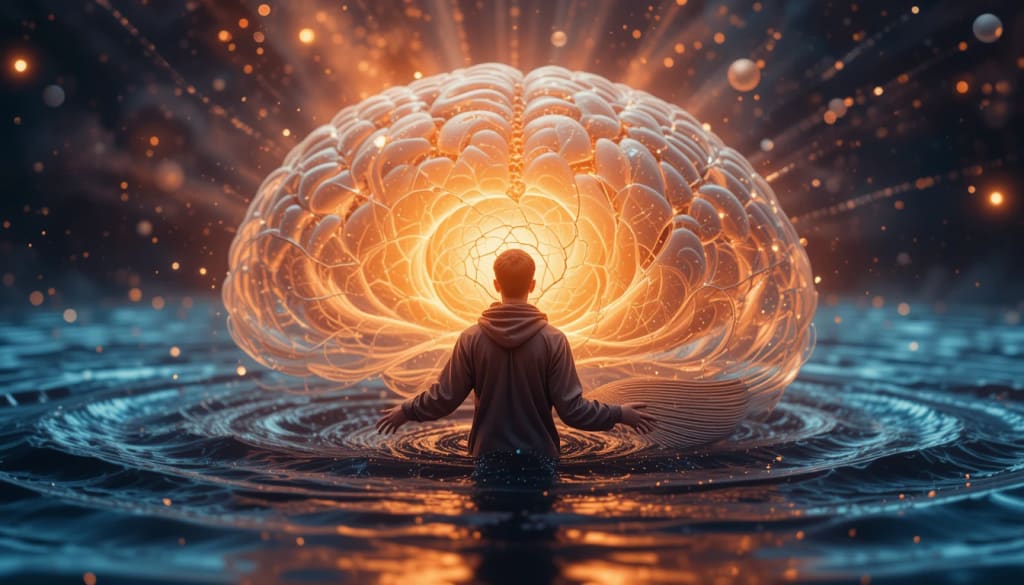
Have you ever wondered how your brain stores memories? How can you remember your first day of school, a family vacation, or even what you had for lunch last week? Scientists have been trying to answer these questions for years. Recent research shows that our brains may store memories using something called "ripple effects," which are tiny waves of brain activity that play a big role in how we form and organize memories.
This article explains how the brain’s ripples help shape our memories using simple language so anyone can understand.
---
What Are Brain Ripples?
The brain consists of billions of nerve cells called neurons. These neurons send signals to each other using electric pulses. When many neurons fire together in a specific way, they create wave-like patterns known as "ripples" or "sharp wave ripples (SWRs)."
These ripples mainly occur in a part of the brain called the hippocampus, which is closely linked to learning and memory. The ripples are very fast and happen in short bursts, often while you’re resting, relaxing, or sleeping.
Think of ripples as the brain’s "replay system." They help the brain review recent events, organize them, and store important information for the future.
How Do Ripples Help with Memory?
Brain ripples act like tiny messengers that help the brain decide what to remember and what to forget. Here’s how they work:
1. Replaying Experiences
After you go through something new—like meeting a new friend or learning a skill—your brain replays that event while you rest or sleep. The hippocampus sends out ripples that repeat the patterns of brain activity from that experience. This process is called "memory consolidation," and it helps transfer memories from short-term storage to long-term storage.
2. Strengthening Connections
Ripples help strengthen the connections between neurons involved in the experience. The more ripples repeat a memory, the stronger it becomes. This is why sleep is so important—most ripples occur while you’re sleeping, when your brain is actively organizing memories.
3. Linking Memories
Ripples don’t just replay single events; they also connect related memories. For example, remembering a trip to the beach might bring back memories of the smell of sunscreen, the sound of waves, or the taste of ice cream. These ripples help weave memories together, creating a full and vivid experience in your mind.
Why the "Ripple Effect" Matters
The term "ripple effect" describes both the brain waves and how one small memory can trigger many others. Just like dropping a stone into water creates ripples that spread outwards, recalling one thing can lead to a chain reaction of related thoughts and feelings.
This ripple effect helps you:
- Tell stories from memory.
- Make decisions based on past experiences.
- Learn from mistakes and build knowledge.
Without these ripples, our memories would be scattered and disconnected.
When Ripples Go Wrong
Unfortunately, not all ripple activity is helpful. If the brain's ripples are too weak, too strong, or poorly timed, it can negatively affect memory. Problems with brain ripples have been linked to:
- Alzheimer’s disease, where memory weakens and becomes disorganized.
- Epilepsy, where abnormal brain waves disrupt normal ripples.
- Schizophrenia and PTSD, where unwanted or intrusive memories may be replayed too often or in harmful ways.
Understanding ripples better could lead to new treatments for these conditions, helping people improve their memory functions.
How Scientists Study Ripples
Studying brain ripples isn’t easy; they’re small, fast, and occur deep inside the brain. But scientists use tools like:
- EEGs (electroencephalograms) to measure brain wave patterns.
- fMRI scans to see which areas of the brain are active.
- Implanted electrodes, in rare cases (such as epilepsy treatment), to record ripples directly from the brain.
Researchers often work with lab animals like rats and mice, which have similar ripple activity in their brains. These studies have shown that ripples play a crucial role in helping animals remember mazes, food locations, and danger zones.
What This Means for the Future
Understanding the ripple effect in the brain could lead to new technologies and therapies. For example:
- Better sleep tools: Since ripples occur during deep sleep, devices that enhance sleep quality might improve memory.
- Brain-computer interfaces: Ripple signals could one day allow us to communicate directly with machines using just our thoughts.
- Memory training apps: Based on how ripples shape memories, we could create smarter ways to study and learn.
- Treatment for memory loss: Stimulating ripple activity might help slow down diseases like Alzheimer’s or dementia.
---
Final Thoughts
Your brain is like a giant orchestra, and the ripples are its way of replaying and storing life's most important moments. These tiny bursts of activity help turn your everyday experiences into lasting memories.
While we still have much to learn, one thing is clear: the brain’s ripple effect is not just a wave; it's the rhythm that helps shape who we are.
So the next time you recall a happy memory, thank your brain’s ripples for keeping it safe.
About the Creator
Day 4 of Quitting
If this is how sobriety feels, maybe it’s better to go through life a little buzzed… this, along with other hits like, I want to kill myself, I wish I was dead, and I’m going to throw myself off a bridge have been the only thoughts on rotation these past few days. I promise myself that if, in a month, I still feel like this (‘this’ meaning despondent, full of rage, and simultaneously numb) I can go back to smoking. Until mid-February though? Nicotine is off the table.
By sleepy drafts28 days ago in Longevity
Why Handwriting Could Be Good For You
Introduction Text from the Instagram post below: 1. Dr. Tanaka tracked seniors over 80 in Kyoto and found one constant: they wrote by hand for 15 minutes a day. Typing uses one neural pathway, but physical writing hits 17 different zones. You’re robbing your focus when you pick a keyboard over a pen. 2. MRI scans show that writing by hand forces your brain to manage spatial logic and memory at the same time. This effort keeps you off autopilot. Typing is just muscle memory, while writing is active thinking. It’s the clear difference between simple data storage and actual cognitive engagement. 3. In one trial, those journaling by hand had 41% better recall and 34% faster processing. “The pen builds the hardware,” Tanaka noted. The industry hid this for years to protect revenue, since you can’t patent a pen. They chose profit over your memory. Write three original sentences every morning to keep your mind sharp.
By Mike Singleton 💜 Mikeydred about an hour ago in Longevity


Comments
There are no comments for this story
Be the first to respond and start the conversation.