
A man built a tiny house inside a tree trunk by himself
Building a house in the forest

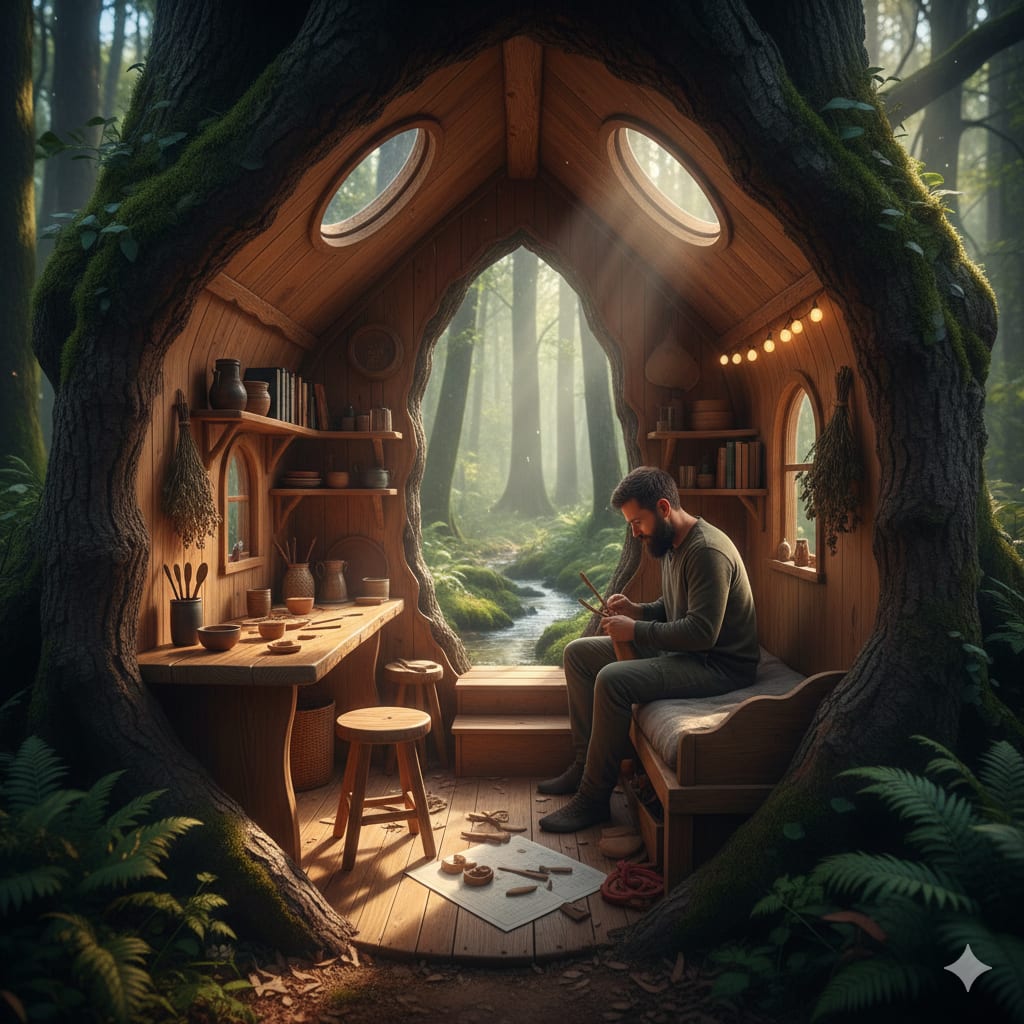
Building a house in the forest is a dream for many people because it represents a life truly close to nature, far from the chaos of the city and the noise of modern society. This story begins with a man who chose a simple way of living and decided to build a tiny house inside the hollow of a giant tree deep in the forest, using only his own strength, effort, and determination. He began by carefully exploring the forest area, selecting a tree with a strong trunk and a natural hollow, located in a safe position away from floods, landslides, and strong winds. Once the right location was chosen, he cleared the surrounding area to prepare the construction site and defined the boundaries of the living space from the very beginning, ensuring safety, stability, and harmony with the natural environment.
Before starting the actual construction, he carefully planned the interior structure. He determined the positions of the floor, walls, sleeping area, sitting area, work corner, shelves, and light openings so that the small house would be practical, comfortable, and well-organized for everyday life. Every inch of space was thoughtfully designed to transform the limited interior of the tree hollow into a functional home. When the plan was ready, he began shaping and carving the inside of the tree trunk, using basic tools to slowly expand the space while preserving the main structure of the trunk to maintain its strength. This stage required precision and patience, because a wrong cut could disturb the balance of the entire structure.
After achieving the desired interior space, he started building the floor structure. Strong hardwood beams were placed as the main foundation, and wooden planks were carefully laid one by one to create a smooth, solid floor capable of supporting weight properly. The floor became the foundation of the entire house, providing stability and long-term safety. Ventilation gaps were also considered to prevent moisture buildup and wood decay. He then moved on to building the interior walls, using natural wood and shaping them to follow the curves of the tree trunk, allowing the house to blend harmoniously with nature instead of appearing rigid or artificial. The walls were firmly installed and reinforced internally to increase strength and durability.
As the main structure took shape, he created small windows and light openings to allow natural sunlight to enter the house. This improved ventilation, reduced dampness, and created a bright, airy atmosphere. Even though the space was small, it felt warm, peaceful, and comfortable. After that, he decorated the interior in a simple yet functional style. A wooden bed was designed to fit the limited space, along with a small table for working or eating, wall-mounted shelves to save space, and a small resting corner for sitting and enjoying the surrounding nature. Every element was carefully arranged so that the tiny house became both a living space and a peaceful retreat.
The final stage was the finishing work. He smoothed the wooden surfaces, applied moisture protection, checked the strength of every part of the structure, and organized the interior neatly. Natural materials were preserved as much as possible to maintain harmony with the forest environment. When everything was completed, the house inside the tree trunk became a tiny home that was warm, strong, fully functional, and perfectly blended with the surrounding forest. This house is not just a physical structure, but a symbol of simple living, creativity, and harmonious coexistence with nature. It reflects the journey of building a home from nothing, through effort, patience, and dedication, until it becomes a true “dream home in the forest,” filled with peace, warmth, and deep emotional value—a place where life slows down and nature becomes part of everyday living.
About the Creator
Keep reading
More stories from Kenneth Ethan Carl and writers in Motivation and other communities.
The Health Benefits of the Mediterranean Diet: Why It’s Considered One of the Healthiest Diets in the World
The Mediterranean diet is often lauded as one of the healthiest dietary patterns worldwide. Originating from the traditional eating habits of people living in countries bordering the Mediterranean Sea, such as Greece, Italy, and Spain, this diet is characterized by a high intake of fruits, vegetables, whole grains, nuts, and olive oil, moderate consumption of fish and poultry, and a low intake of dairy products, red meat, and sweets. Numerous scientific studies have linked the Mediterranean diet to various health benefits, making it a model for healthy eating.
By Kenneth Ethan Carl2 years ago in Motivation
One Hard Thing
Stop me if you’ve heard this one before: You have the number, you know your schedule- you’ve even picked out the perfect day and time to make this appointment. Shoot, you’ve even picked out alternative days and times just in case their schedules can’t accommodate you!
By Taylor Rigsby21 days ago in Motivation
Let (it) Go
Losing my job didn’t happen in a dramatic way. There was no argument, no raised voices, no outright admission of discrimination. Instead, it came wrapped in softer language—performance concerns, operational needs, not the right fit. What those phrases really meant was simple: I could no longer function in the way an able-bodied retail worker was expected to.
By Millie Hardy-Sims6 days ago in Motivation
Think for Me
"How do you calculate the circumference of a circle? Submit your answer when ready." [Pause] "Excellent! Every student was able to call up the answer electronically very quickly. If I, as a robot had feelings, I would express pride. You may break for lunch. Return to this cyber room in 45 minutes."
By Julie Lacksonen2 days ago in Humans



Comments
There are no comments for this story
Be the first to respond and start the conversation.