
Jesse Jackson
A Complicated Architect of American Civil Rights and Politics

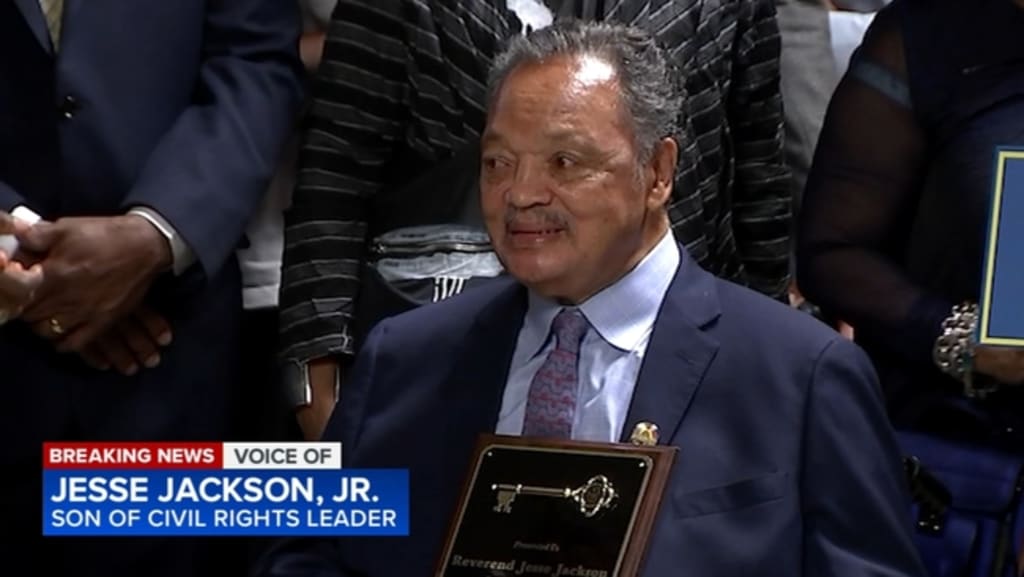
Jesse Jackson has been many things over the course of his public life: preacher, street organizer, presidential candidate, dealmaker, moral agitator, and lightning rod. He is one of those figures who shows up at pivotal moments—marching with Martin Luther King Jr., negotiating the release of hostages abroad, standing on the convention podium in 1984 and 1988, speaking in Ferguson decades later.
Trying to reduce him to a single role misses the point. Jackson helped reshape what was possible for Black politics in the United States, but he also embodied the tensions and contradictions of that transformation. His legacy is both inspiring and uncomfortable, and understanding it requires sitting with those tensions rather than smoothing them over.
Below is a closer look at his life, work, influence, and the limits of what he achieved.
Early Life and Formation
From Greenville to the Seminary
Jesse Louis Jackson was born in 1941 in Greenville, South Carolina, into the rigid racial hierarchy of Jim Crow. His early life was marked by the reality most Black Southerners understood instinctively: if you waited for the system to correct itself, you’d be waiting forever.
He was raised in a complex family situation—born to a teenage mother, with a stepfather who gave him his last name but not always emotional security. Jackson has often described this early experience of feeling like an “outsider,” and it’s not hard to see how that shaped his later insistence on visibility and voice.
He excelled at sports and academics and attended North Carolina A&T, a historically Black university, on a football scholarship. That decision mattered. On Black campuses in the early 1960s, the Civil Rights Movement wasn’t something you watched on television; it was part of daily life. Sit-ins, boycotts, and organizing were woven into student culture.
After college, Jackson briefly attended Chicago Theological Seminary. He didn’t finish, but the time in Chicago and the combination of theology and politics would define him. He was ordained as a Baptist minister, and the cadence and moral framing of the pulpit would remain at the core of his public style.
Joining the Movement Under King
Jackson’s entry into national prominence came through Martin Luther King Jr. and the Southern Christian Leadership Conference (SCLC). He joined SCLC in the mid-1960s and soon ran Operation Breadbasket, the organization’s Chicago-based economic justice initiative.
Breadbasket used a strategy that now looks strikingly pragmatic: boycotts and negotiations aimed at pushing white-owned businesses to hire Black workers, promote Black managers, and support Black-owned firms. Jackson organized “selective buying campaigns,” combining moral persuasion with targeted economic pressure.
It was a training ground in both grassroots organizing and media-savvy leadership. Jackson learned how to negotiate with corporate executives in the morning and speak to church audiences at night. He also learned how visibility could turn local fights into national stories.
But he wasn’t just a loyal lieutenant. He was ambitious, and that eventually caused friction with King’s inner circle.
Break with SCLC and the Birth of Operation PUSH
Tensions After King’s Assassination
Jackson was present in Memphis on the day King was assassinated in 1968. In the aftermath, he quickly became one of the more recognizable voices associated with King’s legacy. Some of his public claims about his closeness to King at the moment of the shooting upset other SCLC leaders, who viewed them as self-aggrandizing.
The conflict was partly personal and partly organizational. Jackson wanted more autonomy and a more direct route to leadership. SCLC leadership saw him as overly theatrical and difficult to manage. By 1971, the split was public: Jackson left SCLC and founded his own organization.
Operation PUSH and the Politics of Economic Pressure
Jackson created Operation PUSH (“People United to Save Humanity,” later “People United to Serve Humanity”) in Chicago. PUSH’s mission centered on economic empowerment and social justice, with an approach that blended civil rights activism, Black institution-building, and media-oriented advocacy.
In practice, Operation PUSH:
- Pressured corporations to hire and promote Black workers
- Pushed for more advertising in Black-owned media outlets
- Encouraged “buy Black” campaigns
- Held Saturday morning “revival” meetings mixing preaching, politics, and organizing
These efforts had mixed results. On one hand, companies did change hiring practices under pressure, and Jackson gave many young activists a platform and training ground. PUSH helped shift the national conversation around economic justice, not just legal equality.
On the other hand, critics argued that Jackson’s style sometimes veered into showmanship, and they questioned how much of the corporate change was structural versus cosmetic. There were also recurring questions about finances and management. PUSH wasn’t a polished NGO; it was messy, personality-driven, and heavily dependent on Jackson’s presence.
Yet this model—moral rhetoric, media visibility, targeted economic pressure—is exactly what he later carried into national politics.
The Rainbow Coalition and National Political Ambitions
Building the Rainbow: From Chicago Roots to a Wider Vision
By the late 1970s, Jackson began talking more explicitly about a “Rainbow Coalition.” The phrase had earlier roots in Chicago politics—Fred Hampton of the Black Panthers had used it for a multi-racial alliance of Black, Latino, and poor white groups. Jackson’s version was broader and more electoral: a coalition of marginalized groups—Black voters, Latinos, working-class whites, small farmers, peace activists, feminists, labor unions—aligned around economic justice and civil rights.
The idea was simple but transformational: if these diverse groups voted together, they could reshape the Democratic Party and eventually the country. In practice, building that coalition was incredibly difficult. The interests of these groups did not always align, and long histories of racial and class mistrust didn’t vanish because someone gave them a unifying label.
Still, Jackson’s Rainbow rhetoric gave a language and framework to a segment of American progressives who felt alienated from the centrist drift of the Democratic establishment.
The 1984 Presidential Campaign: A Test Run
A Campaign Few Took Seriously—Until They Had To
When Jesse Jackson announced his candidacy for the Democratic presidential nomination in 1984, much of the political class treated it as symbolic—a protest run rather than a serious bid for power. Jackson faced structural obstacles: limited access to money, a skeptical party establishment, and open hostility from parts of the white electorate.
He ran anyway, with a platform focused on:
Full employment and economic justice
Cuts in military spending
Opposition to apartheid in South Africa
Voting rights and civil rights enforcement
Support for Palestinian self-determination (controversial then and now)
He won about 3.5 million votes and carried several primaries and caucuses, including Louisiana, Virginia, South Carolina, and the District of Columbia. For a Black candidate in 1984, this was unprecedented.
Strengths and Missteps
The campaign was both groundbreaking and flawed. Jackson’s oratory was powerful—he could frame policy in moral terms that resonated deeply with Black voters and segments of the left. He brought new voters into the system, especially in Southern primaries where Black turnout surged.
But he also made serious mistakes. A visit to Syria to negotiate the release of a downed American pilot brought him global attention but raised questions about his foreign policy judgment. More damaging was his use of an antisemitic slur in a conversation with a reporter, referring to New York as “Hymietown.” When it became public, it caused lasting damage to his relationship with many Jewish voters and leaders.
Jackson apologized, but the incident hardened perceptions in some quarters that he was too divisive or reckless to be trusted with higher office. It also showed the fragility of the “Rainbow” idea in practice; bridging communities required more than shared economic interests, especially when painful stereotypes were involved.
Despite this, the 1984 campaign shifted the frame. Jackson demonstrated that a Black candidate could win delegates, compete in debates, and shape the primary agenda. In many ways, it was a dress rehearsal for what he did four years later.
The 1988 Campaign: From Protest to Power
A More Disciplined Operation
By 1988, Jackson was more prepared. His second presidential campaign was better organized, better funded, and more strategically focused. He had learned from previous missteps and built stronger relationships within parts of the Democratic Party.
His platform remained progressive—for universal healthcare, free or affordable college, reduced military spending, and strong labor rights—ideas that sound familiar now because they were later echoed by figures like Bernie Sanders and others on the left. At the time, many of these proposals were seen as outside the mainstream.
Jackson won 11 primaries and caucuses, including Michigan, Alabama, Georgia, Virginia, and his home base of South Carolina. At one point, he led the Democratic field in delegates. While he ultimately lost to Michael Dukakis, his performance was historic: he finished second and had a real, if still long-shot, path to the nomination.
Shifting the Political Imagination
The 1988 campaign did something unusual: it made visible something many people had assumed was impossible. A Black candidate was not just running as a symbol; he was actually competitive.
Younger politicians of that era—from mayors to future members of Congress—watched closely. Barack Obama, then a young community organizer, later acknowledged that Jackson’s campaigns showed what could be done, even though Obama chose a different style and coalition.
Jackson’s delegate strength also forced the Democratic Party to take Black voters more seriously in its internal decision-making. He pushed for changes in the party rules and platform that gave more weight to progressive and minority voices.
There were limitations. Jackson never fully overcame fears among some white voters that he was too radical or too divisive. The party establishment worried he would be unelectable in a general election, especially against Republican candidates skilled at playing on racial anxieties.
Still, the lasting impact is clear: after 1988, the idea of a Black president no longer felt like science fiction. It felt distant but imaginable, and that matters in politics more than people admit.
International Advocacy and High-Risk Diplomacy
Negotiating Hostage Releases
Jackson’s career also included a series of unofficial diplomatic missions. He negotiated the release of hostages or prisoners in several high-stakes situations, including:
- A captured American pilot in Syria in 1984
- Political prisoners in Cuba
- Hostages held in Iraq before the Gulf War
These missions were controversial. Supporters saw them as acts of humanitarian leadership, using moral authority to save lives when formal diplomacy was stalled or unwilling to engage. Critics accused him of grandstanding, freelancing foreign policy for publicity, or giving repressive regimes a propaganda win.
Both perspectives have elements of truth. Jackson did gain media attention and political capital from these missions, and authoritarian leaders got to present themselves as reasonable negotiators. Yet people also came home alive who might not have otherwise. Families of those hostages rarely cared whether the motives were perfectly clean; they saw a man who stepped in when others appeared stuck.
This aspect of Jackson’s work exemplifies a recurring pattern: he occupied spaces where official institutions failed, but he did so in ways that raised questions about accountability and long-term impact.
Controversies, Criticisms, and Personal Struggles
Tensions with Black Leaders and Younger Activists
Jackson was never universally loved within Black America, despite being one of its most recognizable leaders. Some local organizers resented national figures like Jackson parachuting into their cities after crises, giving speeches, and then moving on. The tension between local, long-term organizing and national media-driven activism is real, and Jackson often sat at the center of that friction.
Younger activists in later decades, especially around Black Lives Matter, sometimes saw him as part of an older generation whose strategies didn’t fully fit the current moment. They respected his history but questioned whether his model—pastoral leadership, negotiation with power brokers, televised rallies—could deliver the structural change they sought.
Personal Scandals and Human Frailty
Jackson also faced personal scandals. In 2001, it became public that he had fathered a child outside his marriage. For a religious leader who had long spoken about moral values, this was a serious blow to his credibility. His public admission and step back from some leadership roles showed a rare vulnerability, but it also fed critics who already saw him as hypocritical or too focused on image.
There were also long-running questions about how his organizations were funded and run. While nothing rose to the level of defining criminal scandal, the perception of loose management and blurred lines between political, religious, and personal activities damaged his standing among some donors and allies.
If you look at his career without mythologizing it, what emerges is not a spotless hero but a flawed, ambitious, deeply driven person whose personal and public lives often collided in messy ways. In other words, a human being.
Later Years: From Central Figure to Elder Statesman
The Rainbow Coalition’s Evolution
The Rainbow Coalition, merged with PUSH into Rainbow/PUSH, continued to operate as an advocacy organization, though it lost some of its earlier intensity and national centrality. Jackson remained a frequent commentator on racial justice issues and a presence at protests and political conventions.
He supported Democratic candidates, including Bill Clinton, Barack Obama, and others, though his relationship with the party establishment was always complex. In the Obama years, Jackson sometimes seemed unsure of his place. The first Black president used a different playbook—cool, technocratic, less overtly moralistic in style—and some of Jackson’s comments during that period created tension.
Still, when issues like voting rights, police brutality, or economic inequality resurfaced (they never really went away), Jackson would appear—less as the leading voice and more as a recognized elder whose presence connected current struggles to past ones.
Health and Aging
In 2017, Jackson publicly announced that he had been diagnosed with Parkinson’s disease. The condition has slowed him physically but not silenced him entirely. He continues to speak and attend events, though at a reduced pace.
There’s something instructive about watching a once-constant figure of movement and motion grapple with a disease that gradually takes away physical control. It humanizes him in ways that political narratives often don’t allow.
Legacy: What Jesse Jackson Changed—and What He Didn’t
A Pathbreaker for Black Political Power
Jackson’s most visible legacy lies in electoral politics. His presidential campaigns did several things that still matter:
- Expanded the electorate by registering and mobilizing Black and poor voters
- Pressured the Democratic Party to give more voice to minorities and progressives
- Demonstrated that a Black candidate could be competitive at the highest level
It would be simplistic to say “no Jackson, no Obama”—history doesn’t work like a straight line—but it’s fair to say Obama’s path would have been harder if Jackson hadn’t already tested and stretched the boundaries of what the electorate and the party could imagine.
Redefining Leadership Beyond Protest
Jackson also helped redefine what civil rights leadership could look like after the 1960s. He moved beyond court cases and legislative lobbying into a mix of economic pressure, international advocacy, and electoral politics. That model—part preacher, part negotiator, part candidate—has influenced a generation of Black leaders who operate both inside and outside formal institutions.
At the same time, his style underscored some pitfalls: reliance on a charismatic leader, the difficulty of building lasting structures beyond one person’s voice, and the constant temptation to chase cameras rather than slow, unglamorous organizing.
Complicated Relationships with Allies and Opponents
Jackson’s record on coalition-building is mixed. He brought together diverse communities under the “Rainbow” idea at moments, but he also damaged trust at key times, particularly with Jewish organizations. Some of those relationships healed partially; others never fully did.
This is one of the more sobering parts of his legacy. The dream of multi-racial, cross-class coalitions is still central to progressive politics, but Jackson’s experience shows how fragile those alliances are, especially when cultural and historical wounds are involved. Building them requires consistency, humility, and discipline that go beyond powerful speeches.
Practical Lessons from Jackson’s Life and Work
Looking at Jackson’s trajectory, a few practical insights stand out—useful whether you’re thinking about politics, social change, or leadership in any domain:
1. Visibility matters, but it isn’t enough.
Jackson was a master of visibility. He knew how to put pressure on institutions by making issues public. But visibility without follow-through can breed cynicism. The most durable gains he helped win came when public pressure was paired with detailed negotiation and structural change.
2. Coalitions are hard work, not slogans.
The “Rainbow Coalition” was a vivid idea, but making it real required addressing tensions honestly—between Black and white workers, between Jews and Black activists, between urban activists and rural farmers. The concept still has power, but Jackson’s career is a reminder that coalition politics is a long, often uncomfortable process.
3. Charisma is both an asset and a trap.
Jackson’s personal magnetism allowed him to inspire and mobilize huge crowds. It also made his organizations heavily dependent on him and magnified the impact of his personal missteps. Charismatic leadership can kickstart movements, but institutions that survive need broader, more distributed leadership.
4. Moral language has political consequences.
Jackson spoke in moral terms—right and wrong, justice and injustice—at a time when many politicians preferred technocratic language. That clarity moved people. It also made compromise more complicated. There’s a real tension here: how do you keep moral clarity without falling into rigidity or self-righteousness? Jackson walked that line with varying degrees of success.
5. Imperfect people can still change systems.
It’s tempting to demand moral perfection from public figures, especially those who claim moral authority. Jackson’s life doesn’t fit that mold. He was flawed and sometimes self-serving, and he also pushed American politics in directions that made more space for the marginalized. Both things are true at once. If you wait for spotless heroes, you’ll wait a long time and probably miss the people who are actually shifting the ground beneath your feet.
Conclusion: Jesse Jackson and the Unfinished Work
Jesse Jackson’s story is not a neat arc from oppression to triumph. It’s closer to a series of overlapping circles: advances and setbacks, breakthroughs and missteps, moral clarity and personal contradiction.
He helped carry the civil rights struggle from the era of marches and sit-ins into the world of electoral politics and global diplomacy. He opened doors that others later walked through more smoothly. He also left unresolved questions about leadership, accountability, and how to build enduring coalitions in a fractured society.
When people look back on the late 20th century and ask how American politics shifted enough to elect a Black president, change its conversation on race, and bring issues of economic inequality to the fore, Jesse Jackson’s name can’t be brushed aside. His contributions are woven into that story, even if he wasn’t the one standing at the final podium.
His legacy is not a monument; it’s a set of tools, cautions, and possibilities. What others do with them will say as much about our political future as it does about his past.
About the Creator
abualyaanart
I write thoughtful, experience-driven stories about technology, digital life, and how modern tools quietly shape the way we think, work, and live.
I believe good technology should support life
Abualyaanart
Keep reading
More stories from abualyaanart and writers in Motivation and other communities.
Ramadan Kareem
Ramadan Kareem is a phrase you’ll hear again and again during the ninth month of the Islamic calendar. It’s often translated as “Have a generous Ramadan” or “Ramadan is generous,” and on the surface it feels like a seasonal greeting, much like “Happy Holidays.”
By abualyaanartabout 11 hours ago in Motivation
One Hard Thing
Stop me if you’ve heard this one before: You have the number, you know your schedule- you’ve even picked out the perfect day and time to make this appointment. Shoot, you’ve even picked out alternative days and times just in case their schedules can’t accommodate you!
By Taylor Rigsby23 days ago in Motivation
The Power of Becoming You
There comes a quiet moment in life when you realize you are meant for more. Not more money. Not more praise. But more growth. It usually doesn’t arrive with noise or celebration. Instead, it appears in silence — perhaps during a failure, a heartbreak, or a moment of deep reflection. You begin to see the gap between who you are and who you could become. That gap is not there to discourage you. It is there to invite you.
By Malak Faisal3 days ago in Motivation




Comments
There are no comments for this story
Be the first to respond and start the conversation.