
Silent Respect
A young man learns that valuing himself changes how the entire world chooses to treat him


Arman had a habit of saying “yes” before people even finished their sentences.
Yes to extra work.
Yes to covering shifts.
Yes to lending money.
Yes to staying quiet when he should have spoken.
He believed this made him a good person.
Helpful. Kind. Reliable.
But slowly, without realizing it, Arman had trained the world to treat him as someone whose time, feelings, and dignity did not matter.
At the office, his coworkers dumped unfinished tasks on his desk before leaving early. His manager praised him for being “adjustable,” which was a polite word for “easy to use.” Friends borrowed money and forgot to return it. Relatives called only when they needed favors.
And Arman never complained.
Because deep inside, he was afraid.
Afraid that if he ever said “no,” people would stop liking him.
One evening, after working two extra hours without pay, Arman stood at a bus stop in the rain. His phone buzzed.
A message from his friend Sameer:
“Bro, can you come help me move my furniture tonight?”
Arman was exhausted. His clothes were wet. His head ached.
His fingers automatically typed: “Yes, I’m coming.”
He paused.
For the first time, he stared at that word.
Yes.
A simple word that had cost him sleep, peace, respect, and happiness for years.
He deleted it.
Then he typed: “Sorry, I can’t tonight. I’m tired.”
His heart began to race as if he had committed a crime.
He pressed send.
Three dots appeared immediately.
“Oh. Okay.”
That was it.
No anger. No drama. No rejection.
Just… okay.
Arman stood in the rain, confused. He had expected an argument, guilt, or emotional pressure. Instead, the world had quietly accepted his boundary.
That night, he realized something important.
People weren’t forcing him to say yes.
He was doing it to himself.
The next test came at work.
His manager dropped a heavy file on his desk. “I need this done by tomorrow morning.”
Arman looked at the clock. It was already 6:15 p.m.
“Sir,” he said carefully, “I can finish this by tomorrow afternoon. I have other tasks pending.”
The manager frowned. “You always finish things quickly.”
“I know,” Arman replied calmly, “but this is the realistic time.”
There was a long silence.
Then the manager nodded. “Fine. Tomorrow afternoon.”
Arman walked out of the office feeling something new.
Not fear.
Not guilt.
Relief.
For the first time in his life, he felt like he had defended himself without fighting anyone.
Days passed, and Arman began making small changes.
He stopped answering calls after 10 p.m.
He stopped lending money he couldn’t afford to lose.
He stopped apologizing for things that weren’t his fault.
He stopped laughing at jokes that insulted him.
And something surprising happened.
Some people disappeared from his life.
Friends who only called for favors stopped calling. Coworkers stopped dumping their work on him. Relatives stopped asking for unnecessary help.
At first, this hurt.
He thought, Maybe I’m becoming rude. Maybe I’m selfish.
But then he noticed who stayed.
The people who respected his time.
The people who asked instead of demanded.
The people who valued him even when he said “no.”
For the first time, Arman understood the difference between being liked and being respected.
One evening, his younger sister Ayesha asked, “Bhai, why are you different these days?”
Arman smiled. “Different how?”
“You don’t look tired anymore.”
That sentence stayed in his mind.
He wasn’t physically less busy.
He was emotionally less burdened.
Weeks later, a big moment arrived.
At work, the manager publicly blamed Arman for a delay that wasn’t his fault.
Earlier, Arman would have stayed silent to avoid conflict.
But this time, he spoke.
“Sir, with respect, that delay happened because the data was submitted late by the marketing team. I have the email record if you’d like to see.”
The room went silent.
The manager checked the email.
He cleared his throat. “Yes… that’s correct. My mistake.”
The meeting continued.
No one shouted. No one insulted him. No one fired him.
But everyone in the room looked at Arman differently.
Not as the quiet, adjustable employee.
But as a man who respected himself enough to speak the truth calmly.
That day, Arman learned the most powerful lesson of his life:
Self-respect is not loud.
It does not shout.
It does not insult others.
It simply refuses to allow disrespect.
Months passed, and Arman’s life changed in ways he never expected.
He got a promotion—not because he worked more, but because he worked with clarity.
He saved money—not because he earned more, but because he stopped giving it away unnecessarily.
He felt peaceful—not because problems disappeared, but because he stopped carrying problems that were not his.
One night, sitting alone on his balcony, Arman thought about the old version of himself.
The boy who thought saying yes to everything made him a good person.
He realized something important.
Kindness without self-respect becomes weakness.
Helpfulness without boundaries becomes exploitation.
Silence without dignity becomes permission.
The world does not decide your value.
You do.
And once you decide it, the world quietly adjusts.
Arman’s phone buzzed.
A message from Sameer:
“Bro, can you help me this weekend? If you’re free.”
Arman smiled.
That last line—if you’re free—was proof of his transformation.
He replied, “Yes, I’m free this weekend.”
This time, he said yes not out of fear.
But out of choice.
And that made all the difference.
About the Creator
USA daily update
News, Politics, Technology Updates
Keep reading
More stories from USA daily update and writers in Motivation and other communities.
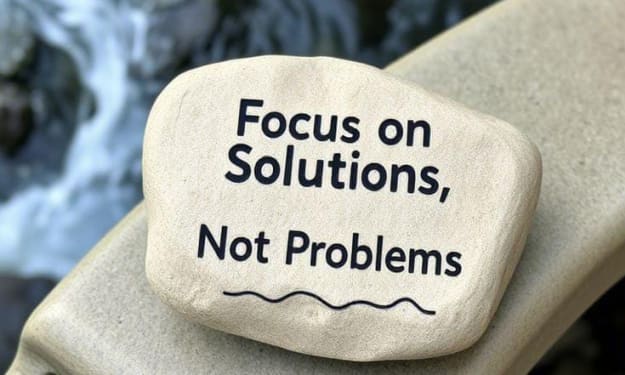
Focus on Solutions, Not Problems
Everyone has problems. Some are loud, some are silent, and some slowly eat you from the inside. But what separates people who move forward from those who stay stuck is not the size of their problems—it’s where they place their focus.
By USA daily update a day ago in Motivation
One Hard Thing
Stop me if you’ve heard this one before: You have the number, you know your schedule- you’ve even picked out the perfect day and time to make this appointment. Shoot, you’ve even picked out alternative days and times just in case their schedules can’t accommodate you!
By Taylor Rigsby8 days ago in Motivation



Comments
There are no comments for this story
Be the first to respond and start the conversation.