
Who Am I Without the Likes?
Self-Worth, Social Media, and the Undefined G Center in Human Design

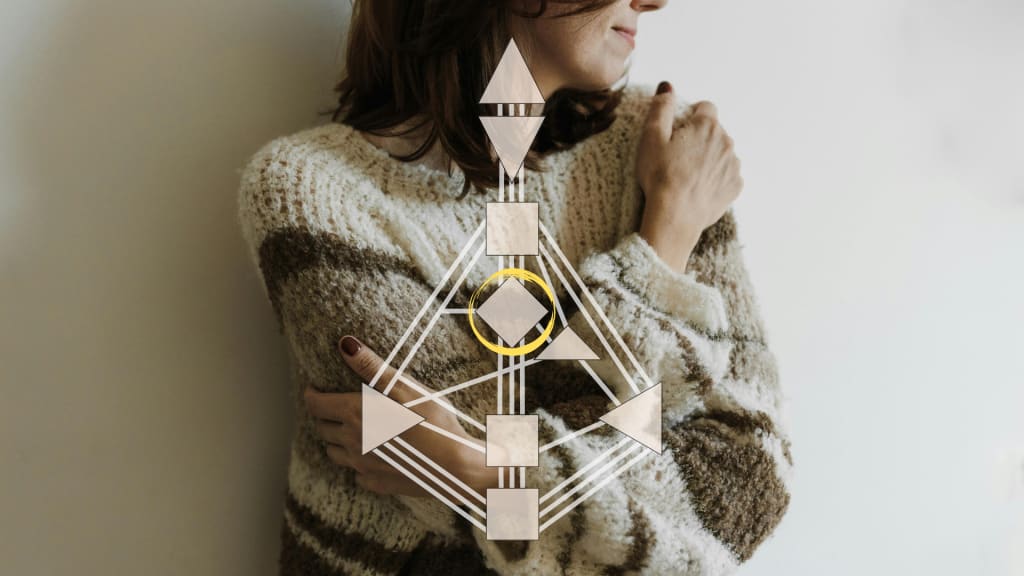
The question of who we are has never felt more complex — or more publicly displayed. We’ve entered an era where our identities are no longer just private evolutions, shaped quietly over time through relationships and experiences. Now, identity is often something to be curated, packaged, and shared. Whether it’s a photo, a caption, or a carefully edited video, we present ourselves in ways we hope will be recognized — and validated.
And this becomes especially intricate for people with an undefined G Center in the system of Human Design — those who are, by nature, not meant to have a fixed identity.
Understanding the Undefined G Center
In Human Design, the G Center — also known as the Identity Center — governs direction, love, and sense of self. People with a defined G Center tend to have a consistent inner sense of who they are. They may evolve and grow, but there’s a clear thread running through their journey — a core identity that feels familiar and stable.
By contrast, those with an undefined or open G Center don’t experience that same inner consistency. Instead, their identity shifts depending on where they are and who they’re with. It’s not that they’re inauthentic — far from it. Their authenticity lies in their adaptability, their openness to change, and their capacity to reflect the energy of their environment.
This can be a beautiful, intuitive way of moving through the world. People with undefined G Centers often relate deeply to others. They understand different perspectives, try on different ways of being, and make space for many kinds of truth. But in a society that demands certainty — and especially in the performative ecosystem of social media — this fluidity can be misunderstood and even punished.
The Trap of Seeking Self in the Scroll
When you don’t have a fixed sense of who you are, you naturally look to your environment for cues. This is exactly how an undefined G Center is meant to work. But the issue arises when your environment becomes digital — a carefully filtered stream of other people’s identities, successes, aesthetics, and definitions of worth.
Social media platforms offer an endless supply of mirrors, each one reflecting a different version of how you could be. It’s easy to try on personas: the wise spiritual guide, the minimal aesthetic influencer, the bold truth-teller, the soft healer, the ambitious entrepreneur. And for someone with an undefined G Center, each of these can feel not only possible — but momentarily true.
Then come the likes. The comments. The brief rush of external validation. When someone responds positively to one of those versions, it’s easy to interpret that approval as confirmation: Yes, this is who I’m meant to be. But that feeling rarely lasts. Because underneath the applause, something feels off — a subtle inner disconnect that whispers, Is this really me? Or just the version of me that gets liked the most?
This is the trap. When your identity is naturally fluid, it’s tempting to let validation become your anchor. You begin to chase a sense of self through other people’s reactions. You begin to brand yourself instead of becoming yourself. And in the process, you drift further from your inner truth — not because you lack depth, but because you’ve been taught to mistrust your ever-changing nature.
Self-Worth Without a Fixed Identity
Here’s the paradox: the more you chase a clear, consistent identity, the more disconnected you may feel. Because if you have an undefined G Center, your identity is not something you’re here to hold onto — it’s something you’re here to experience.
This doesn’t mean you’re lost or fake. It means your sense of self is meant to be informed by your environment. According to Human Design, your environment shapes your sense of self — not in a manipulative way, but in a deeply energetic one. When you’re in the right place, with the right people, doing what feels naturally aligned, your identity takes shape effortlessly. You feel more like yourself, even if you can’t describe exactly who that is.
When you’re in the wrong environment — whether that’s a toxic workplace, a mismatched relationship, or an online space where you feel the need to perform — your identity begins to feel fragmented or false. No amount of attention or approval can fill the void of misalignment.
So for people with an undefined G Center, the key to self-worth is not clarity of identity — it’s clarity of resonance. The question is not “Who am I?” but “Does this feel right?” Instead of building a personal brand, your job is to follow the feeling of truth, presence, and connection — even if it changes over time.
Living in Alignment in a World Obsessed with Definition
This path isn’t always easy. The world rewards consistency. People are more comfortable when they can label you — when they know what to expect. And for those with undefined G Centers, it can feel vulnerable to disappoint those expectations. You may find yourself trying to maintain an old version of yourself just because people liked it. Or you may struggle with guilt when you want to change direction — in your style, your work, your relationships, or your beliefs.
But your gift lies in that very fluidity. You are not here to be someone once and for all. You are here to be many things — to explore identity like an artist explores color, shape, and light. You are here to show the world that becoming is not a weakness. It’s a form of wisdom.
True self-worth doesn’t come from defining yourself. It comes from knowing you are enough, even when you are undefined. From trusting that your value is not in how consistent you are, but in how true you are to what feels right today. From honoring your natural evolution without apologizing for outgrowing old versions of yourself.
Letting Go of the Performance
When you stop looking to likes, comments, and social recognition to validate your sense of self, something beautiful begins to unfold. You start to find peace in being unseen, peace in being between definitions, peace in the quiet spaciousness of not knowing exactly who you are today — but trusting that it’s enough.
You can still share. You can still create, post, connect. But you begin to post not for approval, but for expression. You create not to gain identity, but to explore it. You let go of performing a self, and instead allow your self to emerge through presence.
And that is a kind of freedom that no algorithm can offer.
For those with an undefined G Center, identity will never be a closed book. It will always be a conversation — between you and your environment, your relationships, your work, and your growth. Social media may invite you to lock yourself into a character, but your soul will always ask for something more honest, more alive.
Trust the shifts. Trust the seasons. Trust the sense that who you are is not something to find, but something to feel — in the right space, at the right time, with the right people.
And when you honor that, your self-worth no longer lives in someone else’s “like.”
It lives in the quiet knowing that you are allowed to change — and still be whole.
About the Creator
Vicky Coach
Parenting | Human Design | Mindfulness
Keep reading
More stories from Vicky Coach and writers in Motivation and other communities.
Essential Oils and the Flow of the Five Energy Types in Human Design
Human Design is often described as the map of the soul — a blueprint of how our energy naturally moves, how we connect with others, and how we are designed to live in alignment. When we honor our type, life begins to feel less like an uphill climb and more like a dance. Essential oils, with their subtle yet powerful influence on our bodies and emotions, can become allies in this process. They offer a way to gently shift our energy, bringing balance and reminding us of who we truly are.
By Vicky Coach6 months ago in Motivation
One Hard Thing
Stop me if you’ve heard this one before: You have the number, you know your schedule- you’ve even picked out the perfect day and time to make this appointment. Shoot, you’ve even picked out alternative days and times just in case their schedules can’t accommodate you!
By Taylor Rigsby11 days ago in Motivation
The Last Light in Apartment 309
. Every night, in a tall grey building on the edge of Rotterdam, the same thing happened. Most windows went dark by ten. Families slept. Students streamed shows. Couples argued softly behind curtains. But in Apartment 309, a single lamp glowed beside a small kitchen table covered with notebooks, coffee cups, and a secondhand laptop that hummed like it was tired of working.
By Iazaz hussain2 days ago in Motivation



Comments
There are no comments for this story
Be the first to respond and start the conversation.