
🧠 Why You’re Not as Self-Aware as You Think
📌 Most People Believe They Understand Themselves—But Science Says Otherwise

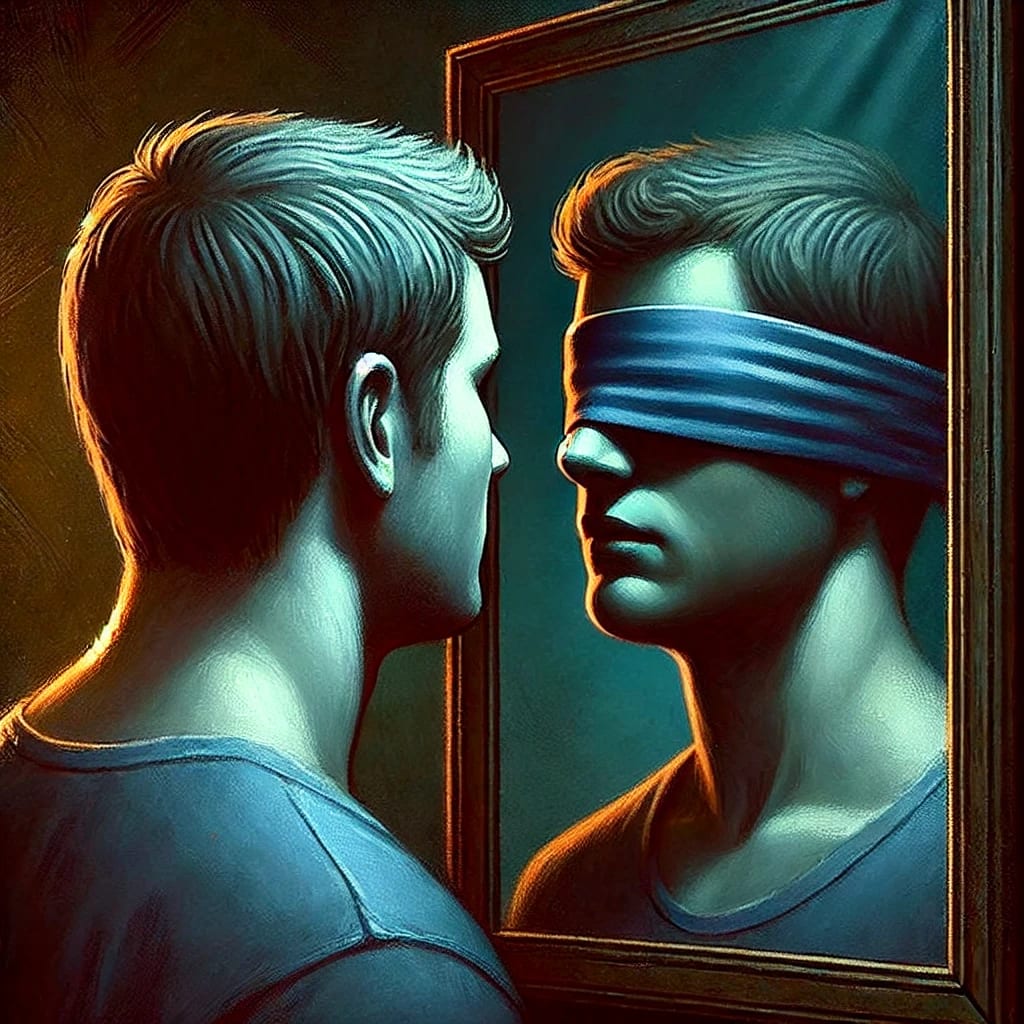
📌 The Illusion of Self-Awareness
We like to think we know ourselves.
✔️ We believe we understand our strengths and weaknesses.
✔️ We assume we know how we come across to others.
✔️ We’re confident that our opinions and beliefs are well thought out.
But what if we’re wrong?
📌 Research shows that most people aren’t as self-aware as they think.
• Studies reveal that only 10-15% of people actually have high self-awareness.
• The rest of us are walking around with blind spots, biases, and false assumptions about ourselves.
🚀 The truth? Self-awareness isn’t as simple as “knowing yourself.” It’s an active skill that requires effort, humility, and constant self-reflection.
💡 This article will explore:
✔️ Why most people overestimate their self-awareness.
✔️ The psychological reasons we fail to see ourselves clearly.
✔️ How to actually improve self-awareness in a way that changes your life.
⸻
1️⃣ Why Most People Are Less Self-Aware Than They Think
📌 Self-awareness is the ability to objectively see yourself—your thoughts, emotions, and actions—and understand how they affect others.
Most people assume they’re self-aware simply because they think about themselves a lot. But reflection isn’t enough—it has to be accurate.
🔹 1. The ‘Illusion of Insight’ (Why We Overestimate Ourselves)
• Studies show that people tend to believe they are more self-aware than they really are.
• This happens because the brain prefers certainty over accuracy.
🚀 Example:
• 93% of drivers rate themselves as above average in skill—a statistical impossibility.
• The same applies to self-awareness. We assume we’re good at it, even when we’re not.
🔥 The truth? If you never question your own beliefs and behaviors, you’re probably not as self-aware as you think.
⸻
🔹 2. The ‘Blind Spot Bias’ (Why We See Others Clearly But Not Ourselves)
• We are excellent at recognizing flaws in other people but terrible at noticing our own.
• Studies show that we judge ourselves by our intentions but others by their actions.
🚀 Example:
• If you’re late to a meeting, you might think: “I had a valid reason.”
• If someone else is late, you think: “They’re irresponsible.”
🔥 The truth? We create excuses for our behavior while holding others to a higher standard.
⸻
🔹 3. The ‘Introspection Trap’ (Thinking About Yourself Isn’t Enough)
• Many people confuse self-reflection with self-awareness.
• Just because you analyze your feelings doesn’t mean your conclusions are correct.
🚀 Example:
• You might think: “I’m bad at public speaking because I’m naturally shy.”
• Reality? Maybe you’re just inexperienced and need practice.
🔥 The truth? If you always explain your struggles in a way that keeps you stuck, you’re not being self-aware—you’re reinforcing a false narrative.
⸻
2️⃣ How to Actually Become More Self-Aware
📌 True self-awareness isn’t about overanalyzing yourself—it’s about seeing yourself clearly and adjusting accordingly.
✅ 1. Ask People You Trust for Brutal Honesty
✔ Instead of: “I already know how people see me.”
✔ Think: “I need an outside perspective to catch my blind spots.”
🚀 Try This:
• Ask three people you trust to describe you in three words.
• Compare their answers to your self-perception.
• The gaps? That’s where your blind spots are.
🔥 The truth? How others see you is often more accurate than how you see yourself.
⸻
✅ 2. Challenge Your First Reaction
✔ Instead of: “I already know why I feel this way.”
✔ Think: “What if my first assumption is wrong?”
🚀 Try This:
• Whenever you feel angry, defensive, or upset, ask yourself:
• What’s really bothering me?
• Could there be another explanation?
• Am I reacting based on past experiences rather than the present moment?
🔥 The truth? Your first reaction is often driven by ego, emotion, or habit—not truth.
⸻
✅ 3. Keep a ‘Pattern Journal’
✔ Instead of: “I’m just unlucky.”
✔ Think: “What patterns keep repeating in my life?”
🚀 Try This:
• Write down every time you feel frustrated, anxious, or unfulfilled.
• Look for patterns. Are the same situations triggering you?
• If the same problems keep happening, the problem might be you.
🔥 The truth? Self-awareness comes from noticing patterns—not just emotions.
⸻
✅ 4. Watch Yourself on Video (The Ultimate Reality Check)
✔ Instead of: “I know how I come across.”
✔ Think: “Let me see myself the way others do.”
🚀 Try This:
• Record yourself talking, giving a presentation, or just having a conversation.
• Watch it back and ask yourself:
• Do I sound how I think I sound?
• Is my body language what I expected?
• Would I find myself engaging or off-putting?
🔥 The truth? Seeing yourself from the outside is one of the fastest ways to improve self-awareness.
⸻
3️⃣ What Happens When You Improve Your Self-Awareness?
📌 When you finally see yourself clearly, everything changes.
✔ You stop repeating the same mistakes.
✔ You improve your relationships because you understand how you affect others.
✔ You stop making excuses and start taking action.
🚀 Final Thought:
• The biggest obstacle to self-awareness? Thinking you already have it.
• The most successful people aren’t the ones who have all the answers—they’re the ones who constantly question themselves.
🔥 The truth? The better you understand yourself, the better your life becomes.
About the Creator
Ahmet Kıvanç Demirkıran
As a technology and innovation enthusiast, I aim to bring fresh perspectives to my readers, drawing from my experience.
Keep reading
More stories from Ahmet Kıvanç Demirkıran and writers in Motivation and other communities.
One Hard Thing
Stop me if you’ve heard this one before: You have the number, you know your schedule- you’ve even picked out the perfect day and time to make this appointment. Shoot, you’ve even picked out alternative days and times just in case their schedules can’t accommodate you!
By Taylor Rigsby27 days ago in Motivation
Finding My Balance Through Winter Sports
Winter wasn’t always my favourite season. For a long time, it felt like something to get through, with short days, cold mornings, and that constant urge to stay indoors where it’s warm. But over time, winter has become the season I feel most like myself. It’s not because it’s easy or comfortable. It’s because winter strips things down and makes you show up honestly.
By Adam Mcmanus Toronto3 days ago in Motivation
There's A Hole in My Bucket
It’s a well-known fact that Liza Dufresne was always the brains in the family. She was the one who always came up with the brilliant schemes the Dufresne kids carried out when they were younger. Like when they tricked Mrs. Claybourn into paying for a trip to Disney World. Liza convinced her that their parents had been kidnapped and were being held for ransom for the total price of three tickets. In reality, they were away on a weekend getaway for their anniversary. When they returned, Liza told the Claybourns that they did not like to talk about the ordeal. Their parents never found out how they got the money. Mrs. Claybourn never found out that the Dufresne parents were never really in any danger.
By David E. Perry3 days ago in Fiction



Comments (2)
Well written article about most people believe they understand themselves, but science says otherwise.You always bring azaming article with informative with technology and phycology. Great post.
Brilliant ♦️♦️♦️I know me best I tell me all my secrets 😝😂😭🎶👌♦️