
Dogs are reverse domesticated due to the conflict in Ukraine.
Changes that can be seen in dogs

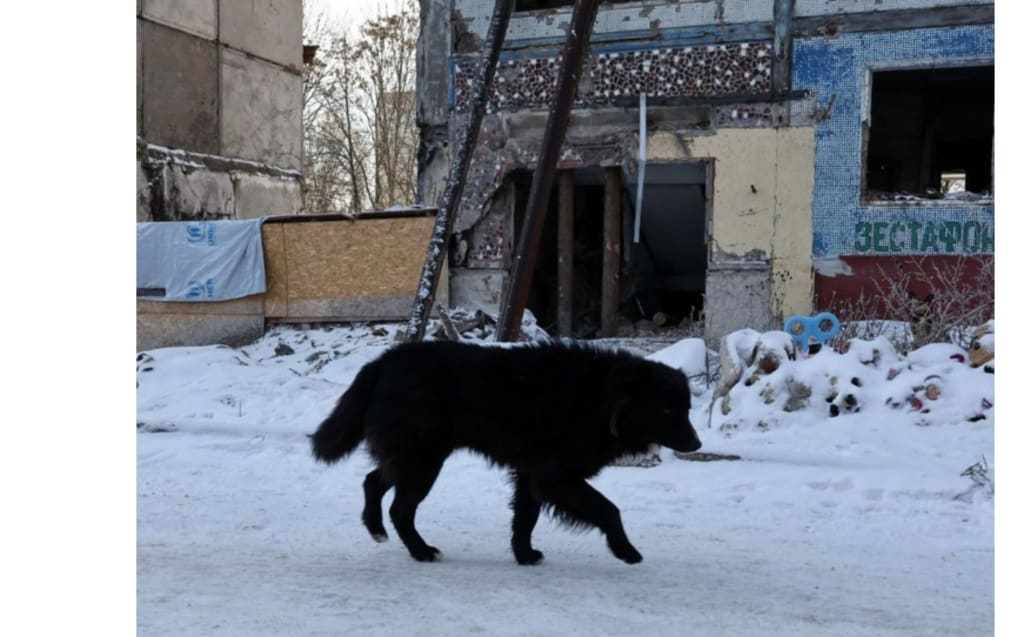
After months of continuous fighting, the surviving canines near Ukraine's front lines have clearly changed to resemble wolves in both appearance and behaviour. Their changed bodies demonstrate how characteristics formed by centuries of human friendship can be quickly erased by battle.
Changes that can be seen in dogs
Free-ranging canines in nine different Ukrainian districts that were close to areas of active conflict showed a close group of characteristics that are rarely found together in populations during peacetime.
Mariia Martsiv of Ivan Franko National University of Lviv demonstrated that upright ears, slim frames, and longer snouts predominated closest to the front by examining 763 animals.
During the ten-month monitoring period, the differences between canines in the front-line and those in safer western regions were already obvious. Since these changes happened too fast to account for new mutations, the pattern suggests that survival itself determined which forms survived the fire.
From residences to streets
Many dogs suddenly started relying on leftovers from strangers as a result of evacuations disrupting patterns that kept pets fed and controlled. The team in one Ukrainian report detailed pets abandoned in occupied regions and at train terminals.
"The situation with domestic animals has been very sad since the beginning of the war in Ukraine," Martsiv remarked. Food shortages and danger forced the surviving dogs to adopt whatever bodies and behaviours made them survive after their owners vanished.
Quick screening of characteristics
Dogs did not have time to develop new genes during months of battle, but it did determine who survived. That sorting was natural selection, survival decides which traits stay common, and war made the sorting brutal.
According to Martsiv, "dogs with 'wild' phenotypes—erect ears, straight tails, and less white fur—are actually more likely to survive on the front lines." Because the transition proceeded from deaths rather than rapid new mutations, the term "reverse domestication" may be misleading.
Characteristics that endured
The scientists used photos to assess each dog's phenotype, paying particular attention to outwardly evident characteristics like ear position and nose shape, in addition to body size. Flat-faced dogs and particularly long-bodied dogs were far less common near active fighting than they were in safer areas.
Short-legged dogs' weak stride and short-snout breeds' breathing issues can make a sprint to cover a failure. The remaining population became less diverse as those delicate types vanished, making it more difficult to forecast a later rebound.
Survival and hunger
The front-line zone saw the biggest weight loss, and several canines appeared underfed even in pictures. By comparing the weight of each dog to its height, the team was able to determine how underfed the pups were, and 82% of them were dangerously thin.
Smaller canines were easier to conceal in confined areas and were less likely to set off anti-tank mines. The team found that places with the highest levels of violence also had the steepest reductions, and low body condition also suggested hunger.
Chemical indicators of hunger
Because hair retains a chemical record for weeks, the researchers were able to analyse the nutrition history of 97 dogs from their hair samples. These traces originated from stable isotopes of nitrogen and carbon, which are types of atoms that include dietary hints.
The hair data across zones indicated underfeeding and poor animal protein, with plants accounting for a portion of meals. However, three instances of dogs chewing on human remains were noted by witnesses, and hostile strays stayed far enough away to prevent sampling.
Under fire, packs form.
Loneliness decreased at the front, with pairs and trios showing up more frequently, according to photos of 489 stray canines. When food was limited, group living was beneficial because multiple canines could protect scraps and navigate debris together.
Puppies made up the largest clusters, with larger groupings reaching 11 dogs in hazardous areas. More dogs traveling together can also raise bite risk and speed disease spread, especially where vaccination programs collapse.
Conflict and illness
It was more difficult to locate elderly, ill, and injured dogs close to the front—not because they recovered, but rather because they passed away. The percentage of front-line dogs with obvious illness or injury was only 3%, with younger canines making up the majority.
Due to inadequate veterinary care, a dog's prospects of survival could be quickly destroyed by eye loss, skin conditions, and infected wounds. Additionally, rapid turnover altered which dogs procreated, allowing any advantage in behaviour or physical shape to propagate swiftly.
Ecosystems are rewritten by war
Dogs provided unmistakable proof, but many less obvious species also had their food and shelter altered by war. Animals are put through unexpected survival tests when people depart because dumps disappear, crops fail, and new threats emerge.
Animals may come into fresh touch with one another in cities and villages due to damaged buildings and absent services. Observing animals in times of conflict can help direct rescue efforts and illness prevention in the present while also exposing long-term ecological costs in the future.
Ukraine's front-line canines demonstrated how violence and shortages can favour particular bodies, diets, and social patterns in the months following the ceasefire. In addition to providing scientists with a baseline for recovery, support for shelters, immunisation, and humane sterilisation could safeguard both humans and dogs.
About the Creator
Keep reading
More stories from Francis Dami and writers in Petlife and other communities.
Understanding the Difference Between F1 and F1B Goldendoodles
For families considering a Goldendoodle, one of the most common points of confusion is the difference between F1 and F1B generations. At first glance, the labels can sound technical or even overwhelming. But once you understand what they actually mean, the decision becomes much clearer. While both generations are popular, loving family companions, knowing how they differ can help you choose a dog that truly fits your home, lifestyle, and long-term expectations.
By Addison Hulsea day ago in Petlife



Comments
There are no comments for this story
Be the first to respond and start the conversation.