
The Truth Beneath the Northern Lights
One Woman's Journey

Janice Liu had grown up in a household where achievement wasn’t just encouraged—it was enforced. The daughter of Chinese American immigrants in the bustling suburbs of New Jersey, Janice was raised in a home characterized by discipline, deference, and diligence. Her parents, both engineers, believed in structure, order, and the absolute necessity of excellence. Her path, as they envisioned it, was straightforward: top grades, a prestigious university, and a respectable, high-earning profession.
The Early Years
Janice delivered. Valedictorian in high school, Summa Cum Laude from Columbia University, and offers from the best consulting firms in New York. From the outside, she was a flawless embodiment of the American dream. But no one, least of all her parents, knew the secret she carried.
She had known she was gay since she was fourteen. It wasn’t a sudden realization; it was a quiet truth, like the slow bloom of spring beneath the winter frost. But in her world, love had its boundaries. Discussions of sexuality were rare and uncomfortable in her household, and gayness was a concept spoken about only in hushed tones, if at all. So, she tucked that truth deep inside her, alongside all the dreams that did not fit her parents’ narrative.
Still, she needed an outlet. While others in her family pursued careers in medicine or finance, Janice found herself drawn to the art of storytelling. Fiction, screenplays, sitcoms—she poured her essence into every character she created. Her protagonists loved freely, laughed loudly, and lived in a world she could only dream of. It was a silent rebellion, her way of existing without confrontation. Her career as a writer bloomed quickly. Her series of novels—smart, funny, and rich in emotional truth—gained critical acclaim. Her screenwriting credits expanded, and soon, she was living in Los Angeles, collaborating with producers and directors, her words reaching millions.
But something still ached. Despite her professional freedom, her personal life remained a compartmentalized and hidden space. Industry friends knew, yes, and some close colleagues. But her family? Her childhood friends? They still saw the perfect, obedient daughter.
Finding Her Way
At thirty-four, Janice hit a turning point. She had written herself into other people’s stories long enough. It was time to write her own—on her terms. She would no longer live quietly or halfway. She began researching where she could live freely, not only as a successful woman but as a gay woman, without fear, without shame, and without feeling the constant need to justify her life.
Her list came down to five countries—each more promising than the last.
Canada was the first. With its diverse cities, polite culture, and strong legal protections, it was a haven for LGBTQ+ individuals. In Toronto and Vancouver, same-sex couples walked hand-in-hand in public without a second glance. Canada offered universal healthcare, inclusive education, and a reputation for open-mindedness. But something about its proximity to the U.S. felt too familiar. She wanted more than safety—she wanted transformation.
Next, she considered Sweden. Known for its progressive values, Sweden has long been a leader in gender equality and LGBTQ+ rights. In Stockholm and Gothenburg, gay pride was celebrated vibrantly, and the government provided complete protection against discrimination. But Janice, who had grown weary of crowded cities, wasn’t sure Sweden’s urban lifestyle was the quiet, healing environment she craved.
Norway came close. With breathtaking fjords and a society that prided itself on fairness and respect, Norway made a compelling case. Same-sex marriage had been legal since 2009, and the Norwegian government actively supported queer artists and writers. Janice imagined living in a wood-paneled cabin outside Oslo, writing as snow fell gently outside. However, despite its beauty, she worried about feeling lonely. Her heart wanted more than tranquility.
Then there was the Netherlands—a pioneer in LGBTQ+ rights. The first country to legalize same-sex marriage, its cities were safe, inclusive, and filled with art and culture. Amsterdam offered both a vibrant creative scene and a deeply tolerant community. But Janice had visited before. As progressive as it was, the fast-paced life reminded her too much of New York.
Then she turned her eyes northward to Iceland. Everything she read about Iceland enchanted her. It wasn’t just that it ranked #1 globally for LGBTQ+ acceptance. It was the spirit of the place. Iceland was small—just over 370,000 people—but mighty in heart. Same-sex marriage had been legal since 2010, and LGBTQ+ visibility was high in politics, media, and daily life. Former Prime Minister Jóhanna Sigurðardóttir had been the world’s first openly gay head of government.
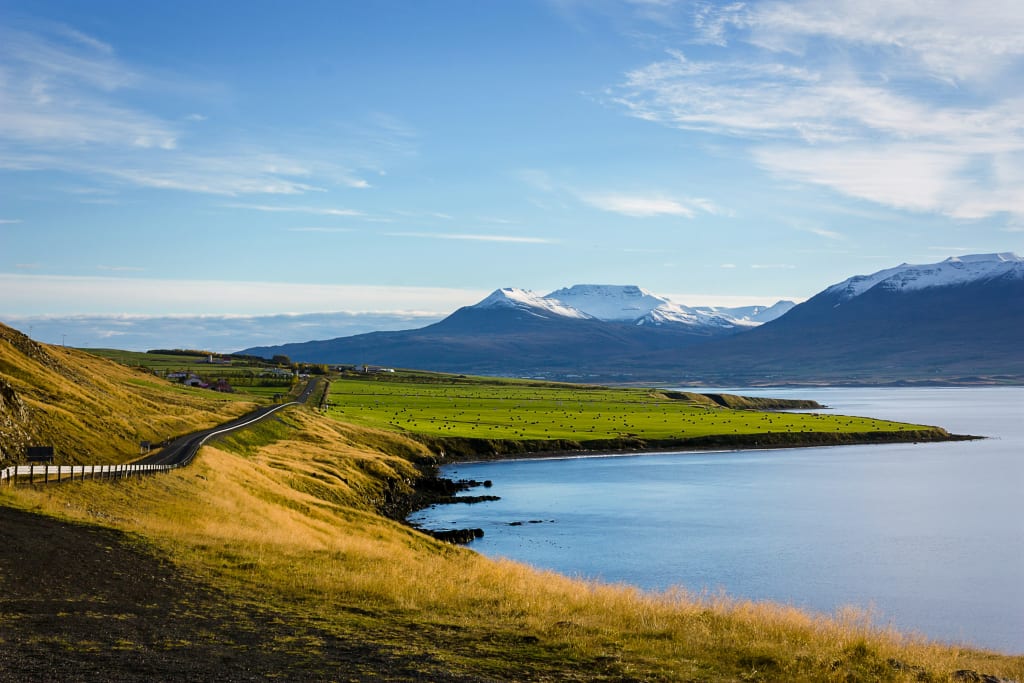
But it wasn’t the politics that pulled Janice—it was the landscape. Vast, surreal, elemental. Glaciers, geysers, lava fields, and endless skies. She could write here. She could breathe. She could build something new.
So, she packed up her life, sold her apartment in LA, and moved to Reykjavik.
Initially, her life was quiet. She rented a modest home near the harbor, featuring expansive windows that faced the mountains. She walked to the local library, joined writing circles, and embraced the rhythm of the Northern Lights. During that time, she wrote more than ever—not as a form of escape, but as a declaration of her existence.
It was at a winter literary festival that she met Gail.
Gail was an environmental journalist from Scotland, living in Iceland for its climate research opportunities. She had dark auburn hair, sharp humor, and eyes that seemed to see through every layer of Janice’s practiced calm. They met during a panel discussion and spoke afterward about glaciers, politics, and the writing life. That conversation turned into dinner, then a hike, then weekend mornings over coffee and shared silence.
Gail didn’t need Janice to explain who she was or what she had left behind. She accepted. No conditions. No caveats. For the first time in her life, Janice felt seen—utterly, joyfully seen.
They built a life together, slowly but surely. They adopted a rescue dog, planted herbs on the windowsill, and hosted dinner parties for friends, both local and foreign. Janice wrote her first novel set entirely in Iceland—a love story about freedom, discovery, and the quiet joy of finding someone who lets you be you.
When Janice finally came out to her parents, it was through a letter. It wasn’t dramatic or angry—just honest. She told them who she was, who she loved, and where she lived. It took months for a reply to come. But when it did, it surprised her. Her mother wrote: “We may not understand, but we want you to be happy. You’ve always made us proud.”
It wasn’t complete acceptance. But it was a beginning.
The moral of Janice’s story is simple but profound: Your life is your own. Plan it. Design it. Fight for it. Not everyone will understand your dreams, your needs, or your heart—but that doesn’t make those things any less real, or any less worthy.
Janice had followed the rules for so long. But it was only when she chose herself—her truth, her career, her place in the world—that she found the life she deserved.
In the quiet light of an Icelandic morning, with Gail beside her and her dog at her feet, Janice finally felt what she had written for others so many times.
Freedom, love, and acceptance!
About the Creator
Anthony Chan
Chan Economics LLC, Public Speaker
Chief Global Economist & Public Speaker JPM Chase ('94-'19).
Senior Economist Barclays ('91-'94)
Economist, NY Federal Reserve ('89-'91)
Econ. Prof. (Univ. of Dayton, '86-'89)
Ph.D. Economics
Keep reading
More stories from Anthony Chan and writers in Pride and other communities.
Fleeting Leaves
Autumn leaves drift down, Beauty fades as time rushes Life, too, feels so brief.
By Anthony ChanExclusive • 5 months ago



Comments (1)
This story really hits home. Growing up with strict expectations can be tough. Janice's secret shows how hard it is to be true to yourself. It makes me wonder how many others are hiding parts of themselves because of family pressure. And her writing as an outlet? That's powerful. How do you think she'll find a way to reconcile her true self with her family's ideals? It's amazing how she built a successful writing career. But the internal struggle she has must be exhausting. I hope she can find the courage to open up to her parents someday. Do you think her work will help her in that process, or will it be too much of a reminder of the life she's trying to break free from?