disorder
The spectrum of Mental Health disorders is incredibly vast; we showcase the multitude of conditions that affect mood, thinking and behavior.
9 Quotes to Calm Overthinking and Spark Positivity
9 Simple Quotes to Stop Overthinking and Feel More Positive We all overthink sometimes — we replay old conversations, worry about the future, or get stuck thinking about problems we can’t fix. This kind of thinking can make us feel tired, anxious, and stuck. But sometimes, a few simple words can help calm our minds and bring us back to a better place.
By Fariha Ferdous Mithila9 months ago in Psyche
Notifications Are the New Cigarettes
You might think addiction is something reserved for substances—alcohol, nicotine, caffeine. But addiction today wears a new face. It's not wrapped in a cigarette or poured into a glass. It’s tucked into your pocket, buzzing gently, lighting up with a red dot, whispering: “Check me.” Every ping, buzz, and badge on your phone isn’t just a convenience—it’s a carefully engineered hook. And much like the tobacco industry of the 20th century, the tech world has learned how to profit off our compulsions.
By shoaib khan9 months ago in Psyche
Radiance Over Stress
In the fast rhythm of modern life, stress has become a silent companion for many, quietly influencing our bodies, minds, and even our reflection in the mirror. While most recognize its emotional toll, fewer understand how deeply stress affects our outer beauty. Behind the tired eyes, the dull skin, or sudden breakouts lies a cascade of biological reactions that unfold whenever we feel overwhelmed. For the community of PSYCHE, where emotional balance and self-care matter deeply, understanding this connection is the first step toward reclaiming peace—and radiance.
By Leesh lala9 months ago in Psyche
Microbial Minds
When we talk about intelligence, we often picture brains—human, animal, perhaps even artificial. But what if some of the most intelligent systems on Earth are microscopic, brainless, and over 3 billion years old? Recent scientific discoveries are revealing that bacteria—yes, the same single-celled organisms responsible for infections and fermentation—may possess a surprising form of intelligence.
By shoaib khan9 months ago in Psyche
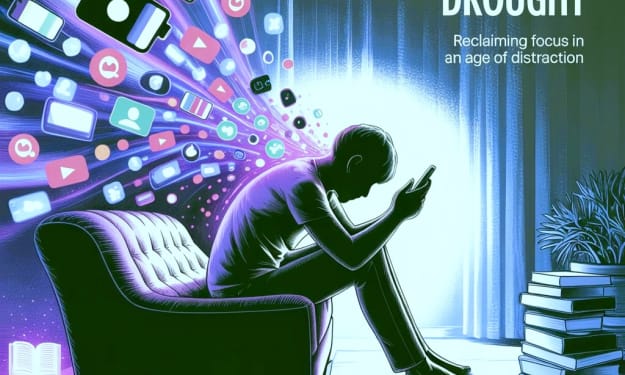
The Dopamine Drought
In the digital age, our brains are being rewired. Constant notifications, endless scrolling, and algorithmic content designed for maximum engagement are draining our attention spans and reshaping how we process pleasure. We’re always stimulated, yet rarely satisfied. Welcome to what psychologists and neuroscientists are calling the dopamine drought—a growing epidemic of mental fatigue, focus loss, and overstimulation.
By shoaib khan9 months ago in Psyche
The Price of Obsession
In the charming town of Eldridge, where mysteries are hidden beneath the cobblestone pathways, resided a girl named Jessica. At seventeen, she possessed wide, inquisitive eyes that twinkled like the stars overhead. However, despite her vibrant spirit, Jessica was enveloped in sorrow. She had fallen profoundly and impulsively in love with Ethan, a boy whose laughter echoed within her being. Unfortunately, Ethan's affections were directed towards another: a girl named Lily, whose grace and beauty shone like a brilliant sun, casting Jessica into darkness.
By Imon Mridha9 months ago in Psyche
"The Gentle Path to Healing"
It sounds like you've shared a really thoughtful piece about healing and self-care. Here are a few ways to reword it, focusing on slightly different angles: Option 1 (Focus on the Turning Point): > Her presence was a turning point. She didn't judge or try to solve my problems; she simply offered support when I needed it most. Shortly after, I started therapy, which felt daunting at first. Expressing my inner turmoil was a challenge, but with consistent effort, I began to understand myself better. Healing wasn't a quick fix, but reaching out for help was the crucial first step in rediscovering my true self. > > Learning to set boundaries became an act of self-love. I used to say "yes" to everything, fearing I'd disappoint others or appear difficult. I mistakenly believed I was being helpful, but in reality, I was neglecting my own needs. Each time I agreed to something that didn't align with my well-being, I was denying myself the chance to nurture my own happiness. Saying "no" wasn't about becoming cold; it was about valuing my own capacity and limits. Surprisingly, establishing these boundaries didn't disrupt things – instead, it felt like an act of self-care. > > The path to healing isn't a straight line. Some days bring lightness and hope, while others feel heavy with old stresses. I used to think feeling down meant I was failing, that healing was a final destination. But the truth is, healing is a winding, uneven journey with forward steps, backward steps, and sideways moments. The important thing is to keep returning to yourself, to keep making choices that support your healing, even when it feels impossible. Now, when darkness returns, I can meet it with calm and acceptance, knowing it's part of the process. > > In conclusion, remember that whatever you're facing, you are not broken – you are human. It's perfectly okay to step back, rest, or seek support. It takes courage to acknowledge your limits and ask for help. Sometimes, our lowest points can lead to profound personal growth, as they did for me. When I felt like I had hit rock bottom, I was actually beginning a slower, more authentic life, one I can finally be proud of. As you navigate your own journey, remember that the light will return. It comes in moments, big and small, reminding you that you are here, and that you matter. > Option 2 (Focus on Self-Compassion): > The simple presence of a supportive person, who offered understanding without judgment, encouraged me to seek therapy soon after. Initially, therapy felt intimidating, as I struggled to articulate my inner world. However, with time and persistence, I began to gain clarity about my experiences. Healing wasn't instantaneous; it was the act of asking for help that initiated my journey back to my authentic self. > > Learning to establish boundaries became an essential act of self-compassion. My tendency to always say "yes" stemmed from a fear of disappointing others or appearing selfish. I mistakenly believed I was doing the right thing by agreeing to everything, even when it conflicted with my own needs. In reality, I was betraying myself. Each time I overextended myself, I was denying myself the opportunity to nurture my own well-being and happiness. Saying "no" wasn't about becoming unkind; it was about recognizing and honoring my own limits. I was surprised to find that setting boundaries didn't create chaos; instead, it felt like a profound act of self-love. > > The journey of healing is rarely linear. There will be days filled with lightness and hope, and others when old feelings resurface. I used to interpret these low points as setbacks, believing that healing meant reaching a permanent state of well-being. However, healing is a fluid process, characterized by progress that isn't always consistent. There will be forward steps, backward steps, and detours. The crucial element is to continually return to yourself, to keep making choices that support your healing, even when it feels incredibly challenging. Now, when difficult feelings arise, I can approach them with a sense of calm, allowing myself to feel them and remembering that they are a natural part of the journey. > > Ultimately, please remember that whatever you are experiencing, you are not flawed; you are human. It is perfectly acceptable to need to withdraw, take a break, or seek support. It requires courage to acknowledge your limits and ask for help. Often, our most challenging moments can pave the way for significant personal transformation, as they did for me. When I felt like I had lost everything, I was actually beginning to embrace a more intentional and genuine way of living, a life I now value deeply. As you navigate your own path, hold onto the understanding that the light will return. It finds you in moments, both big and small, reminding you of your presence. You are here, and that is significant. > Option 3 (More Concise): > Her non-judgmental support led me to therapy, which was initially scary as I didn't know how to express myself. Over time, I began to understand my inner world. Healing wasn't immediate; asking for help was the start of my journey back to myself. > > Setting boundaries became an act of self-love. My "yes-saying" came from a fear of disappointing others, but it was a betrayal of my own needs. Saying "no" wasn't cold; it was valuing my limits and surprisingly kept things running smoothly. > > Healing isn't linear, with good days and bad days. I used to think feeling low was a failure, but healing is an uneven process. The key is to keep returning to yourself and making choices that aid healing, even when it's hard. Now, I meet darkness with calm, knowing it's part of the journey. > > Remember, you're not broken, just human. Needing breaks or support is normal and takes courage. Breakdowns can lead to growth, as mine did. When I felt I'd lost everything, I began a slower, more real life I'm proud of. Know that the light returns in moments, big and small, reminding you that you are here and that you matter. > Let me know if you'd like me to try rephrasing it in a different way or focusing on a specific aspect!
By Nasir Khan9 months ago in Psyche