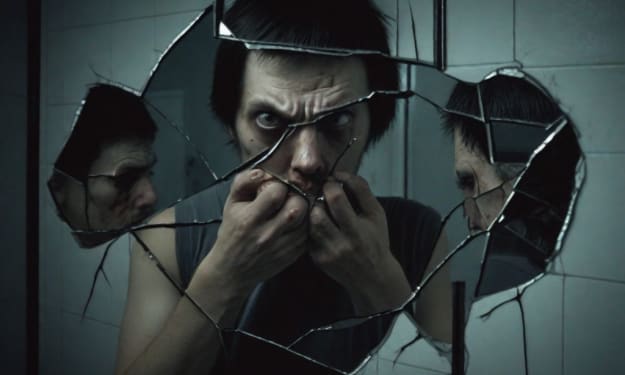
personality disorder
Personality disorders are as complex as they are misunderstood; delve into this diagnosis and learn the typical cognitions, behaviors, and inner experience of those inflicted.
The Psychology of Malignant Narcissists - People of the Lie
"Evil isn't committed by individuals who have an unsure outlook on their honesty, who question their own thought processes, who stress over deceiving themselves. The abhorrent in this world is committed by the otherworldly big whigs, by the Pharisees of our own day, the grandiose who think they are without transgression since they are reluctant to experience the distress of huge self-assessment." M. Scott Peck, Individuals of the Untruth Most legislators declare themselves to be models of uprightness, yet a considerable lot of them impulsively lie, take part in defilement, control and defame the people who can't help contradicting them, and order strategies that obliterate society. Are such legislators mindful of their false reverence? Do they genuinely put stock in the ethically exemplary mental self portrait they attempt to depict? In this video, drawing from the bits of knowledge of the American specialist M. Scott Peck, we investigate the brain research of dangerous selfishness to all the more likely comprehend the malevolent that has tainted current governmental issues. M. Scott Peck characterizes underhanded as "that power, dwelling either inside or beyond people, that looks to kill life or enthusiasm.", or as he proceeds: ". . .evil is 'live' spelt in reverse. Evil is contrary to life… Explicitly, it has to do with… pointless killing, killing that isn't needed for organic endurance… Evil is additionally that which kills soul. There are different fundamental credits of life - especially human existence - like consciousness, versatility, mindfulness, development, independence, will. It is feasible to kill or endeavor to kill one of these properties without really obliterating the body." M. Scott Peck, Individuals of the Untruth We all are equipped for committing insidious demonstrations; for as Aleksandr Solzhenitsyn noticed "the line separating great and malicious slices through the core of each and every person". Regardless, two kinds of individuals are especially inclined to malicious activities: mental cases, and dangerous egotists. The sociopath's true capacity for evil is notable, however the threatening egotists might be answerable for a greater amount of the world's shrewd as they dwarf the mental cases, and as Peck writes in Individuals of the Untruth: "It would be very suitable to order underhanded individuals as comprising a particular variation of the self-centered behavioral condition… specialists have started to give expanding consideration to the peculiarity of self-centeredness, yet how we might interpret the subject is still in its earliest stages." M. Scott Peck, Individuals of the Falsehood The focal quality of self-centeredness is a swelled identity. Egotists are presumptuous and respect themselves to a certain extent that isn't justified by the truth of what their identity is, or what they have achieved. The egomaniac's fixation on a gaudy mental self view prompts narcissism, diminishing their ability to understand the sentiments and encounters of others. Selfishness exists on a continuum; a portion of the milder types of selfishness, for example, relating to a glorified mental self view one makes via virtual entertainment, are undesirable, yet at the same somewhat harmless. At the outrageous finish of the range lies the pathology of harmful self-absorption, in which one relates to a deceptive mental self portrait of moral virtue. Or on the other hand as Peck makes sense of: "Completely committed to saving their mental self view of flawlessness, [malignant narcissists] are persistently participated in the work to keep up with the presence of moral immaculateness… While they appear to miss the mark on inspiration to be great, they seriously want to show up great. Their 'integrity' is all on a degree of misrepresentation. It is, essentially, obviously false. For this reason they are 'individuals of the falsehood.'" M. Scott Peck, Individuals of the Falsehood Dangerous self-centeredness is a protective peculiarity that is established in a profound feeling of dread toward being second rate or lacking, especially in issues of ethical quality. Because of life as a youngster injury, growing up with exacting or self-absorbed guardians, or for different reasons of childhood, socialization, or hereditary qualities, the threatening egotist can't recognize that, similar to every other person, they commit errors, act unethically, and have a potential for malicious that is established in human instinct. Or on the other hand as Peck expresses: "What is the reason for this haughty mental self portrait of flawlessness, this especially harmful kind of selfishness? Fundamentally, it is dread. [Malignant narcissists] are consistently terrified that they will encounter their own abhorrent… This fear is so persistent, so joined into the texture of their being, that they may not actually feel it thusly. Also, in the event that they could, their ubiquitous self-centeredness will forbid them from truly recognizing it." M. Scott Peck, Individuals of the Untruth When mentally sound individuals perpetrate an indecent or insidious demonstration, they recognize their bad behavior, feel culpability and regret, and endeavor to offer to set things straight by getting back to the side of the upside. The greater part of us, all in all, have a working still, small voice which puts moral limitations on our way of behaving. The still, small voice of the harmful egomaniac, conversely, is constrained into a condition of lethargy by nonstop demonstrations of self-trickery. As the threatening egomaniac's character is secured in a vainglorious mental self view of moral goodness, when he ethically wavers, he falls back on legitimizations, confabulations, and other protection systems to keep a sensation of moral nobility, in this manner bypassing the soul and getting away from sensations of culpability. Since the threatening egotist hushes his soul with progressing self-trickeries he can over and again lie and act in manners that go against life, yet still accept that he is in favor of good. Or on the other hand as Peck makes sense of further: "It isn't their transgressions as such that portray [malignant narcissists], rather it is the nuance and perseverance and consistency of their wrongdoings. This is on the grounds that the focal deformity of [malignant narcissists] isn't the transgression however the refusal to recognize it… As opposed to ecstatically deficient with regards to a feeling of profound quality, similar to the sociopath, [malignant narcissists] are constantly taken part in clearing the proof of their detestable away from plain view of their own cognizance… It is out of their inability to put themselves being investigated that their evil emerges." One of the principal self-misleading systems which the dangerous egomaniac uses to keep away from consciousness of his ethically flawed self, is, strangely, the very component that drives him to commit a portion of his most shrewd demonstrations. This system is scapegoating, which, as Peck notes, "manages a component specialists call projection." The threatening egomaniac unwittingly externalizes the feelings and inspirations he can't acknowledge in himself, crediting them to others, and he then faults these objectives for what truly are his own ethical downfalls and bad behaviors. "A prevalent trademark… of the way of behaving of [malignant narcissists] is scapegoating. Since in their souls they view themselves as unquestionably sound, they should attack anybody who censures them. Since they should deny their own disagreeableness, they should see others as terrible… They never consider themselves evil; then again, they therefore see a lot of malicious in others.". M. Scott Peck, Individuals of the Falsehood Self-centered scapegoating is on full showcase in the political world. Numerous legislators today are so frantic to show up ethically exemplary that they completely decline to think about how conceivable it is that their strategies, commands, and social changes are the essential drivers of much that is off with society. When given proof of their devastating disappointments, or when others challenge their ethically impeccable mental self view, political harmful decline to acknowledge fault, and on second thought twofold down on their strategies and load the fault for society's concerns upon their inclined toward substitutes - be it different countries, political adversaries, or people who just end up holding varying political perspectives. Or on the other hand as Peck makes sense of: "For some odd reason, [malignant narcissists] are frequently disastrous in light of the fact that they are endeavoring to obliterate fiendishness. The issue is that they lose the locus of the fiendishness. Rather than obliterating others they ought to obliterate the disorder inside themselves… As life frequently compromises their mental self view of flawlessness, [malignant narcissists] are in many cases hectically participated in loathing and obliterating that life — ordinarily for the sake of honesty… They penance others to safeguard their mental self portrait of flawlessness… They make for those under their territory a small debilitated society." M. Scott Peck, Individuals of the Lie In noticing the debilitated condition of society, we might be enticed to force the analysis of threatening selfishness on any lawmaker we object to. Yet, in doing so we run the gamble of a misdiagnosis, however more terrible, of imitating the threatening egotist's scapegoating conduct. Or then again as Peck reflects: "To be sure, might I not be at legitimate fault for fiendish myself by so marking other people who can't help contradicting my perspectives? Might I not be abusing the idea of evil by easily applying it to all who go against my judgment?" M. Scott Peck, Individuals of the Lie To stay away from misdiagnosing and scapegoating others, we really want to turn out to be more aware of our clouded side. For the more mindful we are of our own ethical disappointments and potential for malevolent, the more uncertain we are to extend our clouded side onto others. Or on the other hand as Jung expresses: "Numerous projections can eventually be coordinated once again into the individual once he perceives their emotional beginning. " (Carl Jung, Practice of Psychotherapy) However by looking up to our clouded side, we accomplish more than pull out our projections, we likewise foster an intuition to distinguish the obscurity which hides behind the threatening egotists' ethically unadulterated veil. For as the clinician Marie Louise von Franz noticed: "On the off chance that one is familiar with the detestable potential outcomes inside oneself, one fosters a sort of second sight or limit with regards to getting a whiff of exactly the same thing in others… to go down into the profundities of one's own evil empowers one normally to create the instinctual acknowledgment of relating components in others." Marie Louise von Fran
By Abdiwahid Mohamud Ibraahim2 years ago in Psyche
Mental Health? Not so mental after all.
There is an Inseparable Link Between Physical and Mental Health. In an era where mental health is gaining the recognition it deserves, a comprehensive approach to well-being is more important than ever. Beyond conventional treatments, recent studies are highlighting the profound influence of diet and physical health on mental well-being. This paradigm shift in understanding is supported by a growing body of evidence. It underscores the potential of nutritional psychiatry in mitigating mood disorders, offering a beacon of hope for countless individuals.
By Yakov Mehdi2 years ago in Psyche
Combined, 7 Lifestyle Habits Cut the Risk of Depression by More Than Half
In the realm of mental health, the quest for effective prevention strategies and holistic well-being remains a paramount concern. Recent research has shed light on a compelling revelation: the profound impact of specific lifestyle habits in mitigating the risk of depression. While the complexities of mental health defy simple solutions, a comprehensive approach that amalgamates seven key lifestyle habits has emerged as a promising avenue for bolstering resilience and nurturing emotional equilibrium. By adopting these habits, individuals can proactively fortify their mental and emotional well-being, paving the way for a more resilient and fulfilling life.
By Morsheda Akter2 years ago in Psyche
Within the Shadows of My Identity. Content Warning.
It was a rainy night in this secluded little town. I sat alone in the dimly lit living room of this old house surrounded by dark trees. My name is David, and I felt a sense of fear and anxiety that I had grown all too familiar with. My battle with identity disorder haunted me once again.
By Adrian Wordsmith2 years ago in Psyche
Social Media and Mental Health
In today's digital age, social media platforms like Facebook, Instagram, and TikTok have become an integral part of our daily lives. These platforms offer a space for self-expression, connection, and entertainment. However, as their influence grows, so does the debate about their impact on mental health. Let's delve into the intricate relationship between these platforms and our well-being.
By Julius Georgy2 years ago in Psyche
Resurrection Defeat Death
Apostle Paul was a pharisee. He was very familiar with the law and treated the law preciously. He had strong passion to follow the law to live his life. However, the more he tried to obey the law, the more he found himself a weak person with limitation. He couldn't have peace and freedom in his heart. After he met Stephen, he was shocked at the peaceful face when Stephen died. He had tried so hardly to pursue the peace and joy but he couldn't have.
By Jenny King2 years ago in Psyche
Postpartum depression poses a threat to marriage and encourages divorce from spouses.
Hello, there thank you for reading this article. Kindly subscribe to my article and give it a like if you’ve learned something from it. I am going to share what most couples go through as they try to raise their babies. It can happen to anyone don’t just ignore the red flag. Recently, divorce has been on the rise. It has become normal and our society has welcomed it. One deadly thing that is causing it is depression after the couple has given birth. Every couple's primary objective is to become parents. Is this a thrilling time? It can be exciting to be expecting a child, especially for first-time parents. A new baby can be very joyful for a married couple. A newborn can, however, also cause a great deal of worry and annoyance, particularly if the mother experiences postpartum depression after giving birth. I am sure no one goes into marriage with the intention of leaving but the pressure generated has made it like that. A form of depression that develops after having a baby is called postpartum depression. Up to 30% of persons are affected. Postpartum depression causes emotional highs and lows, frequent crying, exhaustion, guilt, and anxiety, as well as the possibility of difficulty caring for the newborn. Most women experience postpartum depression two weeks after giving birth. More specifically, this mood illness might have a 1 to 26 percent typical impact on new fathers.
By FRED ABANKWA2 years ago in Psyche
Severe Nurturing Propensities Can Be as Harming to Children as Sexual Maltreatment, master warm
Strict parenting habits can be as damaging to kids as sexual abuse, an expert has warned. Dr. James Comer, a professor of child psychiatry at Yale University School of Medicine, has written extensively on the damaging effects of harsh parenting practices. He asserts that while parents may have the best intentions when they are disciplining their children, their methods can have a lasting, negative impact on their child’s development. Dr. Comer says that when children are subjected to harsh parenting practices, they can suffer from psychological trauma that can be just as bad as the trauma of sexual abuse. He believes that these strict parenting habits can also damage the child’s self-esteem and lead to a variety of psychological issues, including depression, anxiety, and even substance abuse. Dr. Comer warns that it is important for parents to be aware of the potential damage they can do to their children if they are too strict. He recommends that parents choose a parenting style that is firm but fair, and emphasizes communication and positive reinforcement when disciplining children. By utilizing these strategies, parents can help their children develop the skills necessary for success in life without inflicting psychological damage on them.
By Wahyu syah putra sir2 years ago in Psyche
How to Master the Art of Mind Reading: 18 Psychology Tricks
We are bombarded with information when we meet someone for the first time. Understanding how to read people can provide valuable insights into their personalities and intentions. According to experts, 55% of communication comes from body language, 38% from tone of voice, and only 7% from actual words spoken. By paying attention to these cues, we can better understand others. In this article, we will explore 18 psychology tricks that can help you master the art of mind reading.
By Gratitude Writer2 years ago in Psyche
The Puzzle of Memory
In the dimly lit laboratory, Dr. Evelyn Bennett hunched over a cluttered desk, her fingers gently cradling an intricate puzzle. The room was a sanctuary of memories, both fragile and enigmatic, and it was here that Evelyn had dedicated her life to unlocking the secrets of the human mind.
By Lutus magey2 years ago in Psyche