

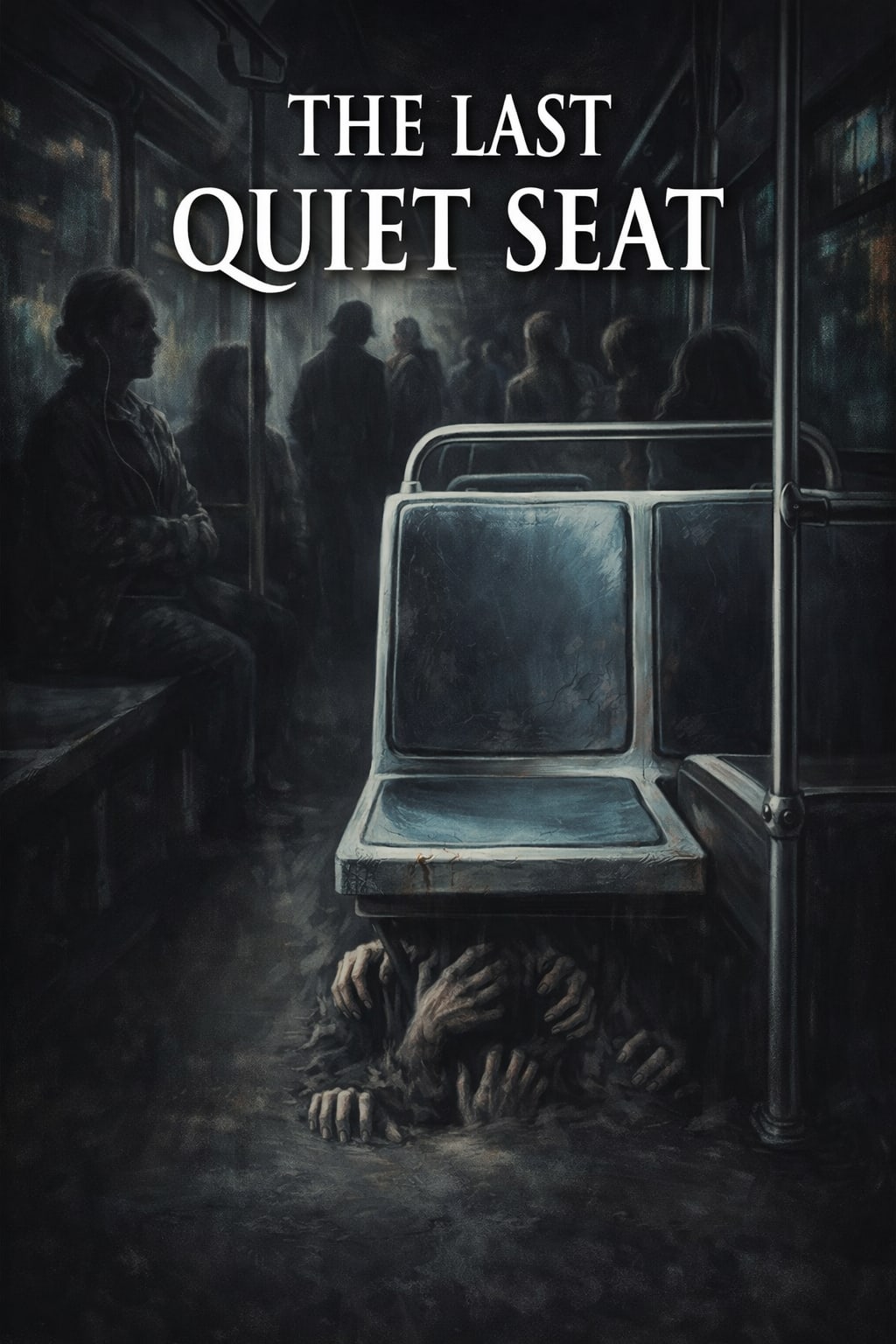
By the time Mara noticed the rule, it had already saved her life.
The bus arrived at 6:12 every morning, sighing at the curb like it had been running for miles before it ever reached her. The doors folded open. People stepped off. People stepped on. Coins clinked. Cards beeped. No one spoke.
Mara boarded, as she always did, and took the second seat on the right, halfway down the aisle.
No one ever sat in the first seat.
It wasn’t marked. No tape, no sign, no warning scrawled in Sharpie. The vinyl cushion was the same faded blue as the others, split at the seams, stuffing visible like a secret that had lost its urgency. The metal pole beside it was dulled by thousands of hands.
But no one sat there.
Not the elderly woman with the oxygen tank who rode three stops and got off breathing hard. Not the construction workers who boarded in muddy boots and filled the back with the smell of sweat and concrete dust. Not the teenagers who pretended not to see anything, ever.
When the bus was full—when people stood shoulder to shoulder in the aisle, gripping straps, swaying with every stop—the seat remained empty.
Mara noticed because she was tired. Because she had slept badly. Because she had woken up already bracing herself for the day ahead, for the fluorescent lights and the hum of machinery and the way time seemed to congeal at work.
She noticed because she thought, for one brief, stupid moment: That’s odd.
The thought slid away as quickly as it came.
The bus pulled off. The city passed by in gray slices. Someone coughed. Someone else scrolled on their phone with the sound off. No one looked at the empty seat.
At the third stop, a man got on who didn’t belong.
Mara couldn’t say how she knew that. He wore the right clothes—work boots, jacket, a knit cap pulled low. He paid his fare. He nodded once at the driver.
But he hesitated.
Just a fraction of a second too long.
His eyes flicked to the empty seat.
Mara felt it then, a tightening in her chest, like when you miss a step on the stairs but don’t fall. Her fingers curled around her bag strap.
The man stepped into the aisle.
And sat down.
The bus did not lurch. It did not brake. Nothing dramatic happened. The world did not end or even noticeably pause.
What changed was the people.
The woman standing nearest the seat shifted away, her shoulder brushing Mara’s arm as she moved. A man across the aisle suddenly found the floor fascinating. Someone near the back muttered something sharp and low, not quite words.
The driver’s eyes met Mara’s in the mirror.
Just for a second.
They widened.
The man in the seat smiled, as if pleased with himself. “Finally,” he said, loud enough to be heard. “Been wondering how long you’d all keep this up.”
No one answered.
The bus rolled on.
Mara’s heartbeat thudded in her ears. She could feel it in her throat, her wrists. She told herself she was overreacting, that this was nothing, that she was projecting meaning onto coincidence.
The man leaned back. The vinyl creaked beneath him.
“You know,” he continued, conversational, “I almost thought there wasn’t a rule. Thought maybe you were all just being polite.”
A woman near the front pressed the stop request cord.
The bell dinged.
The driver didn’t slow.
The man laughed softly. “Oh. That’s not how it works.”
Mara stood.
She didn’t know why she did it. Later, she would tell herself it was instinct, or courage, or stupidity. In truth, it was something simpler: the certainty that if she didn’t move now, she wouldn’t be able to later.
“Sir,” she said. Her voice sounded strange to her own ears—too loud, too steady. “You need to get up.”
He turned his head toward her slowly, like a predator deciding whether something was worth the effort.
“And why would I do that?”
No one else spoke. But the silence was no longer neutral. It pressed in, thick and heavy, as if the air itself were waiting.
Mara swallowed. “Because that seat isn’t for sitting.”
The man’s smile widened. “Says who?”
The bus hit a pothole. Someone gasped. The man’s body jolted—but the seat held him, held him firmly, as if it had been waiting.
“Everyone,” Mara said.
That was when the bus screamed.
Not the engine. Not the brakes.
The bus itself.
A deep, metallic shriek rippled through the floor and walls, vibrating up through Mara’s bones. The lights flickered. The windows rattled.
The man bolted upright, panic finally cracking through his bravado. “What the hell—”
The seat split.
Not the vinyl—the space. The air beneath him tore open like fabric. Something dark and vast yawned where the floor had been.
Hands came out.
Too many. Too thin. Grasping, pale, jointed wrong. They wrapped around the man’s legs, his waist, his arms.
He screamed. A real scream, raw and animal.
The bus stopped.
The doors opened.
No one moved.
The driver turned around fully in her seat. Her face was calm, almost gentle. “You can still let go,” she said to the man. “If you stand up.”
“I can’t!” he sobbed. “I can’t—help me!”
Mara met his eyes.
“I tried,” she said, and meant it.
The hands pulled.
The man vanished.
The tear sealed itself with a sound like a held breath being released. The floor was solid again. The seat was empty.
The bus was very quiet.
Then the driver stood, walked to the seat, and sat down.
She exhaled, long and tired. “Thank you,” she said to no one in particular.
The doors closed.
The bus resumed its route.
No one screamed. No one cried. A few people wiped their faces. Someone near the back whispered a prayer. The woman with the oxygen tank adjusted her mask with shaking hands.
Mara sank back into her seat, legs trembling.
The driver glanced at her in the mirror.
“You noticed,” she said.
Mara nodded.
The driver smiled, small and sad. “We always hope someone will.”
At the next stop, the driver stood and left the bus.
A new driver took her place without comment.
No one sat in the first seat.
Mara rode the rest of the way in silence, the city unfolding as it always had. When she got off, her knees nearly buckled, but she stayed upright. She walked to work. She clocked in. She did her job.
The world did not change.
The next morning, she boarded the bus at 6:12.
The first seat was empty.
She did not look at it.
She took her usual place, halfway down the aisle.
Someone new boarded at the third stop. A woman, this time. She hesitated, just a little.
Mara caught her eye and shook her head once.
The woman looked away.
The rule held.
And the bus went on.
About the Creator
Dakota Denise
Every story I publish is real lived, witnessed, survived. True or not I never say which. Think you can spot fact from fiction? Everything’s true. The lie is what you think I made up. I write humor, confessions, essays, and lived experiences
Keep reading
More stories from Dakota Denise and writers in Psyche and other communities.
Transformative Moment from Rylee's Emotional Journey
**Transformative Moment from Rylee's Emotional Journey** Rylee sat on the edge of the couch, her back hunched, the soft fabric of the cushions almost swallowing her in their plush embrace. The room was quiet, almost painfully so. The only noise was the faint hum of the refrigerator in the background. Her fingers traced the rim of her cold coffee cup, a habit she had developed when her thoughts became too overwhelming to grasp. She stared blankly at the family photo on the coffee table—Ashlee, her daughter, laughing, Rylann, her son, grinning as they hugged her tightly. The picture felt distant now, a frozen moment from a life that felt like someone else’s.
By Dakota Denise 10 months ago in Psyche
Homework Assignment - Right, Wrong, or Grey-zone?
So my autism therapist gave me some homework for a new form (to me at least) of therapy. It is an Internal Family Systems parts mapping exercise and I have no idea if I am doing it correctly or not, but I just wanted to write about my experience... *smile*
By The Schizophrenic Momabout 23 hours ago in Psyche


Comments
There are no comments for this story
Be the first to respond and start the conversation.