Latest Stories
Most recently published stories in The Swamp.
Naval aviator recognised for cat-like reactions to save £2.5m drone helicopter. AI-Generated.
A Royal Navy aviator has been formally recognised for his lightning-fast reflexes after preventing the loss of a £2.5 million drone helicopter during a dangerous landing incident at sea, an act colleagues have described as displaying “cat-like reactions” under extreme pressure. The unnamed pilot, who was operating from a naval vessel during a routine training mission, was awarded a commendation for exceptional professionalism after intervening just seconds before the unmanned aircraft was destroyed. The incident occurred in rough seas when the drone helicopter encountered sudden instability while attempting to land on the ship’s flight deck. A Split-Second Decision According to an official account released by naval authorities, the drone helicopter began to veer off course due to unexpected wind gusts and deck movement caused by heavy swells. The aircraft, designed for reconnaissance and surveillance missions, risked slamming into the deck or tumbling overboard — either outcome would have resulted in the loss of a valuable piece of military equipment and potential danger to nearby crew members. Witnesses said the aviator reacted instinctively, seizing manual control and executing a rapid corrective maneuver that stabilized the aircraft long enough for it to be safely secured by deck crew. “It all happened in a matter of seconds,” said one officer who observed the incident. “The aircraft was drifting sideways, and the conditions were deteriorating fast. His reactions were extraordinary — precise, calm, and decisive.” The successful recovery prevented damage to the drone and avoided what could have been a hazardous situation on the busy flight deck. A High-Value Asset The drone helicopter, valued at approximately £2.5 million, plays a critical role in modern naval operations. Capable of extended flight times and fitted with advanced sensors, it is used for surveillance, search-and-rescue support, and intelligence gathering. Such systems are increasingly important as navies rely more heavily on unmanned platforms to reduce risks to human pilots. Military analysts note that losing a drone at sea is not just a financial setback but also a blow to operational readiness. “These systems are not easily replaced, and each one carries highly sensitive equipment,” said a defense technology expert. “Saving it preserved both the hardware and the mission capability of the ship.” Recognition for Professionalism The aviator’s actions earned him a formal commendation during a ceremony attended by senior naval officers. In praising his conduct, commanders highlighted the importance of training, discipline, and composure in high-risk environments. “This incident demonstrated outstanding airmanship and judgment,” said a senior Royal Navy official. “His ability to respond instantly under pressure reflects the highest standards of naval aviation.” The aviator himself played down the praise, crediting teamwork and preparation. “I was just doing my job,” he said in a brief statement. “The deck crew and the control team worked together, and the training kicked in.” The Challenge of Landing at Sea Landing aircraft on a moving ship remains one of the most demanding tasks in aviation. Unlike airfields on land, ship decks constantly shift with waves and wind, creating unpredictable conditions for both manned and unmanned aircraft. Drone helicopters present unique challenges. While they remove the risk to a pilot’s life, they rely on complex control systems and data links that can be disrupted by weather or technical interference. In this case, strong crosswinds combined with rolling seas made the landing especially difficult. Naval aviation instructors say the incident serves as a reminder that even highly automated systems require human oversight and quick thinking. “Technology is impressive, but it doesn’t replace the need for skilled operators,” said one instructor. “Human judgment still makes the difference when something goes wrong.” Broader Implications The episode comes as the Royal Navy expands its use of unmanned aerial systems across its fleet. Drone helicopters are increasingly deployed for maritime patrol, anti-piracy missions, and intelligence collection in contested waters. With tensions rising in several global regions, including the Red Sea and Indo-Pacific, maintaining reliable reconnaissance capability has become a strategic priority. Incidents like this highlight the vulnerability of advanced equipment and the importance of safeguarding it. Defense officials say lessons learned from the event will be incorporated into training programs to further improve safety procedures for drone recovery operations in rough conditions. Public and Military Reaction News of the aviator’s actions has drawn praise from both military circles and the public. Social media users described the incident as a reminder of the skill and dedication of service personnel behind high-tech military systems. One former naval officer commented that such moments rarely make headlines but are common in the daily life of military operations. “People see the technology and assume it runs itself,” he said. “But it’s the people who make sure things don’t go wrong.” Looking Ahead The saved drone helicopter has since returned to service following a technical inspection, and operations aboard the ship have resumed as normal. Officials confirmed there was no damage to the vessel or injuries to personnel. While the incident ended safely, it underscores the narrow margin between success and failure in maritime aviation. A single miscalculation could have resulted in significant financial loss and operational disruption. For the aviator at the center of the story, the recognition is a proud moment but also a reminder of the responsibility that comes with the role. “When you’re out at sea, every decision matters,” he said. “You train for these moments, hoping you never need them — but ready when you do.” The episode stands as a testament to the value of human skill in an increasingly automated military world and highlights how a split-second response can protect both lives and vital equipment worth millions of pounds.
By Fiaz Ahmed Brohiabout 17 hours ago in The Swamp
Russian arms makers vanish from Asia’s largest airshow. AI-Generated.
Russian defense manufacturers were notably absent from Asia’s largest airshow this year, marking a striking shift in the global arms industry and underscoring Moscow’s growing isolation from key international markets. The disappearance of Russian exhibitors from the high-profile event has drawn attention from military analysts and diplomats alike, raising questions about the future of Russia’s defense exports and its standing among Asian buyers. The airshow, held in Singapore and regarded as the premier aerospace and defense exhibition in the Asia-Pacific region, traditionally attracts major arms producers from the United States, Europe, China, and Russia. In previous years, Russian firms showcased fighter jets, helicopters, missile systems, and radar technologies. This year, however, no Russian government-backed defense companies appeared on the exhibitor list. A Symbol of Shifting Geopolitics Observers say Russia’s absence reflects the deepening impact of international sanctions and the strain placed on its defense industry by the prolonged war in Ukraine. Western sanctions have severely restricted Russia’s access to key components, financing, and global transport networks, making participation in international defense exhibitions increasingly difficult. “This is not just a logistical issue,” said a senior defense analyst in Singapore. “It is a political signal. Russia’s absence highlights how far its international defense ties have eroded since the invasion of Ukraine.” Several Asian governments have been cautious about maintaining visible defense cooperation with Moscow, fearing diplomatic backlash from Western allies and potential exposure to secondary sanctions. While some countries continue to operate Russian-made equipment, they are now exploring alternative suppliers for upgrades and new purchases. Once a Major Player in Asia For decades, Russia was one of the largest arms suppliers to Asia, providing fighter aircraft and missile systems to India, Vietnam, Malaysia, and Indonesia. Russian-made Sukhoi jets were once a dominant presence at airshows, drawing crowds and serving as symbols of Moscow’s technological prowess. In recent years, however, Russia’s export capacity has declined. Defense factories have been redirected toward domestic military needs, limiting production for overseas customers. Delivery schedules have slipped, and maintenance support has become more complicated as sanctions restrict spare parts and financial transactions. India, historically Russia’s biggest defense partner in Asia, has increasingly diversified its arms purchases, turning to the United States, France, and Israel. Southeast Asian nations have followed a similar pattern, seeking equipment that is easier to maintain and politically safer to procure. Competition Fills the Gap The absence of Russian companies left more space for Western and Asian manufacturers to dominate the exhibition floor. U.S. defense firms showcased next-generation fighter aircraft, drones, and missile defense systems, while European companies highlighted advanced radar and electronic warfare technologies. Chinese manufacturers also maintained a strong presence, displaying fighter jets and unmanned systems aimed at export markets. “This airshow made it clear who the rising and declining players are,” said a regional military procurement expert. “Russia’s disappearance contrasts sharply with the aggressive marketing by China and the steady presence of U.S. and European firms.” Several countries attending the airshow reportedly held closed-door meetings with Western suppliers to discuss long-term procurement strategies. Analysts say this reflects a growing shift toward interoperability with U.S. and NATO-standard equipment. Diplomatic Sensitivities Event organizers declined to comment directly on Russia’s absence, saying exhibitor participation is voluntary and subject to national regulations. However, diplomatic sources indicated that pressure from host governments and concerns about reputational risk played a role. “Hosting Russian defense firms now carries political implications,” said one diplomat familiar with the discussions. “Many countries want to avoid being seen as endorsing or legitimizing Moscow’s military actions.” The airshow also served as a forum for regional security talks, including discussions about tensions in the South China Sea, Taiwan, and the Korean Peninsula. Russia’s absence from these informal diplomatic interactions further reduced its visibility in Asia’s evolving security landscape. Impact on Russia’s Defense Industry The lack of international exposure could have long-term consequences for Russia’s arms industry, which relies heavily on export revenue to fund research and development. With fewer opportunities to attract new buyers, Russian manufacturers may become increasingly dependent on domestic contracts and a small group of friendly states. Some analysts believe Russia will pivot further toward markets in Africa and the Middle East, where political alignments may be more favorable. However, competition from China and Turkey is growing in those regions as well, offering cheaper and more flexible alternatives. “Russia’s defense industry is facing a double challenge,” said a Moscow-based military economist. “It must sustain wartime production at home while trying to remain relevant abroad. The absence from Asia’s biggest airshow suggests that balance is becoming harder to maintain.” A Broader Message Beyond commercial implications, the empty Russian booths carried symbolic weight. Defense exhibitions are not just trade events; they are platforms for power projection and diplomatic influence. Russia’s nonappearance was widely interpreted as evidence of its reduced soft power in Asia. “It sends a message that Russia is no longer a central player in shaping regional security discussions,” said a Southeast Asian security scholar. “That role is increasingly being filled by the United States and China.” Looking Ahead Whether Russian defense firms will return to future airshows remains uncertain. Much will depend on the trajectory of the war in Ukraine and the durability of international sanctions. Even if restrictions ease, rebuilding trust with Asian buyers could take years. For now, the disappearance of Russian arms makers from Asia’s largest airshow highlights a broader transformation in the global arms market. It reflects not only the economic consequences of conflict but also the shifting alliances and strategic calculations that are redefining security in the Asia-Pacific region. As one industry observer put it, “An airshow floor can tell you a lot about world politics. And this year, the absence of Russia spoke louder than any display.”
By Fiaz Ahmed Brohiabout 17 hours ago in The Swamp
US Must Be Prudent When Supplying Arms to Taiwan, Xi Tells Trump. AI-Generated.
Chinese President Xi Jinping has warned that the United States must exercise “prudence and restraint” in supplying weapons to Taiwan, emphasizing that the issue remains the most sensitive and potentially explosive point in relations between Beijing and Washington. The message was delivered during a direct exchange with former U.S. President Donald Trump, according to Chinese state media, as tensions continue to simmer over Taiwan’s security and the broader strategic rivalry between the world’s two largest economies. Xi’s comments came amid renewed debate in Washington over arms sales and military cooperation with Taipei. The United States has long maintained a policy of providing Taiwan with defensive weapons under the Taiwan Relations Act, while formally recognizing Beijing as the sole legal government of China. China, however, views any U.S. military support for Taiwan as a violation of its sovereignty and a threat to regional stability. A Sensitive Diplomatic Exchange According to official readouts from Beijing, Xi urged Trump to “handle the Taiwan question carefully” and avoid actions that could embolden what China describes as separatist forces on the island. He stressed that peace and stability in the Taiwan Strait depend on mutual respect for China’s “core interests.” “The Taiwan question concerns China’s sovereignty and territorial integrity,” Xi reportedly said. “Any external interference will only increase confrontation and risk serious consequences.” While the U.S. side has not released detailed remarks from Trump, sources familiar with the exchange said the former president reaffirmed America’s interest in maintaining peace in the Indo-Pacific while also underscoring the importance of supporting democratic partners. The exchange reflects ongoing strains between Washington and Beijing over military posture in Asia, even as both sides attempt to keep communication channels open to avoid miscalculation. Arms Sales and Strategic Signaling Over the past several years, the United States has approved multiple arms packages for Taiwan, including fighter jets, missile defense systems, and advanced radar equipment. These sales are framed by U.S. officials as necessary for Taiwan’s self-defense in the face of growing Chinese military pressure. China has consistently condemned such transfers, often responding with military drills near Taiwan and diplomatic protests. Beijing argues that these moves encourage Taiwanese leaders to resist reunification and undermine efforts to manage cross-strait relations peacefully. In recent months, Chinese military activity around Taiwan has intensified, with regular air and naval patrols crossing the median line of the Taiwan Strait. Analysts see these actions as a warning to both Taipei and Washington that Beijing is prepared to use force if it perceives red lines being crossed. “The arms issue is not symbolic; it is central to China’s perception of U.S. intentions,” said one Asia-Pacific security expert. “From Beijing’s perspective, more weapons mean more resistance to reunification and a higher chance of conflict.” Trump’s Taiwan Record During his presidency, Trump took several steps that reshaped U.S.-China relations, including a trade war and a more confrontational stance on technology and security issues. His administration approved significant arms sales to Taiwan and increased diplomatic engagement with Taiwanese officials, breaking with decades of cautious protocol. Those policies were welcomed in Taipei but sharply criticized in Beijing. Chinese officials accused Washington of hollowing out the “One China” principle, which underpins diplomatic relations between the two countries. Trump has recently returned to political prominence, and his views on Taiwan are being closely watched as U.S. elections approach. While he has expressed support for Taiwan’s defense, he has also questioned the costs of U.S. commitments abroad, creating uncertainty about how he would handle future arms decisions. Regional Implications Xi’s warning highlights how Taiwan has become a focal point of global security concerns. Allies such as Japan and Australia have increased coordination with the United States, citing the need to deter any unilateral change to the status quo in the Taiwan Strait. At the same time, Southeast Asian nations remain wary of being drawn into a conflict between two superpowers. Economic consequences are also part of the calculation. Taiwan is a critical hub for semiconductor manufacturing, and any disruption to its stability could send shockwaves through global supply chains. “Taiwan is not just a political issue; it’s an economic one,” said a trade analyst. “A conflict there would affect everything from consumer electronics to automobiles.” Calls for Stability and Dialogue Despite the sharp rhetoric, both Washington and Beijing have repeatedly said they do not seek war. U.S. officials argue that arms sales are defensive and designed to preserve deterrence, not provoke confrontation. Chinese leaders, meanwhile, insist that reunification remains their long-term goal but stress that peaceful means are preferred. Xi’s appeal for prudence suggests an attempt to rein in escalation while still drawing a firm line. Analysts note that China’s leadership is under domestic pressure to appear strong on sovereignty issues, especially as nationalism remains a powerful force in Chinese politics. “Xi cannot be seen as backing down on Taiwan,” said a political analyst in Beijing. “But he also wants to avoid a crisis that could harm China’s economy or derail diplomatic efforts with the U.S.” A Fragile Balance The exchange between Xi and Trump underscores the fragile balance that defines U.S.-China relations. Taiwan remains the most dangerous flashpoint, where missteps could rapidly spiral into confrontation. For now, both sides appear intent on maintaining dialogue while signaling resolve. Whether that balance can be sustained will depend largely on future decisions about arms sales, military deployments, and political engagement with Taipei. As Xi cautioned, prudence may be the key word — but in an era of strategic rivalry and mutual suspicion, restraint will be increasingly difficult to maintain.
By Fiaz Ahmed Brohiabout 17 hours ago in The Swamp
Ban on Asylum Seekers Using Taxis for Medical Appointments Comes Into Force. AI-Generated.
A controversial new policy banning asylum seekers from using taxis to attend routine medical appointments has officially come into force, prompting concern from healthcare professionals, charities, and migrant advocacy groups who warn the move could put vulnerable people at risk and create barriers to essential healthcare access. The ban, introduced by the Home Office as part of wider cost-cutting measures within the asylum support system, restricts the use of government-funded taxis except in cases deemed “medically exceptional.” Officials argue the policy is necessary to reduce spiraling transport costs and encourage the use of public transport where possible. Critics, however, say it ignores the physical, psychological, and practical realities faced by many asylum seekers. A Shift in Policy Previously, asylum seekers housed in temporary accommodation were allowed to use pre-approved taxi services to attend hospital appointments, particularly when living in remote locations or when language barriers made navigating public transport difficult. Under the new rules, individuals must now apply for special permission to use taxis, and approvals will be granted only for emergencies or cases involving severe disability or acute illness. Home Office sources say transport costs had risen sharply over the past year, driven by increased demand for medical services and the growing number of people in asylum accommodation. The department estimates that millions of pounds could be saved annually by requiring asylum seekers to rely primarily on buses and trains. A spokesperson said the change was designed to “ensure fairness and value for taxpayers” while still allowing exemptions for those with complex medical needs. “We remain committed to ensuring asylum seekers can access healthcare services,” the spokesperson said. “This policy ensures that public transport is used where reasonable, while taxis remain available for exceptional circumstances.” Concerns From Doctors and Charities Medical professionals have raised alarm over the potential impact of the ban. Doctors working with refugee communities warn that many asylum seekers suffer from trauma, chronic illness, and mental health conditions that make long journeys by public transport extremely challenging. Dr. Helen Morris, a GP who works with asylum seekers in northern England, said the policy could discourage people from attending vital appointments. “Some of my patients already struggle to leave their accommodation due to anxiety, depression, or post-traumatic stress disorder,” she said. “Now they are being asked to navigate unfamiliar transport systems, often in a language they don’t understand, to reach hospitals that may be miles away. The risk is that people simply won’t go.” Charities supporting migrants echoed those concerns. The Refugee Health Network said the ban could result in missed appointments, delayed diagnoses, and worsening health outcomes, ultimately costing the NHS more in the long run. “This is a short-sighted policy,” said the group’s director, Samira Patel. “Denying people safe and reliable transport does not save money if it leads to emergency hospital admissions later.” Practical Barriers Advocates point out that asylum seekers are often placed in hotels or accommodation on the outskirts of cities, far from GP surgeries or hospitals. Many are unfamiliar with local transport systems and lack access to smartphones or bank cards needed to plan journeys or buy tickets. Language barriers further complicate matters. Appointment letters are typically written in English, and transport instructions can be confusing even for fluent speakers. Fatima, an asylum seeker from Sudan living in temporary accommodation, said she fears missing future hospital visits. “I don’t know how to take two buses and a train,” she said through an interpreter. “Before, the taxi came and took me to the hospital. Now they say I must use public transport. I am scared I will get lost.” Campaigners have also raised safety concerns, particularly for women and families traveling long distances with children. Political Reaction Opposition politicians have criticized the policy, accusing the government of targeting one of the most vulnerable groups in society. “This decision prioritizes savings over human dignity,” said one shadow health minister. “Access to healthcare should never depend on whether someone can navigate an unfamiliar bus route.” Several local councils have warned that the change could shift responsibility onto already overstretched community services. Some are considering using their own limited funds to provide transport for high-risk individuals. However, government supporters argue that the measure aligns asylum support with what is expected of other low-income residents who must also rely on public transport to attend appointments. “Taxpayers should not be footing the bill for taxis when buses and trains are available,” said one senior Conservative MP. “Exemptions exist for those who genuinely need them.” Legal and Ethical Questions Human rights lawyers are examining whether the policy could breach obligations under international law to ensure access to healthcare without discrimination. They argue that the practical effect of the ban may disproportionately harm those with disabilities, mental health conditions, or trauma-related symptoms. A legal challenge is already being considered by several advocacy groups, who claim the policy fails to account for individual circumstances. “This is not about convenience,” said lawyer James Holloway. “It is about whether people can realistically attend medical appointments at all.” Looking Ahead As the ban takes effect, charities are calling for urgent monitoring of its impact. They want the government to publish data on missed appointments and health outcomes over the next six months. Healthcare providers fear that the policy could increase pressure on emergency services if asylum seekers delay treatment until conditions become critical. For now, asylum seekers and the organizations that support them are scrambling to adapt, offering travel guidance and accompaniment services where possible. But many say this is no substitute for a system that ensured reliable access to care. “This policy sends a troubling message,” said Patel. “It suggests that cost savings matter more than people’s health. That is not a principle any healthcare system should accept.”
By Fiaz Ahmed Brohiabout 17 hours ago in The Swamp
Specialist U.S. Military Jet Arrives in Middle East as Iran Tensions Continue. AI-Generated.
As tensions between the United States and Iran remain elevated, the U.S. military has quietly bolstered its air power in the Middle East with the arrival of specialized aircraft in the region — part of a broader buildup that reflects Washington’s ongoing preparedness for potential escalation. The deployment of advanced jets and surveillance aircraft underscores the Pentagon’s dual strategy: deter aggression, reassure allies, and maintain rapid response options amid volatile conditions linked to Tehran’s regional posture, Iran’s internal unrest, and the still-tense negotiations over its nuclear program. What Has Arrived — and Why It Matters Among the latest arrivals are U.S. Air Force F-15E Strike Eagle fighter jets, which have flown into the U.S. Central Command area of responsibility to reinforce existing air assets. The deployment was confirmed by CENTCOM in a social media post, noting the aircraft came from the 492nd Fighter Squadron based in England, and highlighting that these forces are intended to deter “potential Iranian aggression or threats to U.S. personnel” in the region. www.ndtv.com Alongside the fighters, military planners have also moved aerial refueling tankers, transport planes, and other support aircraft into key bases across the Gulf — including at Al Udeid Air Base in Qatar — to ensure logistical support and sustained operations if needed. CiberCuba These jets are part of an increasingly broad U.S. aerial deployment. Earlier media tracking showed dozens of American military aircraft — from tankers and heavy transports to surveillance platforms — repositioned eastward as part of the high-alert posture. CiberCuba A Broader Military Presence The specialist jets arrive as part of a larger U.S. military buildup across the Middle East, including the stationing of a major naval force centered on the aircraft carrier USS Abraham Lincoln and its strike group, which arrived in the region last week. That deployment represents one of the most visible demonstrations of U.S. force in the region as tensions with Tehran continue. iNFOnews.ca A guided-missile destroyer, the USS Delbert D. Black, also recently joined the carrier strike group, underscoring the diversity of capabilities being positioned. Reuters Collectively, these assets — aircraft carriers, destroyers, and specialized aircraft — send a clear message: the United States is prepared to defend its forces, protect shipping lanes such as the Strait of Hormuz, and support its allies if conflict flares. These deployments come amid threats from multiple directions, including sporadic harassment of maritime traffic and elevated rhetoric from Iranian military commanders. Times of Islamabad Context: Rising Tensions and Recent Incidents The background to the current force posture involves a combination of diplomatic, military, and regional crises. Relations between Washington and Tehran have been strained by issues including Iran’s nuclear ambitions, its support for militia groups across the region, and domestic unrest following the government’s harsh crackdown on protest movements. In a stark demonstration of rising friction, a U.S. Navy fighter jet on February 3 shot down an Iranian Shahed-139 drone near the USS Abraham Lincoln in the Arabian Sea after the unmanned aircraft approached aggressively and repeatedly despite U.S. warnings. The Pentagon said the action was taken in self-defense, and no U.S. equipment or personnel were injured. military.com The drone strike came just hours after Iran’s Revolutionary Guard reportedly harassed a U.S.-crewed merchant vessel in the Strait of Hormuz — a critical chokepoint through which a fifth of the world’s traded oil passes. military.com On the diplomatic front, the two sides remain at a crossroads. Iranian President Masoud Pezeshkian has publicly signaled openness to “fair and equitable negotiations” on nuclear issues, possibly backed by Supreme Leader Ayatollah Ali Khamenei, even as hard-liners in Tehran emphasize continued resistance to external pressures. Reuters U.S. envoys are preparing talks with Iranian officials, potentially in Oman, with the aim of reducing tensions and narrowing differences on nuclear and missile programs. But the prospect of diplomatic progress exists alongside growing concerns in Washington and neighboring capitals that military options remain on the table. Reuters Strategic Implications Analysts see the arrival of specialist jets and expanded air deployments as part of a layered deterrence strategy. Advanced fighter jets like the F-15E provide flexibility across missions — from air superiority and ground attack to quick reaction alert duties — underscoring the U.S. military’s ability to project power across a broad theater. Their presence also reassures regional allies, including Gulf Cooperation Council states and Israel, which have been vocal about containing Iran’s regional influence. Tehran’s support for proxy forces in Yemen, Iraq, and Syria, and its missile programs, remain persistent concerns for U.S. partners. www.ndtv.com At the same time, the deployment is defensive in nature according to Pentagon officials, emphasizing protection of U.S. personnel and interests rather than aggressive posturing. U.S. spokespeople have highlighted that these moves are meant to signal resolve while allowing diplomatic channels to remain open. www.ndtv.com Risks of Escalation Despite those assurances, the situation remains fragile. Military buildups can inadvertently increase the risk of misunderstandings or confrontations, especially in a region marked by crowded airspace and overlapping national interests. Iran has repeatedly warned that any offensive action against its territory could trigger broad retaliation — potentially involving ballistic missiles, asymmetric military tactics, and the activation of allied militia networks. Tehran’s leaders have made it clear that they perceive external military pressure as a threat to national sovereignty. Times of Islamabad At the same time, Washington maintains that it seeks to avoid war. U.S. officials have reiterated that deterrence, diplomatic engagement, and multilateral pressures are preferred avenues for resolving core disputes — even as they prepare for contingencies. Looking Ahead Specialist military aircraft arriving in the Middle East mark an intensification of an already significant U.S. presence, reflecting both strategic caution and operational readiness. As long as tensions with Iran remain unresolved, military officials and diplomats alike will likely continue to walk a fine line between showing strength and preventing unintended escalation. The coming weeks will be a test of whether increased deterrence and ongoing negotiations can produce de-escalation — or whether the region edges closer to a dangerous confrontation.
By Fiaz Ahmed Brohiabout 18 hours ago in The Swamp
Mamdani Chooses a Liberal Jewish Leader to Run Antisemitism Office. AI-Generated.
New York State Assemblymember Zohran Mamdani has appointed a prominent liberal Jewish leader to head a newly created Office to Combat Antisemitism, a move that has drawn both praise and criticism from across the political spectrum. The decision comes amid heightened tensions over how public officials should address rising antisemitism while also navigating deeply polarized debates about Israel, Palestine, and free expression. Mamdani, a Democratic Socialist representing Queens, announced that the office will be led by Rabbi Daniel Weissman, a longtime civil rights advocate and former director of a Jewish social justice organization known for promoting interfaith dialogue and progressive values. Mamdani described the appointment as an effort to ensure the office is guided by someone “deeply rooted in Jewish life, committed to human rights, and capable of building trust across communities.” The creation of the antisemitism office follows months of pressure from Jewish organizations and state lawmakers who have called for a stronger institutional response to rising incidents of hate crimes, harassment, and threats targeting Jewish New Yorkers. According to state data, reports of antisemitic incidents have increased sharply over the past two years, driven in part by global events and political polarization. A Strategic and Symbolic Appointment Supporters of Mamdani’s decision say choosing a liberal Jewish leader reflects an attempt to bridge divides within the Jewish community itself, which is far from monolithic in its views on Israel and U.S. foreign policy. Rabbi Weissman has been outspoken against antisemitism while also advocating for Palestinian rights and criticizing certain Israeli government policies—positions that resonate with progressive activists but anger more conservative pro-Israel groups. “This appointment sends a message that fighting antisemitism does not require silencing debate or abandoning commitments to justice,” Weissman said in a statement. “It means protecting Jewish communities while also standing firmly against all forms of bigotry.” Mamdani emphasized that the office would focus on education, data collection, and partnerships with schools, faith groups, and law enforcement agencies. Its mission, he said, is to reduce antisemitism through prevention and understanding rather than through punitive measures alone. “The goal is safety, not censorship,” Mamdani said. “We must confront antisemitism directly while preserving free speech and democratic values.” Critics Question the Choice Not everyone has welcomed the appointment. Several mainstream Jewish advocacy groups expressed concern that Weissman’s political views could undermine the credibility of the office. Some argued that selecting a figure who has publicly criticized Israel risks alienating large segments of the Jewish population who see such criticism as intertwined with rising antisemitism. “This office must be led by someone who understands how anti-Zionism often becomes antisemitism,” said one spokesperson for a pro-Israel organization. “We worry this appointment blurs that line instead of clarifying it.” Republican lawmakers were more blunt in their criticism, accusing Mamdani of politicizing an issue that should remain nonpartisan. One state senator called the decision “performative” and claimed it would fail to reassure Jewish families concerned about their safety. Mamdani rejected those claims, arguing that Weissman’s background in civil rights and community organizing makes him uniquely qualified for the role. “We are not outsourcing this work to ideology,” Mamdani said. “We are entrusting it to someone who has spent decades confronting hate in all its forms.” A Complex Political Landscape The appointment comes at a time when antisemitism has become a flashpoint in national politics. Universities, city governments, and public institutions have struggled to balance concerns about Jewish safety with protections for political expression related to the Israel-Gaza conflict. Several states have passed laws defining antisemitism in ways critics say could limit criticism of Israeli policy. Mamdani has previously opposed such measures, warning that conflating antisemitism with political speech risks weakening civil liberties. His critics argue that this stance makes his leadership on the issue suspect, while supporters say it reflects a principled commitment to constitutional rights. Political analysts say the choice of a liberal Jewish leader reflects Mamdani’s broader strategy of aligning antisemitism prevention with social justice movements rather than treating it as a solely security-based problem. “This is an attempt to redefine how government fights antisemitism,” said a professor of political science at a New York university. “Instead of focusing only on policing and surveillance, Mamdani is framing it as a community and education issue.” What the Office Will Do The new Office to Combat Antisemitism will coordinate with state agencies to track incidents, develop school curricula on Jewish history and the Holocaust, and provide grants to local organizations promoting interfaith dialogue. Weissman has said one of his first priorities will be to convene listening sessions with Jewish communities across New York, including Orthodox, secular, and immigrant populations. “We need to hear directly from people who feel unsafe,” he said. “And we need to work with Muslim, Black, and immigrant communities who also face hate. Antisemitism doesn’t exist in isolation.” The office is expected to release its first public report within six months, outlining trends in antisemitic incidents and recommending policy responses. A Test for Progressive Politics For Mamdani, the appointment is both a policy move and a political gamble. Progressive leaders have often struggled to articulate a unified stance on antisemitism that satisfies both Jewish communities and activist coalitions. The success or failure of Weissman’s leadership may shape how other cities and states approach similar initiatives. “This is a test case,” said one Jewish community organizer. “Can you fight antisemitism without turning it into a tool for political suppression? Or without ignoring Jewish fears? That’s the balance they’re trying to strike.” As the office begins its work, scrutiny is likely to intensify. Whether Mamdani’s choice will calm tensions or deepen divisions remains uncertain. What is clear is that the debate over how to confront antisemitism—who should lead that effort, and what it should look like—has become inseparable from broader struggles over identity, politics, and free speech in America.
By Fiaz Ahmed Brohiabout 18 hours ago in The Swamp
Retreat to the Red Sea and Relax: Your Ultimate Escape to Tranquility. AI-Generated.
If you’re craving a vacation that balances adventure with serenity, the Red Sea should be at the top of your list. Stretching over 2,300 kilometers and bordered by Egypt, Sudan, and Saudi Arabia, the Red Sea offers crystal-clear waters, vibrant marine life, and untouched coastal beauty. Unlike crowded tourist destinations, it presents a unique blend of relaxation, luxury, and exploration. Whether you’re seeking an adrenaline rush or a peaceful escape from daily life, the Red Sea has it all.
By Ayesha Lashariabout 18 hours ago in The Swamp
Starmer’s “Sorry” Rings Hollow as Mandelson Scandal Deepens: Labour in Turmoil. AI-Generated.
UK Prime Minister Sir Keir Starmer has issued a highly anticipated apology for appointing former Labour grandee Lord Peter Mandelson as British ambassador to the United States — an appointment that has sparked intense fury within his own party and threatens the stability of his leadership.
By Ayesha Lashariabout 18 hours ago in The Swamp
The USA Never Learns.. Content Warning.
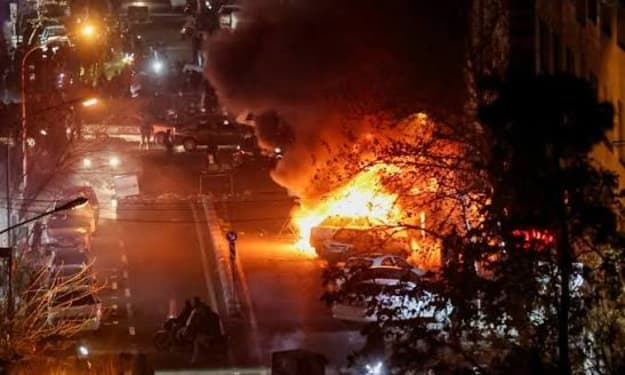
Watching the regime of Ayatollah Ali Khamenei put down protests with the utmost violence was and is distressing. Of course, the watchers' distress from afar is nothing to those who paid the ultimate price under the fire of Iranian security forces. It is reckoned that if Western media can be believed, thousands of Iranian protesters died or were injured under the boot of Iranian security forces. Protests started from shopkeepers and ordinary citizens against the cost of living. We are all facing a cost-of-living crisis right now, but the Iranian people are facing absolute poverty. Thanks to the severe sanctions imposed by the US and other Western nations. The Iranian currency, the Rial, has been so devalued that you might as well use Monopoly money to buy goods if you are an ordinary Iranian.
By Nicholas Bishopabout 19 hours ago in The Swamp
YouTube Just Blocked This Popular Hack for Free Background Play. AI-Generated.
In a move that has sparked widespread frustration across the internet, YouTube has officially blocked a widely used hack that allowed free users to play videos in the background — a feature that was once exclusive to YouTube Premium subscribers. This change, rolled out quietly across mobile web browsers, marks a significant shift in how the platform enforces its subscription benefits. What Was the Hack? For years, YouTube Premium users have enjoyed features such as ad‑free viewing, downloads, and background playback — the ability to keep videos playing even when the app is minimized or the phone screen is turned off. Free users, unwilling to pay, found clever workarounds. By opening YouTube in third-party browsers like Samsung Internet, Brave, Vivaldi, or Microsoft Edge, they could bypass the Premium paywall and keep audio playing while multitasking. This loophole, cherished by listeners who use YouTube like a music or podcast app, no longer works. Google has updated YouTube’s mobile web experience so that background audio stops when the display goes dark or the browser is minimized if the user is not a Premium subscriber. Official Confirmation from YouTube Reports confirmed by Google show that the company has deliberately updated the mobile web experience to make background playback exclusive to Premium subscribers. A YouTube spokesperson told Android Authority: “Background playback is a feature intended to be exclusive for YouTube Premium members.” This change affects mobile browsers on both Android and iOS devices. Even when playing videos through browsers like Samsung Internet or Vivaldi, audio cuts off shortly after the screen turns off — mimicking the behavior of the official YouTube app’s restrictions. Why It Matters YouTube’s move is clearly aimed at driving more users toward Premium subscriptions, which cost around $13.99/month in the United States and £12.99/month in the UK. These subscriptions bundle perks like ad-free viewing and background playback — features once accessible through browser workarounds. Background playback is a high-value feature for users who listen to music, news, or podcasts while on the move. By gating it behind a paywall, YouTube increases the perceived value of Premium and nudges free users toward paying. Users’ Reactions The response online has been largely negative. Many free users expressed frustration on social media, calling the change “anti-consumer” because background playback was a core convenience. Tech forums have seen debates about alternatives, with some users exploring browser tweaks or third-party apps. However, most workarounds are unreliable or violate YouTube’s terms of service. Interestingly, the Brave browser team has shared guidance on how users might temporarily restore background playback, though this may not last due to YouTube’s server-side enforcement. How the Block Works YouTube’s enforcement appears to be server-side, rather than browser-specific. It checks whether an account has the right to background play before allowing audio to continue when the device is locked. Once a non-Premium account is detected, playback stops within seconds, and lock screen media controls are removed. This system makes it hard for browsers to bypass the restriction, as it relies on real-time entitlement validation. What This Means for the Future This crackdown is part of a broader trend: streaming services increasingly gate what was once free behind subscription walls. As ad revenue slows and competition grows, platforms like YouTube push more aggressively for paid conversions. For users, the message is clear: reliable background playback now requires YouTube Premium. Workarounds may exist but are temporary and unstable. Conclusion YouTube’s decision to block the popular background play hack marks a turning point in how the platform balances free access with subscription incentives. While the move makes business sense, many free users are disappointed. Whether it pushes users to Premium or to competing platforms remains to be seen. One thing is certain: the era of free background play on mobile devices is officially over — at least for most users. ✅ Tip for Bloggers:
By Ayesha Lashariabout 19 hours ago in The Swamp
Grave Moment’: End of US-Russia Nuclear Pact Comes at Worst Possible Time, UN Chief Warns. AI-Generated.
The world has entered a perilous new chapter in global security. On February 5, 2026, the last major nuclear arms control treaty between the United States and Russia—New START—officially expired.
By Ayesha Lashariabout 19 hours ago in The Swamp
Questions After Iran’s Government Releases Victim List in Protest Killings. AI-Generated.
In a move that has sparked both surprise and suspicion, the Iranian government has released an official list of individuals killed during the widespread protests that erupted across the country. The release of the list, which was issued by the Ministry of the Interior, comes after weeks of international pressure and public outcry over the brutal crackdown on demonstrators. However, questions abound regarding the accuracy of the list and the government’s motivations behind the release. The Official List: Who’s Included and Who’s Missing? The Iranian authorities have confirmed the names of over 200 individuals who were reportedly killed during protests that erupted in September, following the death of Mahsa Amini in police custody. The protests, which began as a response to Amini's tragic death, quickly escalated into widespread demonstrations calling for greater freedoms, women’s rights, and political reforms. However, the release of the victim list has been met with skepticism. Human rights organizations have pointed out discrepancies, noting that the number of confirmed deaths is far lower than the estimates from independent sources. The government’s list includes individuals who were allegedly killed by “rioters” or “foreign agents” but does not account for those who were reportedly killed by security forces during the crackdown. “There is no transparency in this list,” said one human rights activist based in Tehran, who spoke on condition of anonymity. “The list released by the government only includes the names of people who died in circumstances that fit their narrative. It conveniently omits those killed by the authorities themselves, which could easily number in the hundreds.” Independent reports, including those from international organizations such as Amnesty International and Human Rights Watch, claim that the actual number of victims is far higher. They assert that the Iranian government’s actions in suppressing dissent—including the use of live ammunition, mass arrests, and torture—has led to a much higher toll than what has been publicly acknowledged. The Political Motivation Behind the List The release of the victim list is widely seen as part of the Iranian government's strategy to control the narrative surrounding the protests. By publishing a carefully curated list of names, the government appears to be trying to shape the conversation around the protests, framing them as the result of foreign interference and criminal violence rather than addressing the underlying issues of governmental repression and systemic injustice. “This list is a clear attempt by the regime to exonerate itself and redirect blame onto external forces,” said a political analyst who has closely monitored the protests. “By labeling the protestors as agents of foreign powers and presenting these deaths as part of the wider ‘enemy agenda,’ the government is hoping to legitimize its crackdown.” The Iranian authorities have frequently accused foreign governments, including the United States and European nations, of orchestrating unrest in the country. Tehran has also claimed that the protests were fomented by anti-revolutionary elements within the country, though there is little evidence to support these claims. The government’s insistence on casting the protests in this light stands in stark contrast to the demands of the protesters themselves, who have called for an end to restrictions on freedom of expression, the right to free assembly, and greater protections for women. The tragic death of Mahsa Amini served as a catalyst for the unrest, but many have emphasized that the protests represent a long-standing desire for political reform and social justice. International Reactions and Criticism The international community’s response to the release of the victim list has been swift and critical. Several foreign governments and human rights organizations have called for an independent, international investigation into the deaths and the government’s violent suppression of the protests. While some Western countries have sanctioned Iran’s leadership and officials, the Iranian government continues to reject outside intervention, framing the protests as an internal issue. “There must be a thorough and independent investigation into the deaths of these protesters,” said Agnes Callamard, the Secretary-General of Amnesty International. “The Iranian authorities have shown a complete disregard for human rights in their brutal treatment of peaceful protesters. The release of this list is insufficient and does not bring us any closer to accountability.” In the United States, lawmakers and human rights advocates have expressed outrage over the killings and the government’s continued crackdown on dissent. “The Iranian regime has once again demonstrated its willingness to trample on basic human rights to maintain its grip on power,” said a statement from the U.S. State Department. “We call for the immediate release of all those detained for exercising their fundamental rights and for an end to the violent repression.” European Union officials have echoed these sentiments, calling on Tehran to allow an independent investigation and hold those responsible for the killings accountable. Yet, despite mounting international pressure, the Iranian government remains defiant, continuing to label the protests as acts of sabotage and terrorism. What Happens Next? As the situation in Iran continues to evolve, the key question remains whether the release of the government’s victim list will lead to meaningful change or whether it will further entrench the status quo. Some believe that the list is just the beginning of a broader government effort to control the narrative and prevent further unrest. Others worry that it will lead to increased repression in the coming weeks. The protest movement, which has been sustained by a diverse coalition of Iranians from different political and social backgrounds, shows no signs of waning. The brutal response from the government has only intensified the resolve of many protesters, who remain determined to press for change despite the threats of violence and imprisonment. “The government is trying to hide the truth,” said a university student involved in the protests. “But we won’t stop fighting until we see real justice. The world is watching, and we are not going away.” The coming weeks and months will be critical in determining whether the Iranian authorities will face pressure to change their tactics, or whether the international community will be able to hold them accountable for the deaths of protesters. For now, the protests continue, and the questions surrounding the government’s release of the victim list remain unanswered. Conclusion While the release of the victim list by the Iranian government may be seen as an attempt to quash international criticism and deflect attention from the true scale of the killings, it also raises larger questions about the ongoing struggle for human rights in the country. As the protests persist and the world continues to scrutinize Iran’s actions, it is clear that the pursuit of justice for those who have died will not be silenced by the government’s carefully crafted narratives.
By Fiaz Ahmed about 20 hours ago in The Swamp