Latest Stories
Most recently published stories in The Swamp.
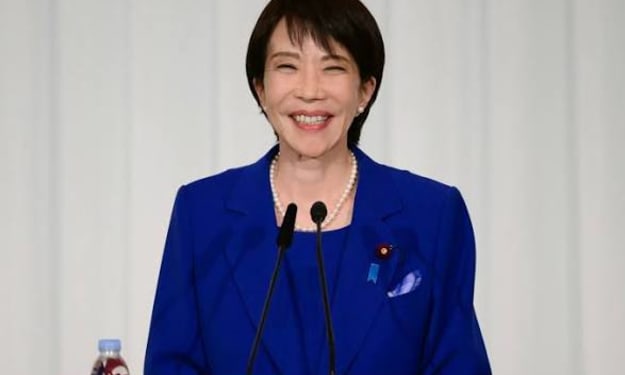
‘Sana-mania’ Grips Japan as Ultra-Conservative Takaichi Expected to Secure Election Landslide. AI-Generated.
Japan’s political landscape is being swept by what commentators have dubbed “Sana-mania,” as Sanae Takaichi, a leading figure of the country’s ultra-conservative movement, appears poised to win a decisive victory in the upcoming election. With opinion polls pointing toward a landslide result, her rise reflects a growing appetite among voters for strong leadership, national identity, and tougher security policies amid regional uncertainty and domestic economic pressure. Takaichi, a former internal affairs minister and long-time ally of the late Prime Minister Shinzo Abe, has campaigned on a platform rooted in traditional values, expanded defense capabilities, and economic nationalism. Her blunt rhetoric and uncompromising positions have energized conservative supporters while alarming critics who fear Japan is moving away from its post-war pacifist orientation. A Wave of Popularity Over recent weeks, campaign rallies across major cities such as Osaka, Nagoya, and Tokyo have drawn unusually large crowds. Supporters wave banners emblazoned with her name and chant slogans calling for a “strong Japan.” Social media platforms have amplified her message, with hashtags linked to Takaichi trending nationwide. Political analysts describe the phenomenon as reminiscent of earlier political surges driven by charismatic figures who promised stability and national pride. Polls released by major Japanese media outlets show Takaichi holding a commanding lead over her rivals, particularly among older voters and those concerned about China’s growing military presence in the region. Younger voters, while more divided, have also shown interest in her promises of technological investment and economic reform. Policy Positions and Ideology At the core of Takaichi’s platform is a pledge to revise Japan’s interpretation of its pacifist constitution. She argues that current security threats—from North Korea’s missile tests to rising tensions in the Taiwan Strait—require Japan to develop stronger defense capabilities and closer cooperation with allies. She has also advocated increased military spending and a more assertive foreign policy, aligning with conservative factions that believe Japan must shed what they view as post-war constraints imposed by history. Her economic agenda emphasizes supply chain independence, protection of domestic industries, and incentives for companies to bring manufacturing back to Japan. Culturally, Takaichi has championed traditional family structures and opposed progressive social reforms. This stance has earned her strong backing from nationalist groups but criticism from civil society organizations and younger, urban voters who favor more liberal policies. Dividing the Nation While “Sana-mania” has electrified her base, it has also intensified polarization within Japanese society. Opposition parties warn that her leadership could undermine Japan’s diplomatic relationships and provoke unnecessary confrontation in East Asia. Some academics argue that her rhetoric risks reopening unresolved historical wounds related to Japan’s wartime past. Human rights groups have expressed concern about her views on education and media regulation, fearing that stricter controls could limit freedom of expression. Feminist organizations are divided: while some praise the possibility of Japan’s first openly nationalist female leader, others criticize her resistance to gender equality reforms. Nevertheless, Takaichi’s supporters see her as a symbol of resilience. “Japan needs a leader who will not bow to foreign pressure,” said one rally attendee in Kyoto. “She speaks with clarity and courage.” Regional and International Implications If elected in a landslide, Takaichi’s leadership could reshape Japan’s regional posture. Relations with China and South Korea may face renewed strain, especially over territorial disputes and historical issues. At the same time, ties with the United States are expected to strengthen, particularly in defense and technology cooperation. Washington has remained cautious in its public statements, emphasizing the importance of stability and alliance coordination regardless of election outcomes. Analysts suggest that a Takaichi government would likely support expanded military exercises and deeper intelligence sharing with Western partners. In Southeast Asia, reactions are mixed. Some governments welcome a stronger Japan as a counterbalance to China, while others worry about escalating tensions that could disrupt trade and security. Economic Uncertainty Japan’s economy remains fragile after years of stagnation, inflationary pressures, and an aging population. Takaichi has promised aggressive stimulus measures and tax reforms to boost growth, but economists question whether her protectionist tendencies could discourage foreign investment. Business leaders have expressed cautious optimism, noting her focus on innovation and digital transformation. However, they remain wary of policies that could isolate Japan from global markets at a time when cooperation is seen as essential for recovery. A Turning Point The upcoming election is widely viewed as a referendum on Japan’s future direction. A landslide victory for Takaichi would signal a shift toward assertive nationalism and a break from the cautious consensus politics that has dominated in recent decades. For supporters, her rise represents renewal and confidence. For critics, it marks a troubling departure from the values that guided Japan’s post-war reconstruction and diplomacy. As “Sana-mania” continues to dominate headlines, one thing is clear: the election is more than a contest of personalities. It is a defining moment for Japan’s identity, security, and role in the world. Whether Takaichi’s surge will translate into long-term stability or deeper division remains uncertain. What is undeniable is that her movement has already reshaped the national conversation, forcing voters to confront fundamental questions about tradition, power, and Japan’s place in an increasingly unstable global order.
By Fiaz Ahmed a day ago in The Swamp
Jewish Australians Must Be Safe From Fear or Harassment. But Shielding Isaac Herzog From Legitimate Protest Is Not the Answer. AI-Generated.
Australia faces a difficult but necessary balancing act: ensuring the safety and dignity of Jewish Australians while also protecting the democratic right to peaceful protest. This tension came into sharp focus following heightened security measures surrounding the visit of Israeli President Isaac Herzog, with authorities moving to restrict or discourage demonstrations in the name of public order. While concerns over antisemitism and public safety are legitimate, shielding political leaders from lawful protest risks undermining the very freedoms that define Australian democracy. The Real Threat of Antisemitism There is no question that antisemitism has increased globally in recent years, including in Australia. Jewish community organizations have reported a rise in verbal abuse, vandalism, and online harassment. For many Jewish Australians, international conflicts have translated into local anxiety, as political rhetoric spills into social spaces, workplaces, and schools. The responsibility of the Australian government is clear: Jewish citizens must be protected from fear, intimidation, and violence. Harassment based on religion or ethnicity is unacceptable, and law enforcement must respond decisively to threats or hate crimes. These protections, however, should not be conflated with efforts to silence political criticism or suppress public dissent. Criticism of the Israeli government or its policies is not inherently antisemitic. Equating protest with hatred risks diluting the meaning of antisemitism and weakening the fight against genuine prejudice. The Role of Protest in a Democracy Peaceful protest is a cornerstone of democratic society. From civil rights movements to anti-war campaigns, public demonstrations have long served as a means for citizens to express opposition to policies they believe are unjust. Australia’s democratic tradition depends on the ability of people to gather, speak, and challenge power without fear of reprisal. Isaac Herzog’s visit, as that of a foreign head of state, naturally involves heightened security. However, the decision to curtail or tightly control demonstrations around his presence raises serious questions. When governments preemptively restrict protests to avoid political discomfort, they risk turning public safety into a tool of political insulation. Protest does not equate to disorder. In fact, well-organized demonstrations often strengthen democratic legitimacy by allowing grievances to be aired openly rather than suppressed and driven underground. Separating Safety From Silence Authorities often argue that restrictions on protests are necessary to prevent clashes or threats. But this logic becomes problematic when applied too broadly. The presence of protest does not automatically endanger Jewish Australians. On the contrary, conflating political opposition with communal threat risks deepening divisions and creating a false narrative that Jewish identity and Israeli state policy are inseparable. Many Jewish Australians themselves hold diverse views on Israeli politics. Some support the government; others strongly oppose it. Treating criticism of Israel as inherently hostile to Jewish people denies this diversity and risks marginalizing voices within the Jewish community who advocate for peace, reform, or accountability. Protecting Jewish Australians means ensuring their safety from harassment—not shielding political leaders from scrutiny. A Precedent With Consequences Restricting protests around Herzog’s visit sets a troubling precedent. If authorities can silence demonstrations for one foreign leader due to political sensitivity, what prevents the same approach from being applied to others? Democracy weakens when leaders are insulated from criticism, especially on controversial international issues. Civil liberties advocates warn that such measures normalize exceptional powers that can later be used more broadly. The language of security, once expanded, is rarely narrowed again. What begins as protection can evolve into permanent limitation on public expression. This concern is not theoretical. History shows that emergency measures introduced during tense political moments often linger long after the immediate crisis passes. The Risk of Polarization Suppressing protest may also inflame tensions rather than calm them. When people feel silenced, frustration grows. Open, visible protest allows grievances to be expressed within lawful boundaries. It gives communities an outlet for disagreement and encourages dialogue rather than confrontation. Moreover, portraying protesters as threats can harden attitudes on both sides. Jewish Australians may feel they are being targeted for political reasons, while protesters may feel their rights are being sacrificed for diplomatic convenience. Neither outcome fosters social cohesion. True safety is not achieved through silence but through trust in democratic institutions and mutual respect among communities. What a Better Approach Looks Like A more balanced response would protect both community safety and democratic rights. This means: Enforcing laws against hate speech and violence without criminalizing political expression. Allowing peaceful protests in designated areas with appropriate security measures. Engaging with community leaders to reduce tension and clarify that protest is directed at policy, not people. Publicly distinguishing between antisemitism and political criticism. Such an approach affirms that Jewish Australians deserve protection from harassment while also affirming that political leaders—domestic or foreign—are not above scrutiny. A Test of Democratic Maturity Australia’s response to controversial visits and international conflicts is a test of its democratic maturity. It must show that it can protect minorities without eroding civil liberties. Shielding Isaac Herzog from legitimate protest may appear to offer short-term stability, but it risks long-term damage to democratic norms. The goal should not be to eliminate discomfort but to manage disagreement peacefully. Democracy is not defined by the absence of conflict but by how conflict is handled. Conclusion Jewish Australians must be safe from fear, intimidation, and harassment—this is non-negotiable. But safety cannot come at the expense of free expression and peaceful protest. Protecting one community should not require silencing another. Legitimate protest against political leaders, including Isaac Herzog, is not a threat to democracy; it is a sign of it working. The challenge for Australia is to uphold both security and freedom, proving that it can defend its citizens without abandoning its principles. In moments of political tension, restraint and clarity matter most. A society confident in its values does not hide its disagreements—it confronts them openly, lawfully, and with respect.
By Fiaz Ahmed a day ago in The Swamp
US Healthcare Needs Fixing, But There’s No Agreement on How to Do It. AI-Generated.
Few issues unite Americans more than the belief that the nation’s healthcare system is deeply flawed. Rising costs, uneven access, and persistent gaps in quality have left patients, providers, and policymakers frustrated. Yet despite broad consensus that reform is necessary, there is little agreement on what that reform should look like. Political divisions, economic interests, and ideological differences have made healthcare one of the most contested and complex policy arenas in the United States. A System Under Strain The United States spends more on healthcare per person than any other developed nation, yet millions remain uninsured or underinsured. Even those with coverage often face high deductibles, surprise bills, and limited provider networks. Hospitals struggle with staffing shortages, while rural communities see clinics close due to financial pressure. The COVID-19 pandemic exposed many of these weaknesses. Overcrowded hospitals, inconsistent access to testing and treatment, and confusion about insurance coverage highlighted systemic vulnerabilities. While emergency measures temporarily expanded coverage and funding, many of those programs have now expired, renewing concerns about long-term sustainability. Patients increasingly report delaying care due to cost. Prescription drug prices remain a major burden, particularly for older Americans and those with chronic illnesses. These realities have intensified calls for reform across the political spectrum. Competing Visions for Reform Despite agreement on the problem, proposed solutions vary dramatically. Progressives advocate for a government-run or single-payer healthcare system that would guarantee coverage to all Americans. They argue that healthcare is a human right and that removing profit motives would reduce costs and improve equity. Moderates favor building on the existing system created by the Affordable Care Act (ACA), expanding subsidies, strengthening public insurance options, and regulating private insurers more aggressively. This approach seeks gradual improvement without dismantling private coverage. Conservatives, meanwhile, emphasize market-based reforms. They propose reducing government regulation, increasing competition among insurers and providers, and allowing consumers more choice. Supporters argue that innovation and competition would lower costs and improve quality over time. These sharply different philosophies reflect deeper disagreements about the role of government in American life. For some, healthcare reform is about social justice; for others, it is about economic freedom and efficiency. The Power of Interest Groups Another obstacle to consensus is the influence of powerful healthcare industry stakeholders. Insurance companies, pharmaceutical firms, hospital systems, and professional associations all have vested interests in shaping reform efforts. Lobbying has played a major role in slowing or reshaping proposed legislation. Efforts to control drug prices, for example, have faced fierce resistance from pharmaceutical companies that argue such measures would limit research and innovation. Hospitals worry that reimbursement cuts could force closures, particularly in underserved areas. These competing pressures make it difficult for lawmakers to craft policies that satisfy both public demands and industry concerns. Federal vs. State Approaches The divide between federal and state authority further complicates reform. Some states have expanded Medicaid and experimented with innovative coverage models, while others have resisted federal programs entirely. This patchwork system results in unequal access depending on where a person lives. A low-income resident in one state may qualify for comprehensive coverage, while a similar individual in another state may remain uninsured. Critics argue that healthcare should not depend on geography, while defenders of state autonomy say local governments are better positioned to tailor solutions. Public Opinion Is Fragmented Surveys show Americans want lower costs and better access, but opinions diverge on how to achieve those goals. Many support protections for preexisting conditions and limits on drug prices, yet fewer agree on sweeping structural change. Fear of disruption plays a role. Millions receive insurance through employers and worry that major reform could jeopardize coverage they depend on. Others distrust government-run systems, citing concerns about bureaucracy and long wait times. This uncertainty creates political risk for lawmakers, who face backlash regardless of the path they choose. Technology and the Future of Care While political debates stall, technology is reshaping healthcare delivery. Telemedicine, artificial intelligence, and digital health records promise improved efficiency and access, particularly for rural and elderly patients. However, these innovations also raise new challenges related to privacy, regulation, and inequality. Not all Americans have access to reliable internet or digital tools, potentially widening disparities rather than closing them. Experts argue that technological progress must be paired with thoughtful policy reform to ensure benefits are shared equitably. A System at a Crossroads The inability to reach agreement has left the US healthcare system in a state of limbo. Incremental changes continue, but comprehensive reform remains elusive. Each election cycle revives the debate, with healthcare consistently ranking among voters’ top concerns. Without consensus, the system risks becoming more fragmented and expensive. Yet any attempt at major reform will require political courage and compromise across ideological lines. Conclusion The United States agrees on one thing: its healthcare system needs fixing. Where it disagrees is on how to do it. Competing visions, powerful interest groups, and public uncertainty have stalled meaningful progress. Until leaders find common ground, millions of Americans will continue navigating a system that is costly, confusing, and unequal. The challenge ahead is not just designing better policy, but rebuilding trust that reform can improve lives without creating new fears. Healthcare remains both a moral question and a political battleground. Whether consensus can be achieved may define the next chapter of American public policy—and determine whether the promise of affordable, accessible care can finally become reality.
By Fiaz Ahmed a day ago in The Swamp
India Is Reportedly ‘Ready’ to Buy Up to $80 Billion in Boeing Aircraft Following Trade Deal with the U.S.. AI-Generated.
India is reportedly preparing to place one of the largest commercial aircraft orders in aviation history, with plans to purchase up to $80 billion worth of Boeing aircraft following a new trade agreement with the United States. The potential deal signals a deepening of economic and strategic ties between the two countries and reflects India’s growing ambitions to become a global aviation powerhouse. According to industry sources, the proposed purchase would include a mix of narrow-body and wide-body jets to serve India’s rapidly expanding domestic and international travel market. While negotiations remain confidential, the scale of the order underscores both India’s surging demand for air travel and Boeing’s need to strengthen its global market position after years of production and safety challenges. A Strategic Trade Signal The reported aircraft order is closely linked to a broader U.S.–India trade framework aimed at reducing trade imbalances and expanding industrial cooperation. Aircraft purchases have long been used as diplomatic and economic tools in trade negotiations, and this potential deal is being viewed as a symbol of trust between Washington and New Delhi. For the United States, the agreement could translate into thousands of jobs across Boeing’s manufacturing supply chain, particularly in Washington state and South Carolina. For India, it strengthens access to modern aviation technology while helping secure favorable trade terms with one of its most important strategic partners. Analysts say the deal also sends a geopolitical message at a time when India is seeking to diversify its partnerships beyond traditional suppliers and reduce dependence on any single foreign power. Meeting Soaring Demand India is currently one of the world’s fastest-growing aviation markets. Rising incomes, urbanization, and government investment in airport infrastructure have driven a sharp increase in air travel. Domestic passenger traffic has already surpassed pre-pandemic levels, and international routes are expanding rapidly. Major Indian airlines have been aggressively modernizing their fleets. In recent years, record-breaking aircraft orders have been announced as carriers compete for market share in an increasingly crowded industry. A large Boeing order would further accelerate this transformation, allowing airlines to introduce fuel-efficient aircraft with longer ranges and lower operating costs. Industry experts note that the demand is not limited to passenger flights. Cargo transport, defense-related aviation, and leasing companies are also expected to benefit from the expansion. What the Order May Include Although official details have not been released, aviation insiders suggest the package could include Boeing’s 737 MAX series for short-haul routes and 787 Dreamliner jets for long-haul international services. The 777X, Boeing’s newest wide-body aircraft, could also be part of the deal for premium international operations. Such a mix would help Indian airlines strengthen their presence in key markets such as Europe, North America, Southeast Asia, and the Middle East. The focus on newer aircraft types aligns with India’s environmental commitments to reduce carbon emissions through more fuel-efficient fleets. Boost for Boeing For Boeing, the potential $80 billion deal represents a critical boost at a time when the company is working to restore confidence after production slowdowns and regulatory scrutiny. A massive order from India would help stabilize its order book and reinforce its competitive standing against European rival Airbus. The company has invested heavily in strengthening relationships with Indian airlines and government agencies. Boeing also operates engineering and support centers across India, employing thousands of workers and contributing to the country’s aerospace ecosystem. Executives have repeatedly described India as one of Boeing’s most important long-term growth markets, making the reported agreement a strategic milestone. Economic and Industrial Impact Beyond aviation, the deal could have broader industrial consequences. Large aircraft purchases typically include agreements on maintenance, training, and manufacturing cooperation. India may seek greater technology transfer and domestic assembly opportunities under its “Make in India” initiative. Such provisions could strengthen India’s aerospace industry and create skilled jobs in engineering, maintenance, and logistics. Training programs for pilots and technicians would also expand, helping address the country’s growing workforce needs in aviation. In the United States, the agreement would support production lines and suppliers at a time when global competition remains intense. Challenges and Risks Despite optimism, challenges remain. Aircraft delivery timelines are under pressure due to global supply chain constraints and manufacturing bottlenecks. Boeing has faced ongoing regulatory oversight that could affect production schedules. Financing such a massive purchase will also require careful structuring, particularly as airlines manage fuel price volatility and economic uncertainty. Any slowdown in global travel demand could complicate long-term projections. Political shifts in either country could also influence the final terms of the agreement, making implementation as important as announcement. A Turning Point in Bilateral Relations If finalized, the Boeing deal would mark one of the most significant commercial agreements between India and the United States in recent years. It reflects a broader alignment of economic and strategic interests, particularly in technology, defense, and infrastructure. For India, the move strengthens its position as a major aviation hub connecting East and West. For the United States, it reinforces a partnership with one of the world’s largest emerging markets. Conclusion India’s reported readiness to buy up to $80 billion in Boeing aircraft represents more than a commercial transaction. It is a statement of confidence in long-term growth, international partnership, and modernization. While negotiations continue behind closed doors, the potential deal highlights the shifting balance of global aviation and the deepening ties between two of the world’s most influential democracies. If completed, it could reshape airline fleets, industrial cooperation, and trade relations for decades to come.
By Fiaz Ahmed a day ago in The Swamp
The U.S. Healthcare System: A Divided Approach to Reform. AI-Generated.
The healthcare system in the United States is undeniably one of the most complex in the world. Despite being one of the wealthiest nations globally, the U.S. continues to grapple with inefficiencies, skyrocketing costs, and unequal access to care. This state of affairs has led to an urgent and ongoing debate about how to fix the healthcare system. Yet, for all the discussions, there is no clear or unified solution. Political polarization, differing ideologies, and vested interests have resulted in an inability to reach a consensus on a pathway forward.
By Ayesha Lasharia day ago in The Swamp
Disturbing Incident in a Chinese Hotel: A Couple’s Privacy Breached Live to Thousands". AI-Generated.
Introduction: A Shocking Discovery In an era where digital surveillance and streaming technology are increasingly integrated into every aspect of our lives, the line between privacy and public exposure is becoming more and more blurred. For one couple, a private moment in a Chinese hotel room became an unintended live broadcast to thousands of people around the world. The couple, unaware at the time, were unknowingly streamed live on a public platform, sparking concerns about privacy violations, the role of digital surveillance, and the ethical implications of such breaches.
By Ayesha Lasharia day ago in The Swamp
The Call for Transparency: Top Government Figures Under Pressure to Hand Over Private Messages with Peter Mandelson. AI-Generated.
In a world where public figures' communications are increasingly scrutinized, the pressure for transparency in political dealings is stronger than ever. One of the most recent and notable examples of this is the growing demand for top government figures to hand over private messages with Peter Mandelson, a key figure in British politics. Known for his role in the Labour Party and his connections to both Tony Blair and Gordon Brown, Mandelson's relationships and communication strategies have long been a topic of public and political interest.
By Ayesha Lasharia day ago in The Swamp
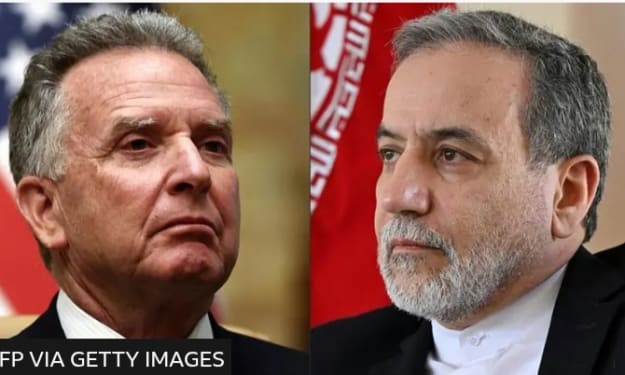
US and Iran Talks: A Critical Step to Prevent Direct Conflict. AI-Generated.
The world’s attention has once again shifted towards the ongoing tension between the United States and Iran, with the two nations set to engage in crucial diplomatic talks aimed at averting the looming threat of direct conflict. This new development comes at a time when the geopolitical landscape in the Middle East is fraught with escalating tensions, military posturing, and deep-rooted animosity between the two countries. As fears of an all-out war intensify, there is a growing realization that dialogue may be the only feasible solution to prevent a catastrophic confrontation.
By Ayesha Lasharia day ago in The Swamp