
Strait of Fire: When One Night Shook the Global Oil Order
A strategic strike, ballistic retaliation, and the looming threat to the world’s most vital oil artery—this is the night the U.S.–Iran conflict went from shadow games to open flames.

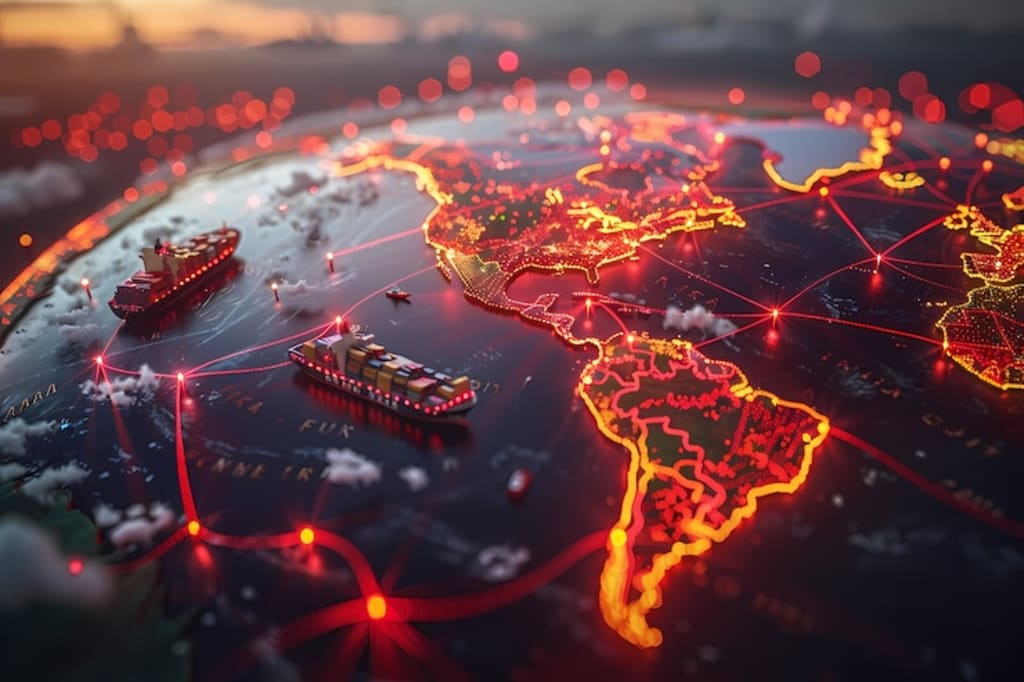
The Night That Changed Everything
On June 22, 2025, the United States launched Operation Midnight Hammer — a coordinated military strike targeting Iran’s nuclear facilities in Natanz, Fordow, and Isfahan. The assault involved bunker-busting bombs, Tomahawk missiles, and naval support, catching Tehran off-guard. The White House described it as “a complete success,” claiming it had disrupted Iran’s enrichment capacity significantly.
But it didn’t end there.
Iran Strikes Back
Within hours, Iran retaliated by launching 27 ballistic missiles towards Israeli targets, causing civilian casualties and severe infrastructure damage. Simultaneously, the Iranian parliament voted to begin formal steps toward closing the Strait of Hormuz, the world’s most strategic oil chokepoint.
🛢 Why Hormuz Matters
Roughly 20% of the world’s oil and liquefied natural gas passes through the Strait of Hormuz every single day. Any attempt to block this narrow waterway could cause a seismic shock in global energy markets, pushing supply chains to the brink.
Iran’s threat was clear:
“If we can’t sell oil, no one else will.”
⸻
🌍 Immediate Global Impact
• Oil prices soared to their highest levels in five months. Brent crude approached $80 per barrel, with projections warning of prices spiking to $110–150 if the disruption continues.
• Insurance premiums on Gulf shipping routes exploded, and Western powers began rushing reinforcements into the region.
• Energy-importing nations from Europe to Asia braced for fuel shortages and inflation waves.
⸻
♟ Tehran’s Strategic Gamble
🎯 Potential Gains:
• Leverage global economic panic to force negotiations
• Show military capability beyond rhetoric
• Use asymmetric warfare: drones, mines, fast-attack boats
⚠ Real Risks:
• Full-scale U.S. counterattack
• Iran’s own oil exports depend on the same strait
• Alienation of neutral partners like China and India
• Economic suicide if full blockade is attempted
Iran may not fully close the Strait — but targeted harassment and maritime threats are almost certain.
⸻
🌐 International Reactions
• United Nations urged immediate de-escalation
• Russia condemned the U.S. strike and opened direct talks with Tehran
• The U.K. cautiously supported the operation but warned of spiraling consequences
• China and the EU stressed diplomacy and expressed deep concern for energy security
• The U.S. Navy went on high alert, reinforcing the Fifth Fleet in the Gulf
⸻
🧠 Tactical Strike, Strategic Chess
This wasn’t just a military move — it was a political message, too.
With U.S. elections approaching, Washington wanted to assert dominance. But the cost of miscalculation is dangerously high:
• A mistake in the Gulf could ignite a multi-front regional war
• Iran could activate its proxies in Lebanon, Syria, Iraq, and Yemen
• The Middle East risks becoming the world’s epicenter of instability — again
⸻
💡 What Comes Next?
• Even minor disruptions in Hormuz could push oil to $120+
• Gulf states may fast-track alternative pipelines bypassing the Strait
• Investors are watching central banks and commodity markets with hawk-like focus
⸻
Final Thoughts
June 22, 2025 may go down in history as the night the U.S.–Iran conflict crossed a point of no return.
The world now waits anxiously:
Will Iran escalate further?
Will the Strait of Hormuz be choked?
Or will diplomacy pull the region back from the edge?
In just one night, the balance of power shifted — and the global map is still reshaping itself.
✍️Adham Ibrahim Zidan
Political Science & Economics student at Alexandria University.
He specializes in Middle East affairs, energy geopolitics, and international relations.
About the Creator
Adham Ibrahim Zidan
Economics & Political Science Student Passionate about Political Analysis & Global Economics Middle East | Energy | International Relatio.
Keep reading
More stories from writers in The Swamp and other communities.
A Gathering of Evil Bosses
“I’m the queen of chin jutting while I smooth my hair, attacking, insulting, and deflecting to protect my appointer.” “Oh, please, Blondi, my hair is curled, highlighted, and longer than yours. I feature television commercials telling immigrants that we will give them a free plane ride home, and if they voluntarily turn themselves in, they will be allowed to legally apply for re-entry. It runs everywhere, and I look good in it! You can’t compete because of your blond hair. Mine is nicer, and my lips are prettier than yours.”
By Andrea Corwin 3 days ago in The Swamp
Craft Over Catharsis Challenge Winners
Craft Over Catharsis? What the hell does that even mean? The phrase came out of a curation meeting as a genuine question. We had been noticing that many challenge entries, across prompts, naturally gravitate toward trauma, grief, and personal reckoning. That makes sense. Writing is often cathartic. It's one of the ways we process what we've lived through.
By Vocal Curation Team3 days ago in Resources



Comments
There are no comments for this story
Be the first to respond and start the conversation.