controversies
It seems every time one racially-charged incident ends, a gender or religious controversy takes its place; Ruminate on the issues dividing our nation and world.
"Quel prix pour ces diamants?" Twenty-plus Years After the Advertisement That Changed Multiple Perspectives
"Quel prix pour ces diamants?" Twenty-plus Years After the Advertisement that Changed Multiple Perspectives Diamonds have symbolized everything for 200 years, from love to wealth. Although they are very common worldwide, they are an expensive natural resource. The question is, “How much would an individual pay for a necklace, earrings, or a ring made with diamonds?”
By Devin Louise9 years ago in The Swamp
A True Story of "White Male Privilege"
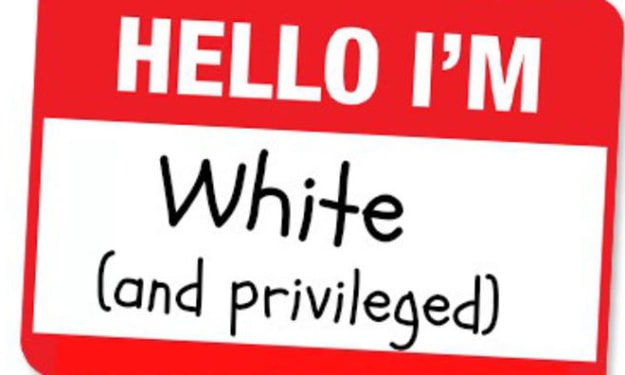
White privilege is a funny thing. Growing up and attending high schools all over the U.S., I really only learned about white privilege while attending college and afterwards. Upon learning that I was supposed to be handed life's rewards on a silver platter for no other reason that my skin pigmentation, I was honestly a little excited. Selfish, I know, but a normal reaction for anyone.
By Brandon Garcia9 years ago in The Swamp
Should the Government Fund Planned Parenthood?
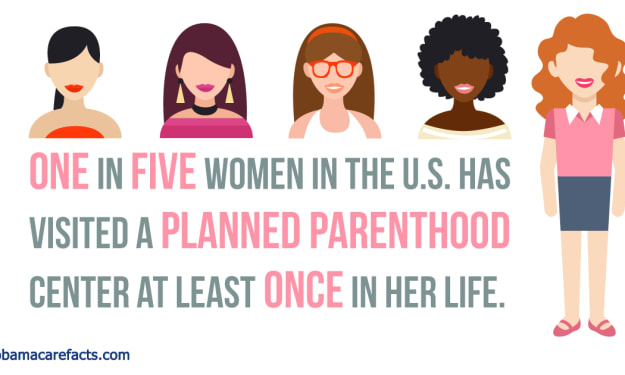
Part I: Background Information In 1921, a non-profit organization called the American Birth Control League opened its doors in New York with the intention of helping promote the negative impacts of reckless breeding, get rid of the state and federal laws that stand in the way of using birth control, and figure out how to alleviate the looming international epidemic of overpopulation. The founder of the organization, Margaret Sanger, states in her book, The Pivot of Civilization, that she believes a child should be: Conceived in love, born of the mother's conscious desire, and only begotten under conditions which render possible the heritage of health (Sanger, Appendix). "A woman's right to control her body is central to her human rights," she says, that "every woman should have the right to choose when or whether to have children, that every child should be wanted and loved, and that women are entitled to sexual pleasure and fulfillment."
By Elizabeth Gelinas9 years ago in The Swamp
Appreciate Not Appropriate!. Top Story - July 2017.
EXTRA! EXTRA!! DO NOT APPROPRIATE MINORITY CULTURE!!! Ladies and gentlemen, Boys and girls, White people. I have heard a lot of bullshit in my life on why culture vultures (people who steal from other cultures) always appropriate the cultures of minority groups (like black, Latina, Native American cultures etc.) and believe me, it's a lot of bullshit (my next article will talk about one of them). On the other hand, I've had a lot of people (who happen to be white) ask me how they can appreciate rather than appropriate culture. My white colleagues often tell me that they listen to rap music and enjoy it very much (I don't know why they feel the need to tell me but...okay). The follow up is often a question asking me if they are appropriating black culture just by listening to rap music. First, the answer is no. Second, my humble self would like to give you some tips on how to appreciate rather than appropriate minority cultures.
By PHILLY THE AFRICANA9 years ago in The Swamp
Blacks Can't Be Racist
Allow me, if you will, to set the fucking record straight. Black people cannot be racist—I repeat—cannot be racist when it comes to white people. We're bigoted and prejudiced as SHIT!!!!!!! But nah, we're not racist. Black people are disadvantaged in a world ruled by a white power structure. We do not control or own any of the economic, legislative, judicial, military, academic, or legal institutions in Western civilization. We're literally guests in a house we, more or less built, but do not own.
By Dre Joseph9 years ago in The Swamp
Philosofail
Every once and again some philosophical dilettante gifts us with unparalleled sapience in video format. Incredible largess is displayed as complex philosophical ideas are broken down into bite-size pieces. Everybody's a fan. However, by that same token, we are, at times, treated to a buffet of word salad where sentences knot themselves together into argumentative catastrophes. I am speaking, of course, about one Philosophy tube. For some time now, Olly, who runs said channel, has amassed a considerable following, thanks in part to his unmistakably charming accent. Sometimes, however, his arguments are rendered far less persuasive than his character. For one thing, Olly pushed out an unscheduled video recently imploring viewers to imbibe his message about conservative voters. Clunky, disoriented, and haphazard, this video portended what calamity might unfold if Olly doesn't reorient his channel's ethos. Specifically, towards his videos end he, perhaps inadvertently, bifurcated his audience between those regular, left-leaning individuals, and everyone else. Needless to say, everyone else cocked their head at this unusual gesture. Philosophy tube, we thought, was dedicated to relaying important philosophical information in a manner that is both digestible and entertaining. However, on this occasion, Olly seemed to have pivoted his channel's purpose to pedaling those political issues that he regards as particularly exigent. Worse still, our gracious host closed the video's comment section to avoid potential squabbling. To me, Olly's actions here represent anti-philosophy's apotheosis. The imperative to close discussion unilaterally in an effort to have one's voice "heard" is an unpersuasive argument all together. On the one hand, scientific journals that pass peer-review gain clout as they demonstrate their robust defenses. Consequently, we generally revere articles that result from this process. On the other hand, theories or opinions that are produced without any analogous peer-review are, in a similar vein, looked down upon. This fact, of course, begs the question of why anybody militating on behalf of those thing's philosophical would decide to close himself off to criticism. So, for his credibility's sake, here I will offer a brief criticism of just one point made in his video. At one point, Olly indicated that America's invasion in Iraq was immoral on account of how many casualties there were at day's end. I find this reasoning wholly unconvincing. To Olly, our moral analysis of wartime conflict ends partially, if not wholly, when every body has been counted. There is one problem with this; that is, that this argument draws no meaningful distinction between consequences that are intended, and consequences that are foreseen. Intended consequences are subject to moral criticism because their agent desired them actively. Whereas foreseen consequences are pardonable by definition due to their un-intended nature. To illustrate my example, two thought experiments are required. For our first thought experiment, imagine that John was strolling in his local park when, suddenly, a drowning child arrested his attention. Impulsively, John flew into the water in an attempt to rescue this endangered child. Unfortunately, however, John’s efforts were thwarted when an alligator swallowed the boy. Now, would we judge John's actions as morally neutral? Surely not. His intentions speak volumes about his moral character. From what evidence has cropped up, we could surmise that physical limitations were all that prevented John's well-intentioned rescue mission. In other words, if John had possessed perfect rescuing-technology, then the child’s demise would have been averted. We should expect this conclusion in light of John’s impressive moral character. If, after all, John was eager to save the drowning child, then we can expect a fortiori that he would perform the task instantly if he had the right technology.
By Roger Smith9 years ago in The Swamp
No’SoHa,’ NowOrEver
When I lived at 125th Street and Fifth Avenue in the borough of Manhattan, it was a hard-won badge of honor. I’d hopscotched around New York City for more than a few years, moving from Hell’s Kitchen (in what is now predominately known as Chelsea, in a victory of urban planners with no sense of urban poetry) to Greenwich Village, and even vacating the city altogether, spending a brief stint in Jersey City.
By Michael Eric Ross9 years ago in The Swamp
Institutional Balance vs. Separation of Powers
Introduction The concept of institutional balance—much used in EU legal publications appears to be a concept that is as elusive as the Unicorn. It is further clouded by parallels often drawn between it and the principle of separation of powers.
By Jim Gilliam9 years ago in The Swamp