history
Past politicians, legislation and political movements have changed the course of history in ways both big and small. Welcome to our blast to the past.
That April Day
It was a spring day in April, a Thursday and I was in first grade. My younger sister was four years old her birthday having taken place the previous month. My youngest brother was two years old. I was six years old, and the only one going to school. Suddenly I looked up to see my mother, who was in her mid-thirties then, walk into the class. She and my teacher huddled in a corner talking. The teacher gave me a look, and my heart sank. I thought I was in trouble – again. I was a good student, but my math grades kept bringing me down. The teacher gave Ma some papers, it was homework I learned later, to take home. Ma told me to get my coat. I was going home early that day.
By Hillari Hunter6 years ago in The Swamp
Catherine Howard: Vixen or Victim?
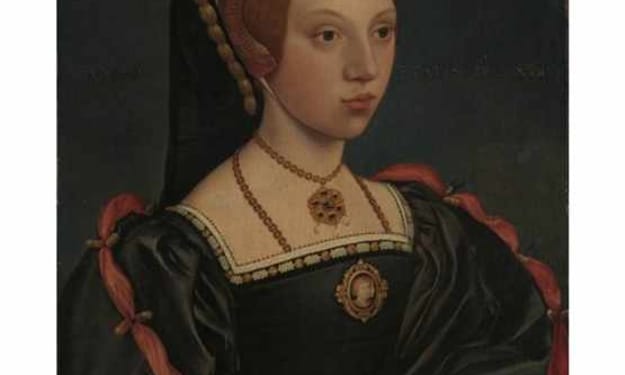
Catherine Howard was Henry the 8th fifth wife. She was born sometime during 1523. When the two wed Henry was 49 while his new bride was 17. Their marriage lasted 1 year, 3 months, and 26 days. She was charged with committing adultery(Treason) with her distant cousin Thomas Culpeper, who was a friend of Henry. On February 13, 1542 Catherine was beheaded by axe and buried next to Anne Bolyen who was her first cousin.
By Tammara Morgan6 years ago in The Swamp
Compromising Conflict
Compromising Conflict Legalism & Confucianism China has encountered many obstacles throughout history in regards to it’s varying governmental and political systems. In the time of the Warring States both religious and philosophical ideals were developed as a result of a very conflicting time. Though conflict was the primary result, the intentional cause was to bring about harmony throughout all of China. Eventually, harmony will be established. However, this took some time and effort. Authoritarianism relates to the sense of freedom being held as a subordinate to a power of authority, more typically established under governmental and political systems (Xu 159). It’s important to understand the idea of an authoritarian society in order to compare and contrast the many forms of governmental and political systems or philosophical doctrines and practices that have emphasized the development of Chinese culture and society. The very same culture, or cultures, that have survived history until today, in these modern times, along with an authoritarian nature, or way of life, comes with the understanding of terms such as hierarchy, aristocracy, and veneration. These methods of teaching carry on in the many political and governmental forms that the Chinese culture, and its people, have embodied as both a form of morale and character. An embodiment resulting from what I like to call a “harmonious conflict”. Kind of an oxymoron when taken at face value. Yet, where else would the beauty of a civilized nation be formed than from a great conflict that molded into its concrete ways and acceptable forms. Conflict is, in a sense, one of natures finest, and most useful, tools used for harmonious precision. Without it, China may have never had the urge, motivation, or drive to bring about ideals, nesting in the minds of eager philosophers and leaders, such as those that promote change which directly resembles the likes of equality, peace, justice, benevolence, and even loyalty in families and nations.
By Nicholas V. (IN.V.ENTR)6 years ago in The Swamp
Coronavirus
I will first begin with a disclaimer, I am not a medical person at all, I am speaking through an historical lens and not a medical one. That being said, you don’t have to be a doctor to read a history book, but it seems the doctors at the CDC haven’t.
By Keith Jacobs6 years ago in The Swamp
Why Queen Elizabeth I should be respected
I got my hands on this book that was written in 1952 by a man named J.E. Neal. It says he was given special recognition for his autobiography of the Tudor Queen, Elizabeth. The infamous queen, the last known Tudor monarch, ruled for nearly 45 years. While some queens have ruled longer in English history, none of them changed the course of the nation much like that of Elizabeth.
By Heather Wilkins6 years ago in The Swamp
History of Racism in the United States
These days, racial tension in the United States is extremely heightened. The indigenous inhabitants commonly known as Native Americans became the first victims of racism. Later, racial discrimination affected the black population of the country. In spite of numerous politically correct declarations of the US leadership, the confrontation between African-Americans and Caucasian people still prevails. Moreover, the country is virtually flooded by all sorts of armed extremist organizations with racist doctrines. It is of vital importance to study the history of racism in the United States as it has always been and remains one of the most pressing problems of the country mentioned white paper writing services.
By Norma Garnica6 years ago in The Swamp
What is a Paladin?
When you hear the word paladin a certain vision comes to mind; a knight in burnished armor, standing tall on a field of challenge and awaiting his opponent. Perhaps he's astride a white charger, getting ready to do battle with the forces of evil. The word itself tends to refer to champions of honor, duty, and whose inherent goodness is displayed in their acts...
By Neal Litherland6 years ago in The Swamp
Globalization on Africa
Today I will be speaking on the topic of to what extent do the legacies of historical globalization affect the people of Africa. What does this mean? To what extent has the choices of Imperial powers and past African leaders affected the continent today. In many African countries, when imperial forces left, there was a massive power imbalance, poverty, and war. Before the scramble for Africa, people in Africa were doing fine. Were there still wars, yes, but it wouldn't be as gruesome as the ones we have today. When imperial powers conquered these countries, new technologies were introduced, groups would be granted special privileges due to their looks and their ideals. In my country, Sudan, before the imperial powers invaded, we saw a lot of Muslims due to the many Arab invasions, but when the British came, they tried to convert them to Christianity. That is a legacy by itself, and this is why we see such a mix of culture in Sudan and many other African countries. Languages were changed, perceptions were altered, government systems changed, and resources depleted. These are all consequences of historical globalization.
By Chris Adams6 years ago in The Swamp
Economic View
Kanes idea of an economy is more to the left as he wanted more government intervention while Hanyek wanted an economy where the economy would take care of it self. When globalization came about these two had began to advance their ideas and take it to a new level. How these new factors like travelling and new ways to trade. Hanyes thought that his new impact would damage their society as their society was fragile. WWII destroyed 20 mil lives, it laid a whole continent to waste. Hanyek was a participant in the first world war, he strived to make the world a better place, a capitalistic economy.In 1917, there was a russian revolution people were divided and people wanted to smash capitalism. Car; Marks idea was to make the working class rise up and this would make equalization which is the basic idea of communism. They tried to make Trade, commerce and private property criminal acts and they promised to end the economic exploitation of man. Kanes was the rival of Hanyek ideology wise. He spent the first world war advising the government. Kane thought that the money that the british were demanding from Germany was disgusting, so he resigned. The idea of socialism is the mixed between both governments. Fairness and equality in a society so that the poor don't have to stay poor and they can become rich. Libertarians believe in people's personal choice. They dont care its your choice, basically extreme freedom. In Moscow 1922, the state controlled the economy everyone was equal. Small business where allowed but anything big was controlled by the soviet government. In Vienna 1923, germany and austria were forced to pay more money for peace. This caused inflation. Hanyek even received 208 pay raises. Pay inflation would lead to people not having enough money and items would become a lot of money due to hyperinflation. Hitler later comes along and promises to make things better and hopefully put an end to Germany paying money. America cities would be spending a lot of money they would buy new cars and most importantly stocks. Stocks would bubble and later the bubble would burst and a lot of people would lose a lot of money and this would later hurt economies in a very big way. This would later lead to the great depression as prices would become a lot and people would become poor and a lot of people who were spending a lot of money would spiral downward. This along with banks and stores. People waiting to withdraw all of their money and this would hurt banks would later close down because of the mass disappearance of money. Pure ideologies would fail no matter what way they were taken. A government can’t be a pure capitalistic if so it would hurt the country and later fail. In washington 1933, Rosevelt would later help america get out of the great depression. It became a soliclism type of government because the government would intervene and help the people. New industries would be made and refined. Governments would help and intervene and make the aviation industry safer for people and would make it more stable. Kaynes made a book or a report on how to fix the great depression. He wanted governments to have a fund of money to prepare for the future. MORE GOVERNMENT INTERVENTION. In world war II, pearl harbor was bombed. The depression was finally gone as the people had to prepare for the war and make new items like uniforms and weapons. Hanyek thought that kanes was taking society in a big step backwards. He wrote the road to serfdom and how kanes economy can make people come back to old ages were people would be “enslaved” and the government would be the new “monarch” in that economy. In New Hampshire 1944, delegates come from all over the world to talk about post world events the later made the world bank and other Global institutions. The goal was to make the economy stable and prevent another depression and they did a great job as they are not as many depressions as there would be more if this didn’t happen. V-E Day in 1945, the war was finally over and the troops came back.
By Chris Adams6 years ago in The Swamp