humanity
Humanity topics include pieces on the real lives of politicians, legislators, activists, women in politics and the everyday voter.
Josh Allen Shines as Bills Eliminate Jaguars From NFL Playoffs in Close Wild Card Win
A Postseason Thriller in Buffalo Josh Allen delivered a performance for the ages as the Buffalo Bills defeated the Jacksonville Jaguars in a nail-biting Wild Card playoff matchup, keeping their Super Bowl hopes alive. In a game that had fans on the edge of their seats until the final whistle, Buffalo emerged victorious in a contest defined by precision, grit, and late-game heroics.
By Aarif Lashariabout a month ago in The Swamp
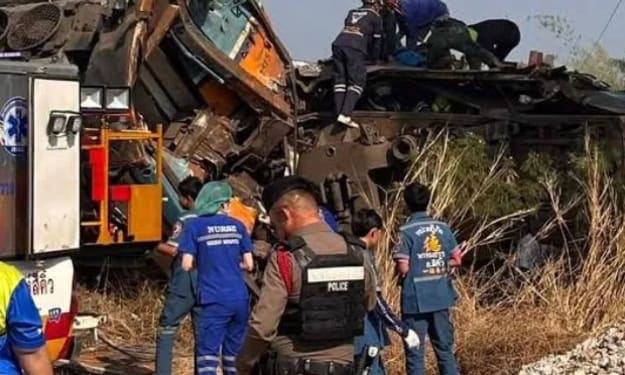
At Least 22 People Killed When Crane Falls on Train in Northeast Thailand. AI-Generated.
A normal train ride turned into a horrifying nightmare when a massive construction crane collapsed onto a moving passenger train in northeast Thailand, killing at least 22 people and injuring dozens more. The tragic incident has shaken the nation, raising urgent questions about construction safety, infrastructure planning, and accountability.
By Aqib Hussainabout a month ago in The Swamp
The Trans Youth Athletes in the US Fighting for Their Rights: ‘Playing Is an Act of Resistance. AI-Generated.
Across the United States, youth sports have become a flashpoint in the broader cultural and political debate over transgender rights. For transgender and nonbinary young athletes, stepping onto a field, court, or track is no longer just about competition or teamwork—it has become a deeply political act. As state legislatures pass laws restricting trans participation in school sports, many trans youth athletes say that simply playing the games they love feels like an act of resistance, resilience, and self-affirmation. The Rise of Restrictive Laws Over the past few years, dozens of US states have proposed or enacted laws that bar transgender youth—particularly trans girls—from participating in sports consistent with their gender identity. Supporters of these laws argue they are designed to preserve “fairness” in women’s sports. Critics, however, say the measures are discriminatory, unsupported by scientific evidence, and target a very small and vulnerable population. According to civil rights groups, these policies often affect children as young as elementary school age. For many trans youth athletes, the laws mean exclusion from school teams, loss of scholarships, and the erasure of a key source of community and mental well-being. “Playing Is Who I Am” For trans youth athletes, sports are not just extracurricular activities—they are lifelines. Many describe athletics as a place where they first learned discipline, teamwork, and confidence. Being told they no longer belong can be devastating. One high school runner from the Midwest explained that competing helped them survive years of bullying and isolation. “When I run, I feel free,” they said. “When lawmakers say I can’t race, it feels like they’re saying I shouldn’t exist.” For these young people, continuing to play—whether in school leagues, community teams, or informal settings—is a way to assert their humanity. “Playing is an act of resistance,” said another trans athlete. “It’s me saying I deserve joy and opportunity like anyone else.” The Mental Health Impact Medical and psychological associations, including the American Academy of Pediatrics and the American Psychological Association, have repeatedly warned about the mental health consequences of excluding trans youth from sports. Research shows that participation in athletics can reduce anxiety, depression, and suicide risk among young people. Transgender youth already face higher rates of mental health challenges due to stigma and discrimination. Advocates argue that sports bans compound this harm by cutting off a critical support system. Coaches and teachers have also voiced concern, noting that sports often provide structure and mentorship that many students rely on. Athletes Becoming Advocates In response to these laws, some trans youth athletes have become outspoken advocates, testifying at state capitols, speaking to media outlets, and joining lawsuits challenging the bans. Despite their young age, they are often forced into the public eye, defending their right to play against hostile rhetoric. Legal challenges have had mixed results. In some states, courts have temporarily blocked enforcement of sports bans, allowing trans athletes to compete while cases proceed. In others, the laws remain in effect, leaving students in limbo. Civil rights organizations argue that these restrictions violate constitutional protections and federal civil rights laws, including Title IX, which prohibits sex-based discrimination in education. Voices from the Sports Community Not all opposition comes from activists alone. Many professional athletes, coaches, and sports organizations have spoken out against the bans. They argue that youth sports should prioritize inclusion, participation, and development—not exclusion based on identity. Several major sports bodies have adopted inclusive policies, emphasizing that there is no evidence trans youth athletes threaten fairness in school sports. Medical experts also note that athletic performance varies widely among individuals and cannot be reduced to gender identity alone. Political Symbolism and Real-Life Consequences Critics say the focus on trans youth athletes is largely symbolic, driven more by political strategy than real concerns about sports integrity. Transgender athletes make up a tiny fraction of all student athletes, yet they have become central to campaign speeches and culture-war narratives. For the athletes affected, however, the consequences are deeply personal. Some families have relocated to more inclusive states so their children can continue playing. Others have turned to private leagues or stopped participating altogether, grieving the loss of something that once brought joy and purpose. Resilience and Hope Despite the challenges, many trans youth athletes remain determined. They find strength in supportive families, inclusive coaches, and teammates who stand by them. Social media has also helped young athletes connect across state lines, sharing stories and strategies for coping and resistance. Grassroots movements continue to push for change, emphasizing empathy, science, and the voices of the athletes themselves. Advocates stress that the debate should center on children’s well-being, not fear or misinformation. Conclusion: More Than a Game For trans youth athletes in the US, sports are about more than winning or losing. They are about belonging, dignity, and the right to participate fully in society. As legal and political battles continue, these young athletes keep showing up—on fields, courts, and tracks—as a quiet but powerful form of protest. In their determination to play, they send a clear message: their identities are not up for debate, and their love of sport will not be legislated away. For them, playing is not just a game—it is an act of resistance, hope, and survival.
By Aarif Lashariabout a month ago in The Swamp
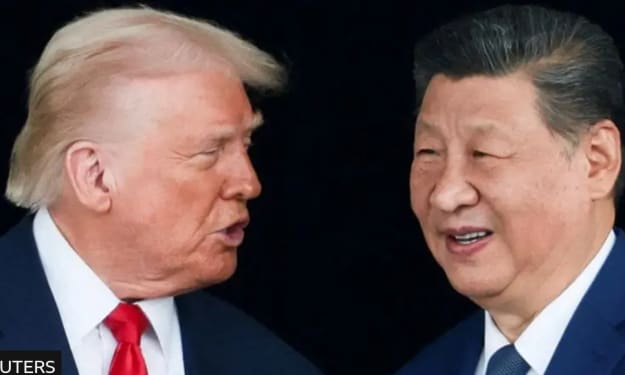
China to ‘Take All Necessary Measures’ Against Trump’s 25% Tariff
Trade tensions between the world’s two largest economies are once again threatening to boil over. After Donald Trump signaled support for a 25% tariff on Chinese goods, Beijing responded sharply, warning it would “take all necessary measures” to defend its economic interests. The statement, brief but forceful, has reignited global concerns about a return to full-scale trade confrontation. For markets, governments, and consumers alike, the message is clear: the fragile balance in U.S.-China trade relations could soon be tested again. What Trump’s 25% Tariff Means Donald Trump has long championed tariffs as a tool to rebalance trade and protect American industries. During his presidency, tariffs became a central pillar of his economic strategy, particularly against China, which he frequently accused of unfair trade practices. A proposed 25% tariff would significantly raise the cost of Chinese imports entering the U.S. market. From electronics and machinery to consumer goods, the impact would ripple through supply chains that remain deeply interconnected despite years of decoupling efforts. Trump’s framing is simple: tariffs pressure China to change its behavior. Beijing, however, sees them as economic coercion. China’s Strong Response: More Than Just Words When Chinese officials say they will “take all necessary measures,” the phrase carries weight. Historically, such language has preceded retaliatory tariffs, regulatory pressure on foreign firms, or targeted trade restrictions. China has several options at its disposal: Imposing tariffs on U.S. agricultural and industrial exports Restricting access to key raw materials or supply chains Increasing regulatory scrutiny of American companies operating in China Beijing’s warning signals that it does not intend to absorb economic pressure quietly—especially from a leader known for aggressive trade tactics. Why Beijing Is Drawing a Red Line China’s economy is navigating a complex moment. Slower growth, property sector challenges, and cautious consumer spending have already put pressure on policymakers. In this context, external shocks—like new U.S. tariffs—are viewed as direct threats to stability. More importantly, China sees trade policy as inseparable from national sovereignty. Accepting punitive tariffs without response could be perceived domestically as weakness, something the Chinese leadership is determined to avoid. By responding forcefully, Beijing reassures its public and global partners that it will defend its interests, even if that means escalating tensions. The Global Impact of Renewed Trade Conflict A renewed U.S.-China trade war would not be confined to Washington and Beijing. The global economy remains deeply exposed to the relationship between these two powers. Higher tariffs could: Increase prices for consumers worldwide Disrupt global manufacturing and logistics Slow economic growth in export-dependent economies Markets tend to react swiftly to such developments, with uncertainty often triggering volatility in stocks, currencies, and commodities. For developing countries tied into global supply chains, the consequences could be especially severe. Lessons From the Last Trade War The first U.S.-China trade war offered clear lessons. While tariffs generated political headlines, they also produced mixed economic results. American consumers absorbed higher prices, farmers required government subsidies, and global supply chains became less efficient. China, meanwhile, accelerated efforts to diversify trade partnerships and boost domestic innovation. Rather than weakening Beijing’s resolve, tariffs arguably hardened it. This history shapes how China is responding now: prepared, cautious, but unyielding. Politics Behind the Policy Trump’s tariff rhetoric also serves a domestic political purpose. Tough talk on China resonates with voters concerned about manufacturing jobs, national security, and economic independence. In this sense, tariffs are as much a campaign tool as an economic one. China understands this dynamic. Its response is crafted not only for U.S. policymakers but also for global audiences, signaling that it will not be used as a political punching bag in American elections. The result is a standoff where politics and economics collide. Is Diplomacy Still Possible? Despite the sharp language, diplomacy remains possible. Past trade confrontations have often included intense rhetoric followed by behind-the-scenes negotiations. Both sides understand the costs of prolonged escalation. However, compromise becomes harder when tariffs are framed as matters of principle rather than policy. Trump’s transactional style and China’s emphasis on sovereignty leave limited room for face-saving solutions. Whether cooler heads prevail will depend on political calculations in both capitals. What Comes Next If the tariff threat moves from rhetoric to reality, China’s response will likely be swift and strategic rather than impulsive. Beijing tends to calibrate retaliation carefully, aiming to apply pressure while minimizing self-inflicted damage. For the world, the situation serves as a reminder: U.S.-China relations remain one of the most consequential fault lines in global politics. Even a single policy announcement can send shockwaves across economies. Final Thoughts China’s warning to “take all necessary measures” against Trump’s proposed 25% tariff reflects more than economic disagreement—it highlights a deeper struggle over power, influence, and the rules of global trade. As both sides prepare for potential escalation, the stakes extend far beyond tariffs and trade balances. Whether this moment becomes another chapter in a long-running trade war—or a catalyst for renewed negotiation—will shape the global economic landscape for years to come.
By Muhammad Hassanabout a month ago in The Swamp
The Remarkable, Heroic Life of Ted Williams
When you think of the Boston Red Sox, names such as David Ortíz, Pedro Martínez, and the late Tim Wakefield come to mind. However, the Red Sox player who is the focus of this story is none other than Ted Williams. Even if you're not a baseball fan, you've probably heard of his name at least once. Towards the end of this story, I'll share the one admirable thing Williams had done to get Major League Baseball's attention. But first, let's get to know the Hall of Famer's life and career.
By Mark Wesley Pritchard about a month ago in The Swamp
Greed in the Desert: How the Promise of Gold Turned Survival Into a Death Trap
The film begins with a man named Sam who is traveling on a train. His life is not going well at all. At every turn, he faces problems. It is revealed that he is going to a deserted, desert-like city where he has to start a new job.
By Filmon Ke Raaz | Movie Mysteries Explainedabout a month ago in The Swamp
Human Remains Found Amid Australia Bushfires, Police Say. AI-Generated.
Australia’s bushfire crisis has taken a devastating turn after police confirmed the discovery of human remains in a fire-affected area of Victoria. The grim finding underscores the deadly nature of the current bushfire season, which has already destroyed hundreds of homes, displaced thousands of residents, and burned vast areas of land.
By Aqib Hussainabout a month ago in The Swamp
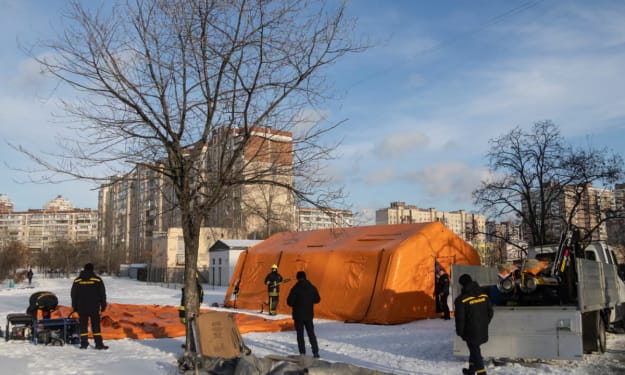
Ukraine War Briefing: Kyiv Battles to Stabilise a Ruined Power Grid After Major Russian Attack. AI-Generated.
The war in Ukraine has entered another punishing phase, one where missiles and drones are no longer just aimed at military targets but at the infrastructure that keeps daily life running. Following a major Russian attack on energy facilities, Kyiv is now struggling to stabilise a power grid left battered and dangerously fragile. The latest strikes have plunged cities into darkness, disrupted heating and water supplies, and placed enormous strain on engineers racing against time, weather, and war. This briefing looks at what happened, why Ukraine’s power grid is such a critical target, and what the damage means for civilians, the government, and the wider conflict. A Renewed Assault on Energy Infrastructure In the early hours of the latest attack, waves of missiles and drones struck key energy sites across Ukraine. Power stations, substations, and transmission lines were hit simultaneously, suggesting a coordinated effort to overwhelm air defences and cripple electricity distribution. Ukrainian officials described the assault as one of the most damaging in recent months. While some missiles were intercepted, enough reached their targets to cause widespread outages. Entire regions experienced rolling blackouts, while critical services were forced onto emergency generators. For Kyiv, the capital, the consequences were immediate. Traffic systems faltered, apartment blocks lost heating, and hospitals were pushed to rely on backup power. In a city that has already endured repeated energy shocks since the start of the invasion, the psychological impact of returning darkness is profound. Why the Power Grid Matters So Much Ukraine’s power grid has become one of the central battlefields of the war. Unlike front-line fighting, attacks on infrastructure directly affect millions of civilians far from combat zones. Electricity is not just about lights; it underpins heating systems, water pumping, telecommunications, transport, and healthcare. By targeting the grid, Russia aims to weaken morale, disrupt the economy, and force the Ukrainian government into difficult choices. Each blackout tests public resilience and increases pressure on leaders to divert resources from military needs to civilian survival. For Ukraine, keeping the grid functioning is now a matter of national security. Energy stability affects everything from factory production to the ability of air defence systems and command centres to operate effectively. The Scale of the Damage Officials have been cautious about releasing precise details, citing security concerns, but the picture is grim. Key thermal and hydroelectric facilities suffered damage, while high-voltage substations were knocked offline. Transmission lines connecting regions were also hit, complicating efforts to reroute power. Engineers describe the grid as “patched together” after nearly two years of repeated attacks. Each new strike compounds existing weaknesses, making repairs more complex and less durable. Temporary fixes that worked months ago are now failing under renewed pressure. The challenge is not just physical destruction. Replacement equipment is scarce, specialised, and often imported. Installing it under constant threat of further strikes turns routine engineering work into a dangerous, high-stakes operation. Kyiv’s Race Against Time Ukrainian energy workers have once again become unsung heroes of the war. Working around the clock, often under air raid sirens, they are attempting to restore partial power and prevent a total collapse of the system. The government has introduced emergency schedules, prioritising electricity for hospitals, water facilities, and military-related industries. Rolling blackouts are being used to balance limited supply with essential demand. Officials acknowledge that stabilisation, not full recovery, is the immediate goal. With winter temperatures dropping, the focus is on keeping heating systems operational and preventing humanitarian crises in major cities. Kyiv has also urged citizens to conserve energy wherever possible, a message that has become familiar but no less urgent with each new wave of attacks. Civilian Life Under Strain For ordinary Ukrainians, the power crisis adds another layer of hardship to lives already shaped by war. Families adapt by stocking candles, power banks, and portable heaters. Shops and cafes operate when electricity is available, closing abruptly when outages hit. In apartment buildings, especially high-rises, the loss of power means no elevators and limited water pressure. For elderly residents and those with medical needs, these disruptions can be life-threatening. Despite the strain, public morale remains a key strength. Many Ukrainians see endurance as a form of resistance, refusing to let blackouts break their resolve. Social media is filled with images of candle-lit dinners and communal efforts to support vulnerable neighbours. International Support and Its Limits Western allies have provided Ukraine with air defence systems, generators, and financial aid aimed at bolstering energy resilience. These measures have undoubtedly saved lives and prevented even greater damage. However, the scale and frequency of the attacks highlight the limits of external assistance. Air defences cannot intercept every missile, and generators are only a stopgap solution. Rebuilding and hardening the grid requires time, money, and security—three things in short supply during an active war. The latest strikes are likely to renew calls from Kyiv for additional air defence capabilities, particularly to protect energy infrastructure. For Ukraine’s partners, the question is not only how much to provide, but how quickly. What This Means for the War Ahead The battle over Ukraine’s power grid underscores the long-term nature of the conflict. Rather than decisive breakthroughs on the battlefield, the war increasingly revolves around endurance, logistics, and civilian resilience. For Russia, infrastructure attacks offer a way to apply pressure without major territorial advances. For Ukraine, surviving these assaults while maintaining military resistance is a delicate balancing act. As Kyiv struggles to stabilise a ruined power grid once again, the message is clear: the war is being fought not only with tanks and troops, but with transformers, cables, and the will of a population determined to keep the lights on—literally and figuratively. In this phase of the conflict, every restored power line is an act of defiance, and every hour of electricity is a reminder that Ukraine’s resistance extends far beyond the front lines.
By Muhammad Hassanabout a month ago in The Swamp
Rubio Voices U.S. Support for Iran’s Protesters Amid Rising Unrest
In a renewed wave of political unrest across Iran, U.S. Senator Marco Rubio has publicly expressed American support for what he called the “brave people of Iran,” as protests continue to challenge the country’s ruling establishment. His statement, shared amid reports of demonstrations and crackdowns, reflects a familiar yet complex position in U.S. foreign policy: vocal backing for popular movements demanding rights and accountability, paired with caution about direct intervention. Rubio’s remarks come at a time when Iran is once again facing internal pressure from citizens frustrated by economic hardship, political repression, and restrictions on personal freedoms. While protests in Iran are not new, each resurgence draws intense international attention, particularly from Washington, where Iran remains a central concern in debates over security, nuclear policy, and human rights. A Statement That Resonates Beyond Washington In his message, Rubio praised the courage of Iranians who continue to demonstrate despite the risks, emphasizing that their actions represent a broader desire for dignity and self-determination. By framing protesters as “brave,” Rubio aligned himself with a long-standing U.S. narrative that positions popular movements as legitimate expressions of democratic will, especially in authoritarian contexts. Such statements are often welcomed by activists and members of the Iranian diaspora, many of whom argue that international recognition helps keep global attention focused on abuses inside the country. For them, moral support from influential foreign leaders can be a source of encouragement, even if it does not translate into immediate policy change. However, within Iran, reactions to U.S. comments are often mixed. While some protesters appreciate external solidarity, others worry that overt American support can be used by Iranian authorities to discredit demonstrations as foreign-backed or manipulated, a charge frequently leveled by state media. The Protests: Roots and Realities The current unrest reflects deep-seated grievances rather than a single triggering event. Years of economic strain, exacerbated by sanctions, inflation, and unemployment, have taken a heavy toll on everyday life. At the same time, political restrictions and limits on social freedoms have fueled anger among younger generations, who are increasingly connected to the outside world through social media. Protests in Iran often begin with specific demands—lower prices, better wages, or justice in individual cases—but quickly expand into broader calls for reform. This pattern underscores how interconnected economic and political issues have become in the country. When Rubio speaks of “brave people,” he is referencing citizens who protest despite the risk of arrest, violence, or worse. U.S. Policy and the Iran Dilemma Rubio’s comments also highlight the broader challenge facing U.S. policymakers: how to support human rights in Iran without escalating tensions or undermining diplomatic efforts. The United States has long criticized Iran’s government for its treatment of protesters, journalists, and activists, while simultaneously pursuing strategic objectives related to nuclear non-proliferation and regional stability. Critics of the U.S. approach argue that statements of support, while symbolically powerful, do little to change realities on the ground. Others counter that silence would be interpreted as indifference and would betray those risking their lives to demand change. Rubio, known for his hawkish stance on Iran, has consistently argued that moral clarity is essential, even if policy options are limited. Tehran’s Likely Response Iranian authorities typically reject U.S. statements as interference in domestic affairs. Officials often accuse Washington of hypocrisy, pointing to America’s own social and political divisions. In state-controlled media, comments like Rubio’s are framed as evidence of foreign plots aimed at destabilizing the country. This reaction is part of a broader strategy to maintain control by delegitimizing protests. By portraying demonstrators as tools of external enemies, the government seeks to rally nationalist sentiment and justify harsh security measures. As a result, international expressions of support, however well-intentioned, can sometimes complicate the situation for protesters inside Iran. The Role of International Solidarity Despite these risks, many human rights advocates argue that global attention remains crucial. Statements from figures like Rubio can amplify reports from activists, encourage documentation of abuses, and pressure international organizations to respond. In some cases, sustained attention has led to targeted sanctions against individuals accused of overseeing repression. For the Iranian diaspora, especially in the United States and Europe, such remarks also serve as validation of long-standing advocacy efforts. They reinforce the idea that the struggle of Iranians is not forgotten, even when global news cycles move on. A Balancing Act Going Forward Rubio’s expression of support underscores a recurring theme in U.S.–Iran relations: the tension between ideals and pragmatism. While Washington voices solidarity with protesters, it remains constrained by geopolitical realities. Direct intervention is widely seen as unrealistic and potentially disastrous, given the region’s volatility and the legacy of past conflicts. As protests continue, the effectiveness of international statements will depend on consistency and coordination. Sporadic remarks may raise awareness temporarily, but sustained engagement—through diplomacy, multilateral pressure, and support for independent media—has a greater chance of making an impact. Conclusion Senator Marco Rubio’s support for the “brave people of Iran” amid ongoing protests reflects both a moral stance and a strategic message. It signals that the United States is watching and that demands for rights and accountability resonate beyond Iran’s borders. Yet it also highlights the limits of words in the face of entrenched power structures. For the protesters themselves, courage remains the defining feature of their struggle. Whether international voices can meaningfully contribute to change is an open question, but for now, Rubio’s remarks add to a global chorus affirming that the aspirations of ordinary Iranians deserve recognition—and that their fight for a better future is being seen.
By Muhammad Hassanabout a month ago in The Swamp
Learning Abuse is Okay. Content Warning.
My coparent and I agreed on when our children would call me. A schedule because he said that I was interfering with his parenting time. Our children have long called me twice a day if I wasn't physically available to them. I understand how much my ex hates it, but hey, I hate things too - it is called putting our children first.
By The Schizophrenic Momabout a month ago in The Swamp