humanity
Humanity topics include pieces on the real lives of politicians, legislators, activists, women in politics and the everyday voter.
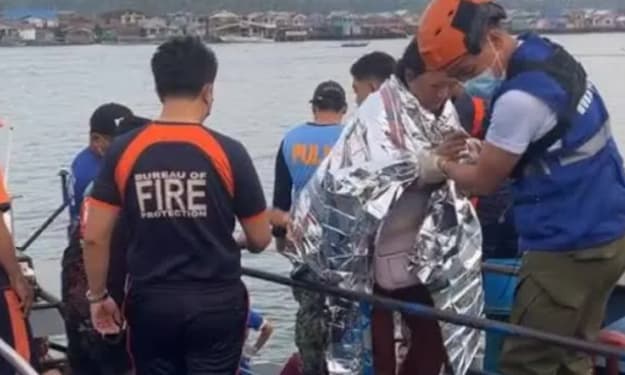
Ferry Carrying Over 350 People Sinks in the Philippines, Killing at Least 18. AI-Generated.
A tragic maritime accident unfolded in the southern Philippines on January 26, 2026, when a ferry carrying over 350 people sank off the coast of Basilan province. At least 18 people lost their lives, while dozens remain missing. The incident has once again raised concerns about the safety of passenger ferries in the archipelago.
By Aqib Hussain9 days ago in The Swamp
Body Found Believed to Be Missing Antiques Dealer. AI-Generated.
The discovery of a body believed to belong to a missing antiques dealer has brought a grim turn to a case that has troubled both investigators and the local community for weeks. What began as a missing person report has now escalated into a full-scale investigation, raising troubling questions about what may have happened during the dealer’s final days.
By Ayesha Lashari9 days ago in The Swamp
Spanish Track Fractured Before High-Speed Train Disaster, New Report Reveals. AI-Generated.
A newly released report into the tragic Spanish high-speed train disaster has revealed that a fractured track was a critical factor in the fatal crash that occurred several months ago. This shocking discovery raises significant concerns about the safety of Spain’s high-speed rail network and the broader issue of infrastructure maintenance. The investigation underscores the complexity of the accident, suggesting that a combination of technical failures and human error contributed to the devastating consequences.
By Ayesha Lashari11 days ago in The Swamp
The Architecture of the Empty. Content Warning.
"In a world increasingly obsessed with 'hollow thinking' where people are reduced to units and human dignity is phased out of the budget the act of creation becomes a form of resistance. This piece was born from a week of rigid rules and 'authoritarian bull shit,' but it ends in the only place the parasites cannot reach: the sanctuary of the imagination.
By Vicki Lawana Trusselli 11 days ago in The Swamp
US Immigration Agents Detain Two-Year-Old Minnesota Girl: ‘Depravity Beyond Words. AI-Generated.
A shocking event in Minneapolis this week has captured national attention. U.S. immigration agents detained a two-year-old girl along with her father, despite a federal judge’s order to release her, sparking protests, legal battles, and public outrage. Advocates have called the incident “depravity beyond words,” highlighting the human cost of interior immigration enforcement far from the U.S. border. The story has become a flashpoint in the ongoing debate over immigration policy, family separation, and how federal agencies interact with local communities. The Incident in Minneapolis On January 22, 2026, federal agents from U.S. Immigration and Customs Enforcement (ICE) detained Chloe Renata Tipan Villacis, a two-year-old girl, along with her father, Elvis Joel Tipan Echeverria, in south Minneapolis after they returned from a local store. According to the family’s lawyers, the agents approached the vehicle where the toddler was sitting, allegedly breaking a glass window to take the child into custody. Minutes later, a Minnesota federal judge issued an emergency order instructing ICE to release the child immediately and prohibiting any transfer out of state. Despite this directive, the father and toddler were placed on a flight to Texas, where they were briefly held in a detention facility. It was only after legal pressure and public outcry that the two-year-old was reunited with her mother, while her father remains in detention. This incident has reignited questions about how ICE enforces immigration laws, particularly when children are involved. Legal Concerns and Human Impact Lawyers representing the family emphasized that Chloe and her father posed no flight risk and that the detention violated federal protections for minors. The family’s legal team claims that ICE ignored the judge’s order, failed to allow a handoff to the mother at the scene, and transported the child in unsafe conditions. Attorney Irina Vaynerman described the situation as “truly unimaginable,” pointing out that detaining a toddler in such circumstances could have lasting psychological effects. Critics argue that the case exemplifies the risks of aggressive enforcement tactics, particularly when federal agents operate in communities far from the border. Government Response The Department of Homeland Security (DHS), which oversees ICE, defended the operation. Officials described the detention as part of a “targeted enforcement operation” and claimed the father had unlawfully re-entered the U.S. and was driving erratically with a child in the vehicle. DHS also stated that agents attempted to return the child to her mother at the scene, a claim disputed by the family’s lawyers. Regardless of differing accounts, the incident has intensified scrutiny of ICE’s interior operations and prompted calls for stronger oversight and accountability. A Broader Pattern This Minneapolis case is part of a wider pattern of interior enforcement in Minnesota. Recent weeks have seen multiple arrests of families and children under Operation Metro Surge, a large-scale ICE operation targeting undocumented immigrants in the area. Another high-profile case involved a five-year-old boy who was temporarily detained with his father, drawing nationwide attention. Critics argue that these sweeps create fear in immigrant communities and undermine trust between residents and law enforcement. Many advocates highlight the disproportionate impact on children, who may face trauma from detention and separation from family members. National and Local Reactions The detention of a toddler has triggered strong responses across the U.S.: Legal advocates condemned the action as a violation of federal protections for minors. Civil rights groups called it a sign of dehumanizing enforcement tactics. Community organizations in Minnesota organized rallies, with thousands protesting outside ICE offices in subzero temperatures. Public support for the family has also surged, with fundraisers covering legal costs and basic needs. Local politicians have expressed concern that aggressive interior enforcement erodes community trust, particularly when children are involved. Legal and Human Rights Implications U.S. law, including the Flores Settlement, protects children in immigration detention, requiring prompt release to parents or legal guardians whenever possible. Lawyers argue that the two-year-old’s detention violated these protections, especially given the ignored federal court order. The case highlights the ongoing tension between enforcement priorities and humanitarian and legal obligations. It also raises questions about agency accountability when minors are involved in enforcement operations. Why This Matters While the case is centered on one toddler and her father, it reflects broader issues with immigration enforcement across the United States. Critics argue that aggressive interior operations: Risk traumatizing children and separating families. Undermine public trust in law enforcement. Raise constitutional and legal concerns about due process and adherence to court orders. Even beyond political debates, the human cost is undeniable. Stories like this prompt national reflection on how a government balances law enforcement with compassion, particularly when the most vulnerable are involved. Looking Ahead The incident in Minneapolis is likely to influence future policies, public opinion, and court decisions on immigration enforcement. Families, advocates, and legal organizations are pushing for stronger protections for children and more oversight of federal operations. At the same time, the case highlights the importance of community awareness and activism. Public scrutiny played a role in ensuring the toddler’s release, demonstrating the power of advocacy and media attention in influencing government action. Final Thoughts The detention of a two-year-old girl and her father in Minneapolis is more than a news story; it’s a reminder of the human impact of immigration policy. Beyond debates over legality or enforcement strategy, the incident emphasizes the need to protect vulnerable populations, especially children, and ensure that government actions adhere to both legal standards and ethical norms. As the legal proceedings unfold, the story continues to shed light on the balance between enforcement and compassion, and how communities, media, and courts can influence outcomes that affect real families.
By Muhammad Hassan11 days ago in The Swamp
Frank Gardner: Not Only Americans Risked Life and Limb to Serve in Afghanistan. AI-Generated.
When discussions turn to the war in Afghanistan, the focus often rests heavily on the United States—its soldiers, its decisions, and its sacrifices. Yet as journalist and security correspondent Frank Gardner has repeatedly emphasized, Americans were far from the only ones who risked life and limb during the two-decade conflict. Thousands of service members from allied nations, alongside Afghan civilians and local forces, paid a profound price in a war that reshaped lives far beyond US borders.
By Aarif Lashari11 days ago in The Swamp
Pentagon to Reduce Its Role in Deterrence of North Korea. AI-Generated.
The United States Department of Defense has confirmed plans to reduce the Pentagon’s direct role in the deterrence strategy against North Korea, marking a notable shift in Washington’s approach to security on the Korean Peninsula. While US officials insist the move does not signal a weakening of commitment to allies, the announcement has prompted debate among analysts, regional partners, and lawmakers about the future balance of power in East Asia.
By Aarif Lashari12 days ago in The Swamp