new world order
With our new president comes a New World Order. A guided tour through dramatic shifts in political thought and power struggles that inform our future.
The Dollar Is Falling: What It Really Means for Small Countries
In the global economic theater, the U.S. dollar has long played the leading role — a symbol of stability, strength, and trust. But today, the spotlight is shifting. From the rise of alternative alliances like BRICS to increasing distrust in U.S. global leadership, the fall of the dollar is no longer a conspiracy theory — it's a visible trend. And while the headlines focus on Washington and Wall Street, the real impact is unfolding quietly in small and developing countries.
By Keramatullah Wardak9 months ago in The Swamp
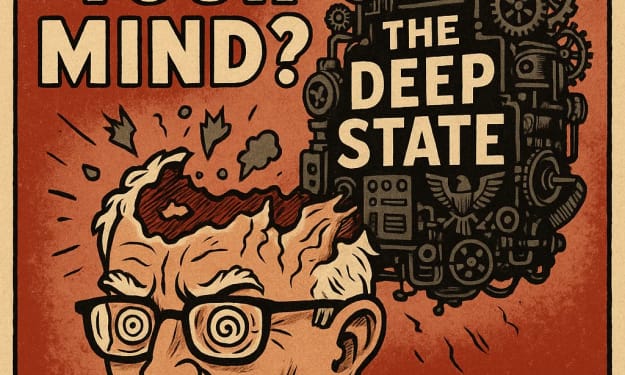
The Silent Superweapon
Editorial Note: This satirical essay is a speculative exploration of administrative overreach, government efficiency rhetoric, and the unintended consequences of digitized control. Inspired by the spirit of The Twilight Zone, it invites readers to imagine a world where a new bureaucracy becomes the engine of dystopia. It is not a declaration of fact, but a provocative thought experiment. License is taken to use the real life Department of Government Efficiency name as it is current in the public ethos.
By Lanny Newville9 months ago in The Swamp
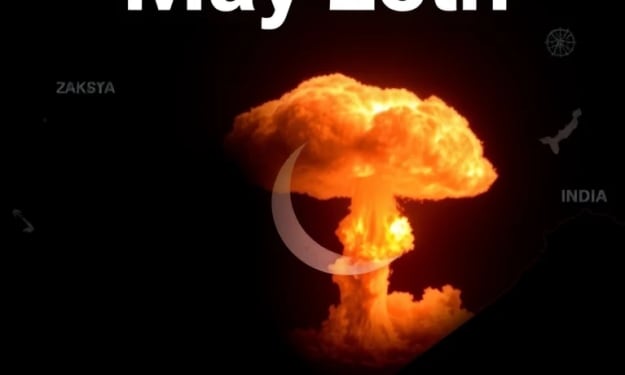
May 28th: How Pakistan’s Nuclear Test Redefined Regional Power Balance
Introduction May 28th stands as a defining date in the history of South Asia, marking Pakistan’s emergence as a nuclear-armed state and fundamentally reshaping the regional power balance. On this day in 1998, Pakistan conducted its first public nuclear weapons test, sending shockwaves through the geopolitical landscape of South Asia and the wider international community. This act was not merely a demonstration of military capability but a bold assertion of strategic autonomy, directly challenging the long-standing nuclear dominance of India. The May 28th nuclear test underscored Pakistan’s resolve to safeguard its national security in a highly volatile regional environment and introduced a new dimension to the Pakistan India nuclear rivalry.
By Shamshair Khan Hasan Zai9 months ago in The Swamp
Western Media and the Double Standard in Portraying Black Men
In the digital age, media narratives significantly shape public perception. However, a persistent issue remains: the portrayal of Black men in Western media often reflects deep-seated biases and double standards. These portrayals not only influence societal attitudes but also have tangible effects on the lives of Black individuals.
By Mohammad Ashique9 months ago in The Swamp
🇺🇸 U.S. Foreign Policy Under Trump: A Global Ripple Effect
U.S. Foreign Policy Under Trump: A Global Ripple Effect The return of Donald Trump to the U.S. presidency in 2025 has once again placed American foreign policy under the global spotlight, sparking significant shifts with wide-reaching consequences. Trump's approach to international relations, marked by nationalism, skepticism towards multilateral institutions, and a transactional mindset, has created waves that resonate far beyond American borders. These ripple effects are shaping global geopolitics, alliances, and international governance, with implications felt in global health, diplomacy, human rights, and security.
By World politics 9 months ago in The Swamp
"Diplomatic Turbulence: Qatar Gifts Jet to Trump Amid Global Tensions"
In a move that has shocked Washington and raised fresh questions about international influence in U.S. politics, Qatar has reportedly gifted a private jet to former President Donald J. Trump. While details surrounding the aircraft’s value, origin, and intended use remain sparse, the gesture has already sparked bipartisan concern over what it might signify for American foreign policy — past, present, and future.
By Kaleem Ullah9 months ago in The Swamp
"Trump’s Gulf Odyssey: Power, Politics, and the Pursuit of Legacy"
Introduction: A Return to the Global Stage In May 2025, former U.S. President Donald J. Trump embarked on a high-profile tour of the Middle East, visiting Saudi Arabia, Qatar, and the United Arab Emirates. This journey was not merely a series of diplomatic meetings; it was a meticulously orchestrated endeavor blending statecraft, economic ambition, and personal legacy. Chapter 1: Riyadh—The Desert Welcome Arrival and Ceremonial Grandeur On May 13, Air Force One touched down at King Khalid International Airport in Riyadh. Trump was greeted with an opulent ceremony: a lavender carpet laid out, traditional music echoing through the air, and a camel procession leading the way. The Saudi royal family spared no expense, signaling the importance of this visit . Strategic Agreements and Historic Meetings In Riyadh, Trump and Crown Prince Mohammed bin Salman signed a "strategic economic partnership" agreement encompassing energy, defense, and other sectors. Notably, this included a $142 billion arms deal and broader investments totaling $600 billion. Additionally, Trump held a historic meeting with Syrian President Ahmed al-Sharaa—the first such encounter in 25 years—announcing intentions to lift longstanding U.S. sanctions on Syria following the fall of Bashar Assad’s regime . Chapter 2: Doha—Deals and Diplomacy Economic Engagements On May 14, Trump arrived in Doha, Qatar. The visit was marked by significant economic engagements, including Qatar Airways signing an agreement to purchase as many as 210 planes from Boeing—the largest order in the company's history. The United States announced over $243.5 billion in deals with Qatar, covering defense agreements and infrastructure projects . Cultural Exchange and Symbolism Beyond the economic aspects, the visit included cultural exchanges. Trump attended a state dinner at Lusail Palace and participated in a ceremony passing the hosting duties of the FIFA World Cup to the United States. These events underscored the strengthening ties between the two nations. Chapter 3: Abu Dhabi—Technology and Recognition Advancements in Artificial Intelligence On May 15, Trump arrived in Abu Dhabi, United Arab Emirates. The visit focused on technological collaboration, with the UAE committing to invest $1.4 trillion in the U.S. artificial intelligence sector over the next decade. This partnership aimed to enhance the UAE's access to U.S. AI and semiconductor technologies, positioning the nation as a leader in the global AI sector . Honors and Cultural Visits During his stay, Trump was awarded the Order of Zayed, the UAE's highest civil decoration. He also toured the Sheikh Zayed Grand Mosque and visited an interfaith center, reflecting a commitment to cultural and religious understanding. Chapter 4: Emotional Undercurrents and Personal Reflections Private Encounters Amidst the grandeur, there were moments of personal significance. In Dubai, Trump met privately with an American businesswoman who had lost her husband in the Afghanistan war. The encounter was solemn, with Trump expressing condolences and reflecting on the human cost of conflict. Legacy and Personal Ambition Throughout the tour, Trump was acutely aware of his legacy. The scale of the deals and the warmth of the receptions were seen as validations of his approach to foreign policy. In interviews, he emphasized the success of the trip, noting the unprecedented nature of the agreements and the strengthening of U.S. relations in the region . Conclusion: A Complex Tapestry Trump's 2025 Middle East tour was a multifaceted endeavor, blending diplomacy, economic ambition, and personal legacy. The agreements signed and the relationships reinforced have the potential to shape regional dynamics for years to come. While the tour was met with both praise and criticism, it undeniably marked a significant chapter in the ongoing narrative of U.S. engagement in the Middle East. Call to Action: What are your thoughts on the impact of Trump's Middle East tour? Do you believe these engagements will lead to lasting change? Share your perspectives in the comments below.
By Shabir Ahmad9 months ago in The Swamp
Trump & KSA: Power, Oil, and Politics
Trump & KSA: Power, Oil, and Politics Few alliances in modern geopolitics have generated as much intrigue, criticism, and speculation as that between former U.S. President Donald J. Trump and the Kingdom of Saudi Arabia. It is a relationship built not merely on diplomacy, but on towering stakes: oil, arms, influence, and ideology. From lavish state receptions in Riyadh to controversial arms deals and mutual interests in regional security, the Trump-KSA connection became one of the defining features of his foreign policy. As Trump reenters the global stage with renewed political ambitions, the echoes of his engagement with Saudi Arabia continue to shape the narrative of U.S. involvement in the Middle East—and may once again become central in his potential return to power.
By World politics 9 months ago in The Swamp
" Trump returns to Riyadh "
Riyadh, Saudi Arabia — May 2025 In a move that has captured international attention, former U.S. President Donald J. Trump made a high-profile visit to Saudi Arabia in May 2025, reigniting discussions about U.S. foreign policy, global diplomacy, and the evolving relationship between Washington and Riyadh. The visit, his first since leaving the White House, was marked by both symbolism and substance, offering insights into Trump's ongoing political influence and his vision for America's role in the Middle East.
By Kaleem Ullah9 months ago in The Swamp